Categories
Branding Digital Marketing Downloads Email Marketing Featured News Online Marketing PPC Remote Sales SEO Social Media Social Media Marketing Tips and Tricks Uncategorized Video Marketing Web Design Web Development

Elevate Your Business with Social Link: A Top Marketing Agency in Nashville

Are you looking for a marketing partner that can help take your business to the next level? Look no further than Social Link, a leading marketing agency in Nashville that offers a range of services to help businesses build their brand and reach new customers.

At Social Link, we believe that every business deserves a marketing strategy that is tailored to their unique needs and goals. That’s why we offer a full suite of services, including branding, web design, SEO, social media marketing, and more. Our team of experts has years of experience working with businesses across industries, from healthcare to finance to hospitality, and we’ve helped our clients achieve measurable results and sustainable growth.

What sets Social Link apart from other marketing agencies in Nashville? Here are just a few reasons why we’re the right choice for your business:

  1. We take a data-driven approach to marketing. At Social Link, we don’t believe in guesswork. Instead, we rely on data and analytics to inform our marketing strategies and ensure that we’re delivering measurable results for our clients.
  2. We’re committed to collaboration and communication. We know that effective marketing requires open communication and collaboration between our team and our clients. That’s why we prioritize transparency, regular reporting, and ongoing communication throughout the marketing process.
  3. We offer a range of services to meet your needs. Whether you’re looking to build your brand, increase your online visibility, or drive more leads and sales, Social Link has the expertise and resources to help you achieve your goals.

Our Services

At Social Link, we offer a wide range of services to help businesses of all sizes and industries succeed in the digital age. Here are just a few of the ways we can help elevate your business:

  1. Branding: Your brand is the foundation of your business. At Social Link, we can help you develop a strong brand identity that resonates with your target audience and sets you apart from your competition.
  2. Web Design: Your website is your online storefront, and it’s often the first impression that potential customers will have of your business. We can help you design a website that is visually appealing, user-friendly, and optimized for search engines.
  3. SEO: Search engine optimization (SEO) is essential for businesses that want to improve their online visibility and attract more traffic to their website. Our team of SEO experts can help you develop a customized strategy that includes keyword research, on-page optimization, link building, and more.
  4. Social Media Marketing: Social media is a powerful tool for building your brand and engaging with your target audience. Our social media marketing services can help you develop a strong presence on platforms like Facebook, Twitter, and Instagram, and leverage these channels to drive traffic and sales.
  5. PPC Advertising: Pay-per-click (PPC) advertising can be an effective way to reach new customers and generate leads and sales. Our PPC experts can help you develop and manage campaigns on platforms like Google Ads and Bing Ads, ensuring that you get the most bang for your buck.

Why Choose Social Link?

When it comes to choosing a marketing agency in Nashville, there are many options to choose from. Here are just a few reasons why Social Link stands out from the crowd:

  1. Experience: Our team of marketing experts has years of experience working with businesses across industries. We’ve seen it all, and we know what it takes to help businesses succeed in today’s competitive digital landscape.
  2. Results: At Social Link, we don’t just talk the talk. We walk the walk. Our team is dedicated to delivering measurable results for our clients, and we have the track record to prove it.
  3. Collaboration: We believe that the best marketing strategies are developed through collaboration and communication. That’s why we work closely with our clients throughout the marketing process, ensuring that we understand their unique needs and goals and can tailor our services to meet them.
  1. Transparency: We believe in transparency and honesty in everything we do. That means providing regular reporting and updates, being upfront about costs and timelines, and always being available to answer any questions or concerns.
  2. Customization: At Social Link, we know that every business is unique, and there is no one-size-fits-all approach to marketing. That’s why we offer customized solutions tailored to each client’s specific needs and goals.

If you’re looking for a marketing agency in Nashville that can help take your business to the next level, look no further than Social Link. Our team of experts has the knowledge, experience, and dedication to help you achieve your marketing goals and grow your business. Contact us today to learn more about our services and how we can help you succeed.

Categories
Blog Featured Web Design Web Development

Your Website Will Probably Break Soon

No More Mixed Messages About HTTPS

Below is a press release posted on the Chrome blog. We highly encourage our clients to consider whether their site has been updated to prevent ‘stuff’ from breaking due to lacking the proper security being promoted by Google Chrome.

Please contact us if you need help with understanding your website’s current security settings. Our website development team is standing by ready to help you maintain and future proof your website content today.

Thursday, October 3, 2019

Update (April 6, 2020): Mixed image auto upgrading was originally scheduled for Chrome 81, but will be delayed until at least Chrome 84. Check the Chrome Platform Status entry for the latest information about when mixed images will be auto-upgraded and blocked if they fail to load over https://. Sites with mixed images will continue to trigger the “Not Secure” warning. 

Today we’re announcing that Chrome will gradually start ensuring that https:// pages can only load secure https:// subresources. In a series of steps outlined below, we’ll start blocking mixed content (insecure http:// subresources on https:// pages) by default. This change will improve user privacy and security on the web, and present a clearer browser security UX to users.

In the past several years, the web has made great progress in transitioning to HTTPS: Chrome users now spend over 90% of their browsing time on HTTPS on all major platforms. We’re now turning our attention to making sure that HTTPS configurations across the web are secure and up-to-date.

HTTPS pages commonly suffer from a problem called mixed content, where subresources on the page are loaded insecurely over http://. Browsers block many types of mixed content by default, like scripts and iframes, but images, audio, and video are still allowed to load, which threatens users’ privacy and security. For example, an attacker could tamper with a mixed image of a stock chart to mislead investors, or inject a tracking cookie into a mixed resource load. Loading mixed content also leads to a confusing browser security UX, where the page is presented as neither secure nor insecure but somewhere in between.

In a series of steps starting in Chrome 79, Chrome will gradually move to blocking all mixed content by default. To minimize breakage, we will autoupgrade mixed resources to https://, so sites will continue to work if their subresources are already available over https://. Users will be able to enable a setting to opt out of mixed content blocking on particular websites, and below we’ll describe the resources available to developers to help them find and fix mixed content.

Timeline

Instead of blocking all mixed content all at once, we’ll be rolling out this change in a series of steps.

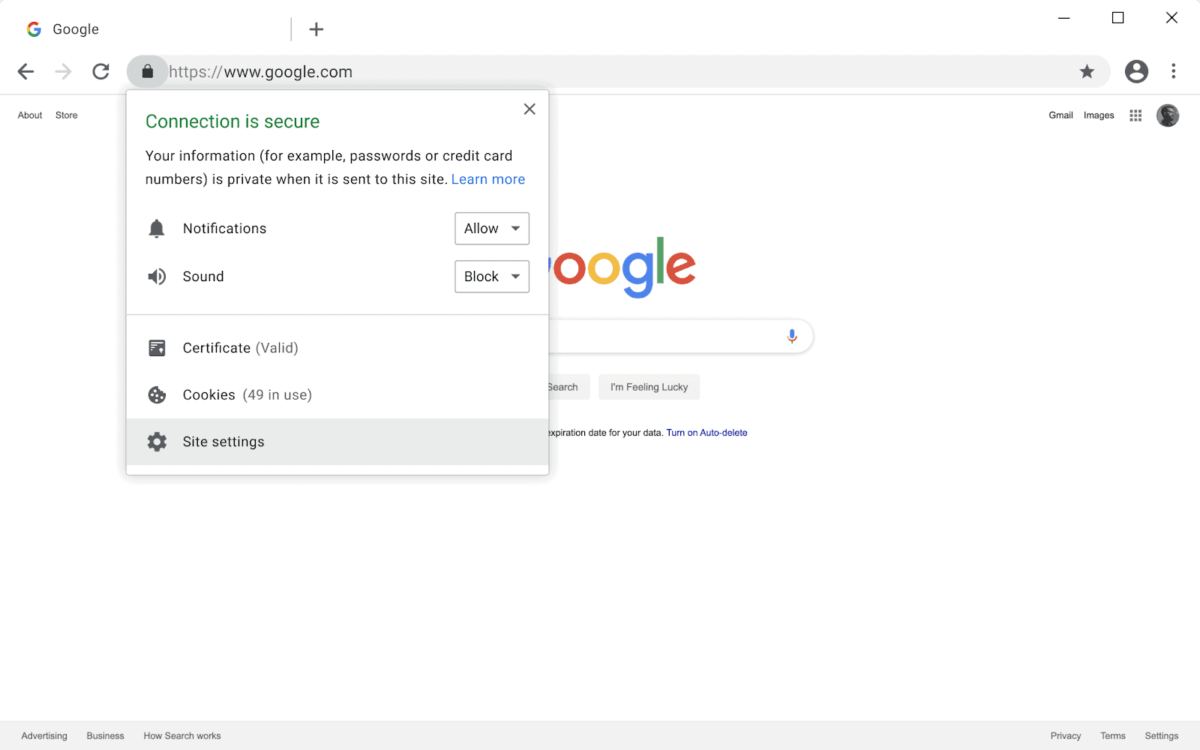
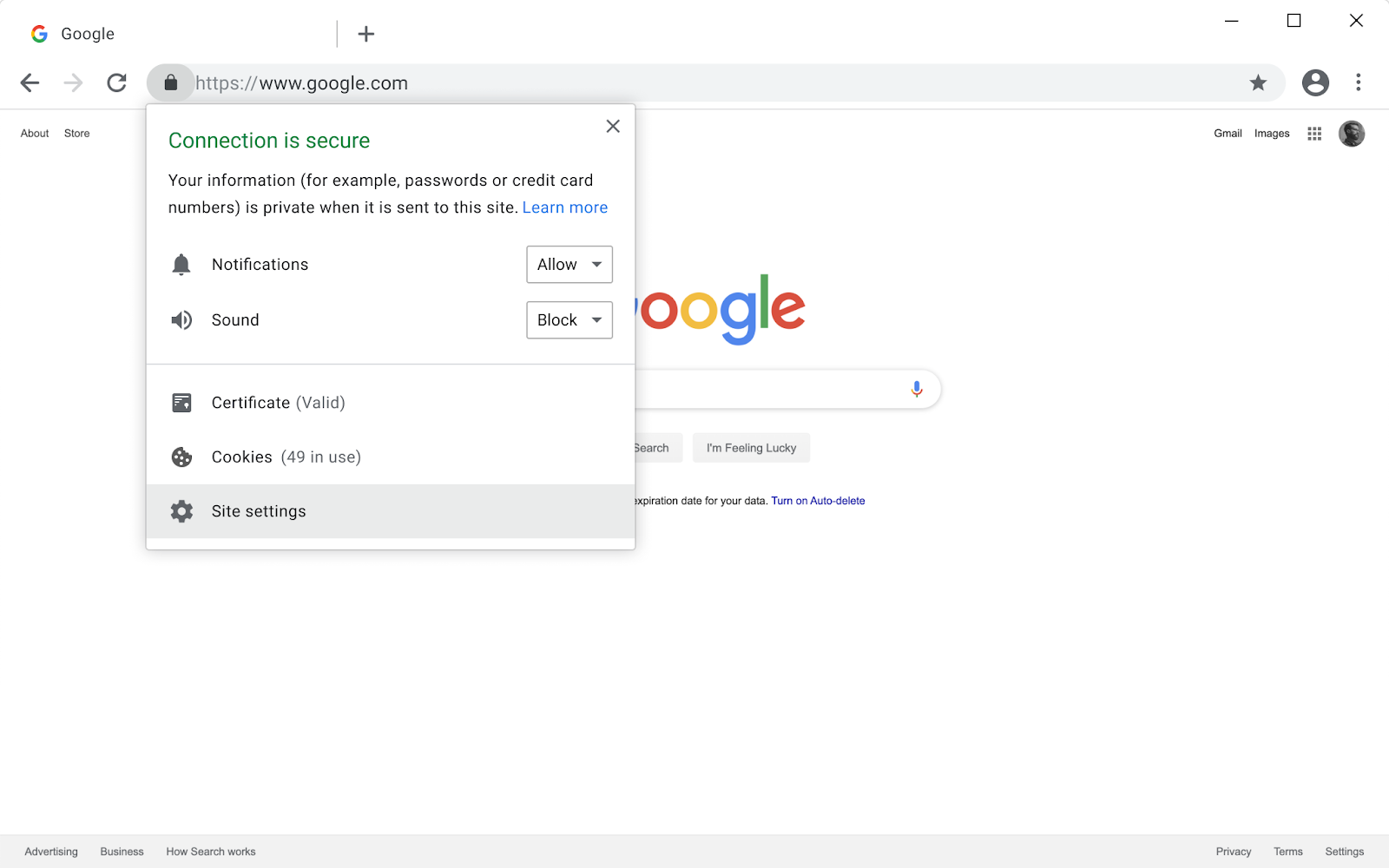
  • In Chrome 79, releasing to stable channel in December 2019, we’ll introduce a new setting to unblock mixed content on specific sites. This setting will apply to mixed scripts, iframes, and other types of content that Chrome currently blocks by default. Users can toggle this setting by clicking the lock icon on any https:// page and clicking Site Settings. This will replace the shield icon that shows up at the right side of the omnibox for unblocking mixed content in previous versions of desktop Chrome.
  • In Chrome 80, mixed audio and video resources will be autoupgraded to https://, and Chrome will block them by default if they fail to load over https://. Chrome 80 will be released to early release channels in January 2020. Users can unblock affected audio and video resources with the setting described above.
  • Also in Chrome 80, mixed images will still be allowed to load, but they will cause Chrome to show a “Not Secure” chip in the omnibox. We anticipate that this is a clearer security UI for users and that it will motivate websites to migrate their images to HTTPS. Developers can use the upgrade-insecure-requests or block-all-mixed-content Content Security Policy directives to avoid this warning. Here is the planned treatment:
  • In Chrome 81, mixed images will be autoupgraded to https://, and Chrome will block them by default if they fail to load over https://. Chrome 81 will be released to early release channels in February 2020.

Resources for developers

Developers should migrate their mixed content to https:// immediately to avoid warnings and breakage. Here are some resources:

  • Use Content Security Policy and Lighthouse’s mixed content audit to discover and fix mixed content on your site.
  • See this guide for general advice on migrating servers to HTTPS.
  • Check with your CDN, web host, or content management system to see if they have special tools for debugging mixed content. For example, Cloudflare offers a tool to rewrite mixed content to https://, and WordPress plugins are available as well.

Posted by Emily Stark and Carlos Joan Rafael Ibarra Lopez, Chrome security team

Contact Social Link to help navigate the updates necessary to ensure your site is secure from breaking after this release.

Categories
Blog Digital Marketing Featured News Online Marketing Web Design

Diversity and Inclusion in Marketing

Current Events in Diversity and Inclusion in Marketing 

Diversity and inclusion in marketing have always been important. However, due to the current cultural climate and pandemic, these elements are even more of a focus for marketers than ever before. 

Why now?

Lily Zheng, a diversity, equity, and inclusion consultant explains it best, poignantly writing in the Harvard Business Review: “We are in two crises right now, an economic crisis and a people crisis, and organizations that acknowledge only one risk exacerbating the other. Diversity, equity, and inclusion efforts can be a powerful solution to both challenges — but the nature of diversity work must evolve to meet that charge. We need to broaden our definition of DE&I work to capture the new challenges of working amid a pandemic and develop an approach that focuses on solving real problems, not maintaining appearances.”

Diego Tuya, Creative Leader at an Argentinian advertising agency, stated, “We are at a pivotal point in society where we have the opportunity to use images that reflect a world we want to be part of. Images where diversity is key, where subcultures are celebrated, and where expected gender and societal roles are smashed.”

Room for growth.

NewsCred Insights found that over 91% of U.S. marketers agree with the statement, “there is still room for growth in using more diverse images by marketers.” Clearly many American companies have a diversity blindspot that could impact business growth.

It’s become increasingly apparent that many companies, big and small, haven’t fully embraced diversity and inclusion in their marketing campaigns—and they’re being called out on it. With all this at the forefront, many businesses are scrambling to right their wrongs, embrace diversity and inclusion, and put their best foot forward.

You want to be truly representative of a varied audience when creating marketing materials, right? It’s crucial that your brand is inclusive in its imagery, themes, and language. If you’re struggling with identifying your target demographic and knowing if your marketing efforts are diverse in a variety of categories— age, race, gender, body size, disabilities, etc.—you’ve come to the right place.   

Let’s get started with some cold, hard facts. Who doesn’t love a good statistic?

These numbers make it impossible to deny how critical it is for companies to focus efforts on diversity, equity, and inclusion marketing.

Definition of diversity and inclusion.

Diversity is defined as “the condition of having or being composed of differing elements : variety especially.” One of the definitions of inclusion is “the act or practice of including and accommodating people who have historically been excluded (as because of their race, gender, sexuality, or ability).”

But what exactly do diversity and inclusion mean in relation to marketing? 

Zebra Strategies, a strategic marketing and research firm specializing in diversity and inclusion marketing, explained: “When applied to marketing, diversity, and inclusion are all about respecting and appreciating differences. It ensures that everyone’s voice gets heard, no matter what their racial, socioeconomic, gender, sexual orientation, age, or cultural background is.” 

Customers need to relate to your brand.

First things first: you must understand who your demographic is and connect with them.

If potential clients go onto your website or check out your marketing materials and don’t see themselves represented in any way, they aren’t going to be too apt to become actual customers. 

“If your customers are different than you and they feel unrecognized, you will begin to lose them,” stated author Michael P. Crone in his “Diversity Marketing & Cultural Awareness” paper.

“Truly diverse and inclusive content – the kind that resonates consciously and subconsciously with your audience – requires far more than an image,” said Ann Gynn, a writer for the Content Marketing Institute. “It requires thinking more deeply, from your audience research to your team structure, from your style guide to your user experience.”

Take a look at the man (or woman) in the mirror.

It’s imperative that organizations assess themselves and take a step back to reflect. “If you seek to enter diverse markets, your organization must become the market you seek,” said Del Johnson, a principal at Backstage Capital, a venture capital firm that has invested over $7 million in companies founded by underrepresented entrepreneurs. 

“The more distance there is culturally between your team and the market, the less ability you will have to execute. We all fall into particular biases. That’s why you need to have culturally competent people in the room who have the power to affect decisions. By bringing in the talents of those who have traditionally been overlooked, you unlock true creative expression — and build an organization able to check its biases.”

Authenticity is key.

Consumers can tell when a brand is coming from an authentic space versus regurgitating what they think they should be saying. Your business needs to truly walk the walk and “reinforce its value proposition from the inside out if [you] want to drive change,” according to Shelley Zalis, CEO of the Female Quotient, a women-owned business committed to advancing workplace equality. 

People want to see a reflection of themselves in advertising. Make it believable, relatable, and brand-appropriate. It shouldn’t come across as forced or unnatural. It needs to make sense and reflect your audience. Don’t go overboard. For example, if you’re looking for marketing images for your maternity clothing boutique, don’t pop in a photo of elderly woman just to seem inclusive. Grandma isn’t getting pregnant; we don’t need her on your website. (No offense to Nana, of course). 

All shapes, sizes, ages, and abilities.

Don’t forget that diversity is more than just color and gender. Audiences want to see people of all shapes, sizes, ages, and abilities. A good example of a brand celebrating diversity is clothing company Aerie, which found great success with their #AerieReal marketing campaign. The ads feature diverse, non-airbrushed models with a wide range of body types and ethnicities wearing everything from T-shirts and workout outfits to bikinis and underwear. Their ads look more relatable and real than their competitors’ images. They also use models with disabilities, which is a huge win.  

Go beyond the rainbow.

When it comes to being diverse and inclusive for the LGBT community, “It is not enough to put a rainbow on a product and call it a marketing strategy,” said Sarah Kate Ellis, president and CEO of GLAAD, a nonprofit that advocates for the LGBTQ community. 

“Brands need to take the initiative to reflect the world we live in by showcasing the wide range of diverse identities within the LGBTQ community,” Ellis continued. “This includes transgender and non-binary people, as well as gay and lesbian parents with children. When a trans woman of color is represented in a commercial or ad, it builds understanding and sends a validating message to trans people everywhere.”

Casting call.

Don’t use models as props or a check mark for your diversity to-do list. If you’re casting actors or models for a campaign, popping one person of color into a sea of white isn’t enough, and you’ve clearly missed the point. It makes the multicultural person seem like a token you’ve used to fulfill some sort of quota, which is inauthentic and leaves viewers with a bad taste. 

Don’t create content that tries to shove a particular gender, race, or age in a stereotypical mold. It can be offensive and create a backlash, which is obviously the opposite of what you want. For example, you’re filming a commercial with an office scene. All the employees are played by male actors, with the exception of one female who plays a stereotypical secretary. That won’t bode too well for your ad. Push beyond the boundaries ingrained in your mind and brand.   

Stock photos galore.

Maybe you don’t have the marketing budget to create your own content from scratch. And that’s okay! There are lots of good options available at your fingertips. If you’re looking for diverse stock photos, explore the internet to find a whole range of potential images. Get creative with where and how you search for imagery. Some pros of using stock photos are it’s cost-effective, quick, and easy to find a variety of images that could work well with your brand. Cons? These photos won’t necessarily be unique to you, as other site users have access to them as well. You might not find exactly what you’re looking for, depending on how strict your parameters are; the more niche your marketing needs are, the harder it could be to find the perfect images.   

Here are some great stock photo options to get started:

  • PhotoAbility is a stock photography website specializing in pictures of people with disabilities in travel, leisure, and lifestyle settings. 
  • Death to Stock is an artist-owned co-op that provides users with the “freshest, authentic stock photos and videos with unlimited downloads and new work added every month.” 
  • TONL offers “culturally diverse stock photos that represent the true world we live in.”
  • Diversity Photos prides itself on being inclusive, authentic, and relevant, offering users a wide range of diverse photos.
  • Raw Pixel proudly states that they have design resources for everyone. 
  • Unsplash is a free (yay!) site powered by creatives around the world.
  • Stocksy has art-forward images showcasing a variety of races and cultures.

Think big.

When choosing imagery and graphics that reflect diversity, you don’t have to be literal—your brand doesn’t have to feature cheesy, trying-too-hard photos of people of multiple races and genders holding hands and singing Kumbaya. 

Diversity and inclusion marketing can be portrayed in a variety of ways, using everything from inanimate objects to color stories instead of faces, bodies, or hands. 

A diverse story can be told in a unique way with a wide variety of images if you think outside the box. 

More than marketing.

If your business needs to fix diversity and inclusion marketing problems outside of just the marketing department, Lily Zheng, the DE&I consultant mentioned earlier, has a few key tips. Lily suggests that leaders collect information on the opportunities that are most important, and then match problems with specialists as needed. Her recommendation is that businesses create a strong strategy at the top as well as allow individual leaders and managers to have the freedom to implement it within their own teams. She reminds organizations that diversity and inclusion marketing isn’t an issue with a one-size-fits-all solution. Flexibility is important.

Remember: it’s a journey.

This isn’t a one-and-done situation. Ensuring your marketing is diverse and inclusive is an ever-evolving process. It sounds dramatic to say that your diversity work is never done, but it’s true. There’s always room for growth, always room for improvement. 

Resources

Here are a variety of resources to guide you as you continue to navigate the waters of diversity and inclusion marketing.

Social Link is here to help.

If you’re looking for marketing help for your business, we’re here to help! From strategic planning and content creation to website design and development, Social Link has the marketing support you need. We’re your partner for progress and performance.

Potential accompanying photos:

https://www.pexels.com/photo/heart-fruit-form-708513/

https://www.pexels.com/photo/alphabet-blur-color-conceptual-1152661/

https://unsplash.com/photos/pMW4jzELQCw

Categories
Digital Marketing Featured News PPC

Google Ads Grant for Non-Profits: $10K per month

Shout out to all non-profit organizations! Looking to enhance your advertising efforts without breaking the bank? You’ll be happy to learn that Google Ads has an initiative called the Google Grant Program. This amazing opportunity provides non-profits with a chance to advertise on their platform for free.

Wait, For Real?

Yep! Sounds made up, right? But it’s true. In case you didn’t know, Google Ads used to be called Google AdWords. It’s a frequently-used online tool with a range of paid ad campaign opportunities.

It’s used by everyone from small businesses to conglomerate corporations. Google Ads is an invaluable resource that can change the game when it comes to advertising. This makes the Google Grant Program all the more exciting.

There’s a lot to learn about this program and its eligibility requirements.

Social Link + Non-Profits = Heart-Eyed Emoji

Before we get into the nitty-gritty details, we should mention that Social Link has a history of working with many different non-profits.

We proudly offer 10% off labor rates for qualified non-profit organizations, because we know how hard you work. What your company does is important, and we appreciate all you do.

If you’re interested in learning more, check out our work or contact us. We’d love to hear from you.

Now let’s go ahead and dive in.

Google Ad Grants Program Overview

As previously mentioned, the Google Ad Grants Program gives non-profit companies the ability to advertise on Google Ads with no price tag attached. Qualified, Google-approved organizations receive $10,000 USD per month in Google Ads dollars. This marketing spend helps the non-profits carry out their mission and promote their initiatives.

Google isn’t just throwing out money to any organization that calls itself a non-profit. In order to qualify, companies must go through an application process. Once the grant is received, the program regulations must be followed, otherwise the non-profit could lose the grant. You gotta play by the rules if you want to keep that $10k!

Does My Company Qualify for a Google Grant?

To be eligible for a Google Grant, non-profits need to apply to Google for Non-profits. The specific offerings, requirements, and resources Google for Non-profits provide are available on their page. Non-profits also need to make sure their company meets the following criteria:

  • Currently hold a valid charity status. If you’re in the United States, this means your organization needs to have a current 501(c)(3) status. If you’re outside the US, the status specifications are different.
  • Be approved through the Ad Grants pre-qualification process.
  • Agree to Google Grant’s required certifications, which specify how to receive and use donations obtained from the grant.
  • Have a high-quality website with adequate information and details on the non-profit.
  • Be based in one of the 51 countries that Google works with already.

Which Organizations Are Ineligible?

Governmental entities and organizations as well as hospitals and medical groups are all ineligible for the grant. The same goes for schools, childcare centers, academic institutions, and universities. The only exceptions are the philanthropic arms of educational organizations.

The good news is educational entities can still find resources and other forms of support through Google. Visit here for more information.

Maintaining Google Grant Eligibility

Congrats! You’ve got your grant. Now what?

Non-profits must abide by Google’s Grant Program policies in order to maintain grant eligibility. An Ad Grant mission-based policy compliance guide is available online. In addition, Google provides organizations with plenty of online resources to guide them through this journey.

  • No single-word keywords permitted. Exceptions to this rule include your own brand keywords and approved medical conditions. It’s easy to pause single keywords using a filter. A step-by-step guide on filtering keywords and pausing them can be found here.
  • No overly generic keywords permitted. Google’s policy requires overly generics keywords that “don’t indicate the intent of the person searching” to be paused or removed. Examples include basic phrases like “free videos,” “e-books,” or “today’s news.”
  • No keywords with a quality score of 1 or 2 permitted. Simply check your quality score regularly to make sure non-permitted keywords are paused. An automated rule can also be set up so you don’t have to manually pause the words. An account’s quality score can be found in a column in the Keywords tab. It may not show up by default. If this is the case, it’s easy to add it.
  • Must maintain a 5% click-through rate (CTR) each month. Google has a 7-step list to help guide non-profits through a CTR corrections process. These additional tips for improving CTR may be helpful as well.
  • Must have valid conversion tracking, if applicable. This means that organizations should report at least one conversion per month. The total number of clicks won’t be equal to the total number of conversions.
  • Must have at least 2 ads per ad group. These ads should lead to relevant, meaningful landing pages. Google suggests that the ad rotation is set to “optimize.”
  • Must have at least 2 ad groups per campaign. Keywords should align with associated ads and landing pages. The Search Terms report will help organizations see what word searches resulted in a good CTR.
  • Must have at least 2 sitelink ad extensions. Sitelinks offer more opportunities to click directly from an ad to a landing page on a non-profit’s site.
  • Must respond to program survey.  This one’s easy! An annual program survey is sent to the login email addresses on the Ad Grants account. It needs to be completed with the proper customer ID entered.

Failing to do any of the above may result in account deactivation.

Additional Requirements

All the ads in must link to your non-profit URL. This is the URL that was approved in the earlier application process.

Non-profits need to log into their Google Ads account monthly to stay active and properly manage their ads. Otherwise, Google has the right to pause the account with zero notification.

The promoted advertisements must reflect the non-profit’s mission. Products for sale can be advertised only if 100% of the proceeds go to support the organization.

Big No-Nos

The ads cannot point visitors to pages that send users to other sites. This isn’t time to have sponsored links on a page and send people down an Internet rabbit hole.

It seems obvious, but it should still be stated that financial products like mortgages, loans, or credit cards cannot be advertised.

Organizations are forbidden from asking users for large donations in the form of cars, boats, or property donations. Keywords related to any of these activities are also not allowed.

The website cannot display ads from Google AdSense or other affiliate advertising links while participating in Google Grants.

Any violation of these guidelines means Google can remove the offending account from the grant program. They also reserve the right to supplement or amend the eligibility rules and regulations at any time.

What Else We Should Know?

Non-profit recipients of a Google Grant receive free advertising, as we already know. However, the ads will only be displayed on Google.com. This means no Search Partners and no Display Network ads. Keep in mind that the Grant ads are text only. If you’re interested in having an ad with imagery, graphics, etc., this program will not fulfill that want.   

Ad Grants ads don’t compete with paid Google Search campaigns. The Grant ads appear only on Google’s search results pages, either independently or in positions beneath paid ads.

Each non-profit is in total control of their account, from building to managing the ads. Google will not manage it for anyone, even if an organization wanted them to.

What Are Some Specific Restrictions?

In terms of budgeting, non-profits have a max daily spend of $329 per day. This equates to around $10,000 per month.

For manual bidding, there is a maximum cost-per-click (CPC) limit of $2.00.  Smart Bidding strategies Maximize Conversions, Target ROAS, and Target CPA can bid over $2.00 in an effort to gain more conversions, if appropriate to a non-profit’s account goals. Please note that other Smart Bidding strategies are capped at $2.00 CPC.

One crucial thing to remember? If you don’t use it, you lose it. Eek! Yes, that’s right. If non-profits fail to spend the $10,000 per month, they lose it. It doesn’t roll over to the next month or go to another organization. It’s gone. Use that money wisely, and make sure it doesn’t go to waste. That being said, there is no penalty or requirement for not spending the full $10,000 each month.

Tips and Tricks

All this information might seem overwhelming, especially to non-profits who don’t spend a lot of time on advertising strategies. It may be intimidating to get into the marketing frame of mind. However, it isn’t as intense as it may seem. With some time, research, and practice, non-profit organizations can take the Google Grants world by storm and find success! Here are a few assorted tips and tricks that may be helpful.

  • Set negative keywords to block out irrelevant traffic, but don’t go overboard. Include keywords that relate to looking for non-profit volunteers and non-monetary donations if applicable.
  • Check out query information to see what queries are triggering your ads and to monitor for irrelevant traffic.
  • Think outside of the box when crafting keywords. Select relevant terms and match types, but also brainstorm and try to get more creative than usual. There are probably a lot more keywords associated with your non-profit than you realize at first. Dive deep and take some time to think things through.
  • Remember: the focus of this entire initiative is to drive meaningful outcomes for your non-profit’s mission. It isn’t just about making money. Yes, you want to be successful and raise money for your non-profit. However, it’s also about brand awareness and expressing the organization’s values and mission. There is a value beyond just getting donations.
  • Always keep the best practices in mind. Approach the ad creation the same way you would if you were paying for the service.

This is just an overview of the initiative, so if you want to get more into the nitty-gritty, feel free to explore Google’s resources. 

For more details and specifics on the Ad Grants program, please visit the Ad Grants Help page.

Good luck with your advertising journey! Thanks for stopping by to learn more about the Google Ads Grant program.

Don’t forget that Social Link offers discounted labor rates for qualified non-profit organizations.

Take advantage of our wide range of services if you’re looking to ramp up your advertising efforts, rebrand your website, create killer content, and more!

We cater to all small and medium-sized organizations that need external marketing resources and assets to help grow their business. Our clients come first. Always. We genuinely love what we do, and it’s clearly reflected in everything we do for our customers.

Categories
Featured News

Best Marketing Agency & Advertising 2019 Clutch Award

Social Link Named Top Advertising & Marketing Agency

At Social Link, our team of digital strategists has developed high-quality systems and approaches to social media and internet marketing.

We are excited to announce that our dedication to strategizing to fortify your marketing goals with your desired customer base has earned us a spot on the 2019 Clutch list of leaders for advertising and marketing services in the legal industry.

This recognition exemplifies our firm belief in never compromising with the quality of our deliverables or cutting corners. It is proven that using our inbound marketing will connect people to your brand.   

Based on our Clutch reviews, past clients in the legal field have praised our innovative thinking, efficient project implementation, and attentive communication. We have also been highlighted for our web design work in the past.

“We strive to excel all of our clients expectations and honored to be selected.” -CEO, Social Link

Clutch is a B2B ratings and reviews platform that provides firm recommendations and buying options to businesses based on objective data-driven research and feedback that comes directly from our clients’ experiences.

The Manifest, a data-driven resource and Clutch sister site, lists us as a top social media marketing agency in Nashville. Our social media campaigns are also showcased on Visual Objects, another Clutch sister site dedicated to creative and design companies.

To our loyal customers and the associates at Clutch, we would like to say thank you for making this spotlight possible.

Get your initial consultation today to start driving leads that will nurture your visitors into converted sales opportunities and customers. Contact.

Categories
Blog Digital Marketing Featured News Online Marketing

How Much Could a Virtual Marketing Team Save your Company?

Marketing is expensive.

That probably won’t come as a huge shock. Budgets vary between companies, but it’s not uncommon to spend 5-10% of revenue on marketing.

Of course, it’s not really something you can avoid. No company can survive, let alone grow and prosper, without an effective marketing team. But boy, are they costly.

If only there was a way to save costs on marketing, without compromising on any of the benefits. What if you could access a skilled marketing team without paying the sky-high costs required to train and retain one?

Virtual marketing teams could be the answer. In our increasingly digital and globalized economy, they’re becoming increasingly popular and accessible, and with good reason.

In this post we’ll break down how they work, why more and more companies are turning to them, and how much money you could save by taking the virtual route.

What is a Virtual Marketing Team?

A virtual marketing team is a remote-based team that provides all the services of a marketing department without ever having to set foot in the office. They represent a shift away from the old approach of hiring a team on a permanent basis and having them stay in the office in exchange for a salary.

And they’re exploding in popularity. 16% of global companies are now fully remote, a trend that looks set to continue. The benefits for remote workers include increased flexibility, less time spent commuting, and more time with family, among many others.

For companies, they could also represent a major cost saving. Let’s break it down.

How Much Could You Save with a Virtual Marketing Team?

The amount you save will, of course, vary case by case. One study found that companies were able to save $2000 per employee when switching to remote workers. That’s impressive, but switching to a virtual team could save you even more.

Here’s why:

When you use virtual teams and agencies, you don’t need to hire employees any more. Instead, you can work with your virtual team on an as-needed basis, instead of paying multiple salaries year-round whether you need the work or not.

That translates to a whole host of benefits. Perhaps the most obvious metric here is pure salary savings. Let’s take a look at some common marketing jobs and their salaries:

  • Copywriter: average annual salary of $60,296 according to Glassdoor
  • SEO expert: average salary of $65,200
  • Web designer: average salary of $57,470
  • CMO: $173,120

Wow. These four members of staff alone would be costing you upwards of $350,000 per year. And that’s just in terms of raw salary; we’ve not even started on benefits like health insurance, pensions, and bonuses. Hiring and retaining a permanent, on-site team can be incredibly expensive.

There are other expenses to consider, too. Think about the physical office space required to house all these workers, the equipment needed for them to do their jobs, the heating, A/C, and staff parties. It all adds up, and fast.

Even the process of hiring and training staff is time-consuming and eats into the budget. According to the Society for Human Resource Management, the average cost to hire an employee is $4,129. You’ve already spent thousands of dollars before your new staff member has even started work.

How a Virtual Team Saves You Money

A virtual marketing team helps avoid many of these costs. Instead of spending time recruiting staff and paying for them year-round, you can work with a virtual team when their services are needed.

On top of this, you can shop around for specialists depending on the project at hand. Instead of hiring a team of permanent generalists and training them when the need arises, you can simply turn to a pre-existing group of experts. Not only does this save a huge amount of time and resources, it will also typically generate better results.

There are many benefits to working with a virtual team, and cost is one of the most obvious and important ones. The dollar figure amount that you will save is dependent on your company’s specific needs and demands, but in most cases it should be worthy of serious consideration.

Categories
Blog Featured News Online Marketing PPC Social Media Social Media Marketing

3 Facebook Advertising Agency Tips

All too often as marketers, we hear clients and potential clients say that Facebook Ads don’t work for their business. Maybe they believe that, in their industry, social media isn’t useful or maybe they’re one of the oldschoolers that thinks that social media marketing is a hoax in general. There are a million different things that we hear, but the truth is, they’re all excuses.

Facebook has billions of users. We’ll say it one more time. Facebook has billions of users. There are that many people using the platform on a daily basis and yet, people still have the audacity to say that reaching their target market on Facebook is an impossibility.

The truth is if you haven’t had success using Facebook ads, then you are not constructing effective ad campaigns.

So how do you create you effective Facebook Ads?

We are glad that you asked. There are three different keys to creating an effective Facebook ad campaign: Killer content, killer copywriting, and accurate audience targeting.

“So where do I start?”

Start with content. What’s the first thing that you notice when you are scrolling your Facebook feed? You notice the content! A well-written article or an inspirational quote doesn’t catch your eye. It’s the shocking video or the stunning photo on your feed that catches your eye and then draws you in towards the rest of the advertisement. Make sure that it is both quality and relevant content. Below are two examples of content. One is quality and one is not. Can you guess which one is which?

Okay, we know it’s pretty obvious. But you get the point. Focus on creating content that is consistent with the quality and the message of your brand.

Next…

Focus on quality copywriting. Too many brands and businesses are allowing copywriting to go by the wayside with the focus becoming much more on content creation. Whatever you do, do not underestimate the power of your copy. In the same way that your content creates a first impression for your brand, so does your copywriting.

There are many different tips and tricks to remember in regards to your copywriting, but the most important thing to remember is to evoke emotion in your audience. Rather than just providing a dull, lazy call to action to try and make a quick sale, try to write from the perspective of your audience. What are their fears? What are their insecurities?

If you were writing a headline for a weight-loss supplement, you could write something like this:

“Try Hydroxycut- the number one weight-loss supplement in the world.”

Why would you ever click on that? You wouldn’t. It evokes no emotion and is clearly just a lazy advertisement.

But, what about something like this?:

“Tired of not being able to fit into your jeans from last summer? Try Hydroxycut- the number one weight-loss supplement in the world.”

That is going to be way more effective, because to someone who struggles with their weight, not fitting into their clothes is a giant insecurity of theirs that they will pay to alleviate.

Last, but not least…

Without the proper audience targeting, all of the work above will be useless.

You can have the greatest content and the most phenomenal copywriting in the industry, but without the proper targeting you’re not going to hit the right audience to sell products or services.

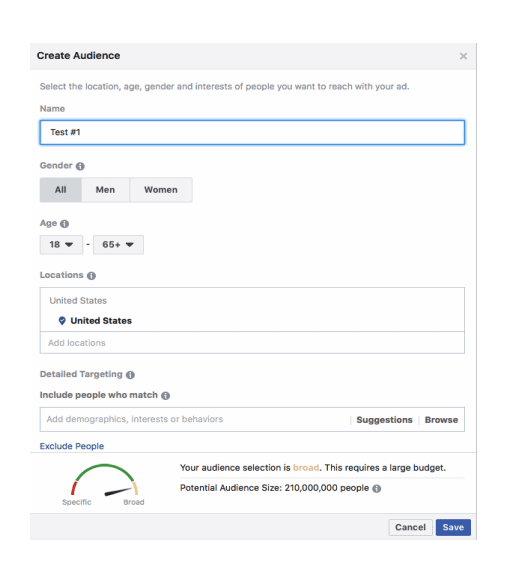
For those of you who are new to audience targeting, follow the steps below to create your ideal audience:

You will first see the audience creation dashboard:

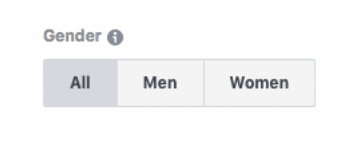
Now it’s time to select a gender- Whatever you do, make sure that the gender you select matches the product or service that you are selling!

How old are the members of your audience?

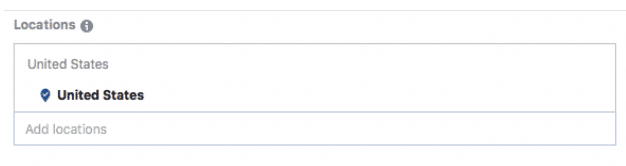
Location, location, location- This is a part of the audience targeting that we constantly see being screwed up. Too many business owners think that the wider the audience, the better their ad will perform, and that’s simply not the case. If you’re are a roofing company in Arizona, why on Earth would you be targeting the entire United States? Think about who you serve and decide what makes sense for you.

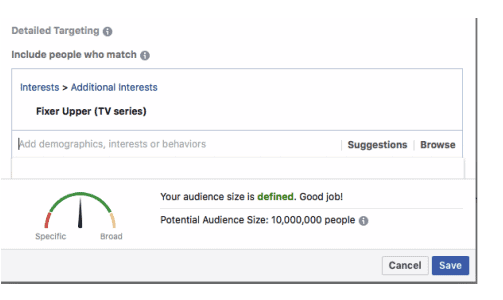
Who is your audience?- If you’re just starting off with Facebook ad campaigns, you’re going to want to use interest-based targeting. Target interests that are related to your business, because these are going to essentially target “warm leads” for your business!

Now, put it all together!

We’ve talked about creating killer content, writing killer copy, and now using accurate audience targeting. It’s important to remember that using just one of these strategies will not produce your most effective ad campaigns. You have to put all of them to use in the same ad campaign, and that is where you are going to see the most significant results in running your Facebook advertising campaigns.

We’d also be happy to talk more with you about how to optimize your current Facebook Ad spend. Just shoot us a note!

Categories
App Development Blog Digital Marketing Downloads Email Marketing Featured News Online Marketing PPC Remote Sales SEO Social Media Social Media Marketing Tips and Tricks Web Design Web Development

Thank You from a VirtualAF CEO

“You’ve got to start with the customer experience and work backwards to the technology.”

As Social Link grows and drives forward with a beta launch of its first software product since the beginning in 2009, it seems like now is a good time to revisit our vision as Jobs brought to light in this video.

The obvious customer? Our business clients. Without them we would not been able grow and learn how to adapt to a variety of industries in 27 states and four countries. They’ve taught us to be disciplined, remain humble, and keep us sharp. For that we thank you!

The not so obvious customer? Our team. They’ve taught me about loyalty, growth, and unity. Without their support and alignment in Social Link’s vision, none of this would be possible. Thank you (current and past) for being the best VirtualAF team I could ask for. Your dedication and commitment is what gets me out of bed in the morning and keeps me up at night.

Social Link is focused on changing the way people work. We look to provide the tools and resources to employees for freedom to do what they love from anywhere there is an internet connection…and to clients for accessibility to their marketing team and business assets whenever needed.

Join us today and try the desktop version of our beta platform at https://app.sociallink.com. Look for it in your mobile app store in just a couple of weeks.

Brady O’Rourke

VirtualAF CEO

Categories
Featured Online Marketing Web Design

Top Three Best Attorney Sites in Nashville

Top Three Best Attorney Sites in Nashville

Did you know that boredom has been shown to make people 144% less attractive? Or that boredom actually caused the sinking of the Titanic? What about boredom being the number one reason the world is running out of pencils at an alarming rate?

Ok, so while those might be completely invented facts, it doesn’t take a whole lot to see that there are few things worse in life than boredom. And in this digital age where it’s harder than ever to grab someone’s attention, being boring can be the kiss of death for anyone trying to convey a message, especially businesses.

Now, this might not be an issue for companies like IDEO or SpaceX, who thrive on being creative and cool. But there are whole industries out there like the legal profession that could be awarded special commendations for their contributions to boredom. When it comes to digital advertising and brand positioning, too many law firms are missing out on attracting new clients. They’ve confused website with textbook and are still using AOL accounts despite the fact that it’s no longer 1995.

It doesn’t have to be this way.

We’ve found five attorneys based right here in Nashville who are nailing their digital presence. Let’s take a look at who they are and why:

  1. Beckett Law Office – this is one of the few law firm websites we’ve found that’s attractive to millennials, which makes perfect sense given they’re entertainment and intellectual property lawyers. They understand that millennials are now the grown-ups and need lawyers too. They’ve included just the right amount of text to inform and not overbear, and the color scheme is a new kind of elegance that appeals to both artists on the stage and executives in the creative suite.
  2. Cordell & Cordell– where a lot of law firms try to generalize and tell you how much law they cover, these guys get points for nailing down not just their area of expertise, but the exact type of client they want to attract. In this case, Cordell & Cordell is representing dads in divorce cases, but really the specialization could be anything. By staking out territory, they’re establishing themselves as the guys to compete with, which helps them extend their message beyond the traditional client referrals.
  3. David Randolph Smith & Associates – we chose this website not just because of its clean and simple layout or easy navigation, but because the content places an emphasis on transparency. The copy is designed so that anybody can understand. The mission statement is clear. These guys know who they are and what they’re about so the messaging is strong.


Law offices don’t have to have to have boring websites. They can implement simple but strong tactics to reach clients with clear and effective messaging and brand positioning that doesn’t compromise their professional image.

If you’re a law office and you want to extend your reach, update your brand messaging, and start getting new business instead of just referrals, give us a call. We can help you create a website that’s inviting, engaging, and fit for the digital age.


Categories
Featured News Sales Tips and Tricks

Blockchain: What it Means for Healthcare Marketing

If there was an award for biggest buzzword, right now it would be given to blockchain. From bitcoin to voting procedures, blockchain promises to revolutionize every industry under the sun. This includes one of the costliest and most important industries that affects everyone – health care.

Let’s get one thing out of the way first, though. Who really understands blockchain? Apart from a few tech geeks, entrepreneurs and finance enthusiasts, the concept is not yet well grasped by the public at large.

Definition: Blockchain is first and foremost a database system that stores information in a way where it cannot be hacked, traced or changed, at least not without considerable effort and difficulty.

Here’s an over-simplified example: right now, if you search for trips to the Bahamas, you’ll suddenly start seeing ads on other, unrelated websites for trips to the Bahamas. That’s because the information was stored in a central location and was shared with a third-party, including the data that traced the information back to you and your search. Clear your browser cookies and cache and it goes away. Blockchain, however, does not store the data in one place, but in multiple, decentralized locations. The data is still accessible to the third party and they can track how it changes over time, but it’s no longer traceable to you and you cannot clear its history of events, but only add new information (or blocks) to the record (or chain).

Although the blockchain data storage system was first used to keep track of cryptocurrency, its supreme capacity for security and reliability means that the future applications extend well beyond its original intended use. Health care is in a position to benefit most of all.

Health Records

Blockchain has the capacity to not only maintain greater accuracy in health care records, but it could also ensure the accuracy of the record is maintain across different healthcare providers. This can be great for those with an extensive and complicated medical history and the need to visits many types of specialists with varying opinions, or with people who need medical care in a foreign country and a language barrier could easily result in a life-threatening misdiagnosis. Although the technology might result in doctors over relying on the existing record or missing new symptoms, the benefits of a completely accurate and accessible medical history far outweigh the risk that may emerge in a small sector of medical providers.

Medical Advancements

One of the greatest advancements in modern healthcare is the ability to pool big data to look for statistical patterns that will contribute to medical advancements. It’s important to remember that this doesn’t just mean cures but extends into existing factors such as which medicines are most likely to be effective given factors such as age, race, sex and preexisting conditions. By pooling the data, the biotech industry will be able to get a clearer sense of which treatments are working, which ones aren’t, and most importantly, why certain patterns in treatment effectiveness have emerged. And it can be done without compromising the privacy of the patient, as the data can be preserved with complete accuracy without being traced back to any single individual.

Financial Tracking

Currently, health care expenditures are so fragmented and vast that each year, providers spend billions of dollars chasing payments, correcting billing errors, or combatting billing fraud. By implementing blockchain in health care financial tracking systems, patients and providers alike will be able to gain a greater sense of trust in the accuracy of their cost of care. This has the ability to build trust whilst reducing financial disputes and the time it takes to correct them. By eliminating the financial complications, the time between doctor and patient can be focused more on the health care itself, and less on whether or not someone might get a second heart attack if they’re the victim of billing error or fraud.

The future of blockchain in the health care industry is speculative, but it could become a reality very soon. One of the greatest hurdles is that most people still associate blockchain with bitcoin and cryptocurrency, but it’s real main benefit is that it establishes a level of trust in information that has never existed before…and therefore a level of trust between the parties that rely on that information that has also never existed before. It’s hard to think of an industry that could benefit from blockchain more than health care. The only question is what will it take for them to adopt the technology?

Categories
Featured News Online Marketing Tips and Tricks

Branding from Within: Why Internal Marketing Matters

Internal Marketing Matters

Before you read this, make a list—go ahead, I’ll wait—of the kinds of people your organization markets its goods or services to. Think about those carefully-crafted buyer personas, all the demographics you work so hard to attract and the needs you strive to satisfy. Who’s included in your target audience?

If your own company’s employees didn’t make that list, it’s time to start rethinking your approach. How can the people behind your organization’s product perform at their best, and hence contribute as much as they can to selling it, if they’re not fully invested in the brand and what it can accomplish? This goes double for employees who talk to your customers every day—how can they sell a message that they don’t believe in?

What is internal marketing?

Internal marketing is based in the idea that every individual an organization employs contributes in some way to its culture, and that culture then filters down into every interaction a potential customer has with the company. Happier, more invested employees make for a more positive, unified, and powerful external representation of the company—which makes for more (and more satisfied) users. Internal marketing means treating the employees who make your product possible as if they’re also consuming it. (Bonus: happier employees mean less turnover, and less money spent on recruitment and training.)

Why bother?

You might assume that the people who work for your organization, who live with it day in and day out and need its sales to stay robust in order to get paid, don’t need convincing as far as the brand’s value is concerned. Unfortunately, it’s all too easy for individual departments to become insular, focusing only on the success of a research project or an IT overhaul, and not on how those things fit into the mission of the company as a whole. And in an environment where every team or department appears to operate in a vacuum, individual employees can grow disillusioned and cynical, feeling as if their contributions—or even the whole organization’s goals and brand—are meaningless.

Let’s say you work at a hospital. The quality of experience that a patient has doesn’t just depend on the care they get from the clinical care staff, but on the workers who serve their meals, change their bedding, and process their insurance. If that hospital’s staff takes the time to create a caring and personalized experience, whether it’s through efficiently handling a patient’s financial paperwork or through taking the time to accommodate specialized dietary needs, those patients are far more likely to maintain brand loyalty. But it takes every hospital employee to make that happen, and getting to that point is where internal marketing comes in. 

Skip the trust falls

Internal marketing isn’t about pulling employees from different departments together for bonding exercises, nor does it mean you have to send out an exhaustive weekly newsletter detailing everyone’s accomplishments. Approach the members of your organization as you would a group of consumers; interview them about their work experience, send them surveys, and get them into focus groups to hear what they have to say.

You’re looking to foster a culture of enthusiasm, creativity, and expertise, as well as brand loyalty. Use what you learn from those surveys and interviews to create a culture that helps everyone who contributes to your company feel respected, valued, and empowered, and to build an organizational vision that they can believe in and support. Once you’ve got an idea of what your campaign needs to address, content made just for employees (like an anthem video, which gives them a cause to rally around and focus on) is the first step towards rolling out a successful internal marketing campaign.

Some more tips: invite discussion and constructive criticism of your company’s inner workings, make professional development opportunities widely available, and ensure that everyone understands the direction the organization is headed in. Bring key employees into the discovery process, so they have a tangible role in researching your clients’ marketing strategies, business goals, and operations, so when they work with clients they’ll be implementing strategies they helped to make. Above all, the goal of an internal marketing strategy is to establish an emotional connection and personal relationship with your brand and what it has to offer, just as you would with a potential customer.

Feeling stuck? Not sure how your company’s anthem starts? Our team of experts is here to help with all your internal marketing needs.

Categories
Blog Digital Marketing Featured News Online Marketing Sales Tips and Tricks

If You Want A Following, Lead: Why Copying the Competition Doesn’t Work

Do what you do best

Your biggest competitor just rolled out a new social-media campaign, and it looks like it’s drawing in a ton of visitors. Or maybe they’ve redesigned their website, so everything about it is bright and shiny (especially the conversion rates it’s getting). Meanwhile, your company seems to be stuck in stasis, plying a strategy that just isn’t achieving the success that the competition has.

It can be very tempting to decide that the way to get similar results for your own organization is to copy what’s worked for someone else, and change your whole marketing approach in order to keep up. But this strategy only looks appealing—and, at the end of the day, it’ll do your brand more harm than good.

Your rivals don’t know everything

In all probability, your competition has no idea why their approach is bringing in better results. Let’s say they’ve redesigned some of their landing pages, and are getting higher conversion rates out of the new look. Most likely, they haven’t done much testing or data gathering to figure out why that is the case, and that alluring new layout was dreamed up in the first place either by a committee of opinionated employees who didn’t look deeply into the data or by a web designer who was pressed for time and made something based on their own opinions about what’s functional and what looks pretty on a screen. 

Often, your competition has cribbed their marketing or design moves from one of their competitors, who also probably don’t know why a particular tool or strategy works the way it does. And the last thing you want is for your own online presence to come across as a third- or even fourth-hand imitation.

You’re not a magic 8-ball

Unlike that astute device, you don’t know all, see all. You have no way of knowing what’s going on behind the scenes at a competing organization; what looks to you like a fantastically successful campaign may not actually be going so well for the people running it. External stuff like site layout or social media advertising tells you nothing about the internal workings of your competitor’s strategy, so don’t assume that something is great just because it looks snazzy.

Your brand gets lost in the shuffle

Even if they’ve done consistent A/B testing and figured out what’s making their marketing campaign tick, and even if things are running as smoothly under the hood as they appear from the outside, what works for your competition won’t necessarily work for you. You’re in this business because you believe your brand has something unique and valuable to offer, right? So why would you compromise on that vision in the very places where potential consumers encounter it for the first time?

Imagine that you work for a company that makes bath products—body washes, bath bombs, etc.—and you’re trying to build a following on Instagram and Twitter. Your biggest competitor has recently started racking up more followers seemingly by the minute, by making image-heavy satirical posts that reference current events and make jokes about “keeping it clean.”

Before you start writing copy like you’re submitting to the New Yorker cartoon caption contest, check in with your brand’s innate personality, values, and marketing goals. Maybe funny doesn’t work for you, or maybe you’ve committed to an image centered on providing a product that transcends its era. Long after your competition’s humorous reference points have faded into yesterday’s news cycle, your company will still be making classic bubble bath, not just for an age but for all time.

Lead the way

It’s easy to forget about your brand’s unique strengths and goals in the rush to get the results the competition’s getting by doing what they’re doing. But that kind of copying means that you’ll miss out on the chance to be an innovator in your field. Your organization is better-off, in the short and in the long term, with a marketing plan tailored to its own goals, and designed to help them lead. Every brand is different—so why should you settle for a campaign like everyone else’s?

Need a marketing plan that’s tailored to your brand’s goals, but not sure how to get started? SocialLink’s virtual marketing department has you covered.

Categories
Digital Marketing Featured News Online Marketing Tips and Tricks

They’ve Got the Bucks, You’ve Got the Brilliance: How to Level the Playing Field

Leveling the Playing Field

You’re starting out in an industry dominated by companies bigger than yours, with marketing budgets way beyond what you can dream of. You know your brand has something special to offer, but you don’t know how to get word about your product to its potential consumers without breaking the bank.

Inbound marketing, which allows you to compete with major players in your field without spending the kind of money those organizations command, can make it happen.

Effective doesn’t mean expensive

As numerous recent studies have indicated, social media advertising is one of the most effective ways to reach a potential customer base. Users are generally more open to advertisements in a social context, when they’re thinking more about how cute the pictures of their niece’s new baby are than how companies like yours are out to reach their eyeballs.

Not to mention that, with inbound marketing strategies, you’re creating content that gives users value and builds awareness of your brand without being a direct sales pitch—and, as users who enjoy that content share it organically, you get free advertising.

Best of all? Advertising on social media is the cheapest strategy going.

Size doesn’t (always) matter

Inbound marketing also allows you to target highly specific audiences. Instead of taking out a billboard that might be seen by 1,000 people in a day, to only 80 of whom its message is actually relevant, Facebook’s advertising tools will allow you to make sure that the only people who see your ad are the people who might be interested in your product—and you can narrow the field by using a huge range of factors, including not just age and income demographics but also recent life events (i.e. a move, an engagement, a medical issue) and demonstrated interests (such as artisanal jams, medieval music, or deep-sea fishing). So your campaign doesn’t have to be huge—it just has to be specific.

And the principle of specific reach over broad-spectrum advertising applies to your company’s website, too. You don’t have to get a team of developers to build you a lead-generating machine from scratch; you can get professional-level lead ecommerce and lead generation sites by using WordPress and similar platforms. It’s all about knowing what tools to use, what kinds of user behavior to measure, and what to tweak once you’ve got that data.

The magic word: Value

One of the fundamental principles of inbound marketing holds that you’re more likely to get customers (and keep them) if you’re providing them with some kind of valuable content, in addition to the actual product you have on offer. You’re trying to carve out a niche with a unique offering and build a loyal following, not drown out the message your major (i.e. generously-funded) competitors are sending.

Focus on what you have to offer, and how you can communicate that offer most effectively. Big companies dominate, but emerging companies earn loyalty—and loyalty is the very thing inbound marketing is designed to help you cultivate. If you can use its techniques and principles to find people who think like you and offer them content and goods or services of value, you’ll be leveraging exactly the tools you need to compete with the best and biggest organizations in your field.

Not sure what inbound marketing is, or how to put its magic to use? Your virtual marketing department at Social Link can fix that.

Categories
Blog Featured News Online Marketing PPC Social Media Marketing

Do our devices show mobile ads based on our conversations?

Does Social Advertising Pop Up After A Conversation? Here’s Why.

Have you ever experienced a case where you talk about a certain product and the next thing you see online is an advert for the exact product? Many people have. The advancement in technology has brought diverse approaches to marketing. Targeted and user-generated advertising is one of such approaches although it has been around for a while. There are a lot of concerns that people should be careful with whatever they do online including signing the “Never-ending Terms and Conditions” which in most of the cases, nobody reads fully, and only rushes to click the “Accept” button. This article covers a comprehensive discussion on how social ads pop after people’s conversion, as well as the reason for such occurrences.

Digital marketing has brought new marketing approaches

It is an undeniable fact that the digital age is the cause of the new changes experienced in the way business market their services and products. A lot of advancement is notable in the manner in which advertising is carried out nowadays. Nevertheless, it is no doubt that online advertisements and the general approach to marketing have become so specific in comparison to the usual ads that you are used to seeing, which apparently, depending on your Google searches. There are many advertisements, which you will come across that have a close relation to the things that you have not searched online, any other time, but most likely, things you have had a conversation about. Such cases are common among users of the common social media platforms such as Facebook and Instagram. The only natural question when one sees adverts on things they have been talking about on phone is whether social media platforms are listening to their conversations.

Is social media targeted advertising based on our conversations?

With the seemingly endless social media platforms as well as the available customization options, the social advertisement is becoming a common way for brands to create awareness of their products and services. Such advertising approach is incredible profitable but requires the input of social media marketing experts to bring out the necessary aspects of social media ads for it to make the necessary impact as far as achieving the goals and objectives of a business is concerned. Nevertheless, the concerns about targeted advertising are becoming common. Why do the ads pop up after a conversation about the given product or service? Probably, there are several reasons to account for such events but the most plausible ones are two –one, the possibility that companies are eavesdropping on conversations that people make through mobile microphones, or two, there are sophisticated algorithms in use.

Do you think about the information you leave online?

The online space is full of all sorts of people and machines. Some machines are data-hungry and in spite of this, we keep feeding them with sensitive information without being cautious of what happens when we are logged out of the online platforms. Some of the machines have tracking capability and troll on you and the information you feed them. The increased use of tracking applications such as the GPS and other apps is to blame for some of these leakages. Did you know that your phone could keep a track of your location and conversation details? The information that you manually input on the devices you use everyday can be a significant way to which companies can track what you really need next. The devices we use every day know much about our daily patterns.

For the past years, there have been cases of reports on social media platforms being suspect to spy and listen to people’s conversations via microphones installed on mobile phones. While such actions are at times done for good reasons, the challenge comes in when we do not know the percentage of such information shared with the world. Specifically, how do these companies learn about our conversations?

  • They obtain information through our phone’s microphones

The first assumption is that the companies sending out targeted ads learn of our conversations is that they are listening to people’s conversations through the phone’s microphones. In spite of this, Facebook and Google have, in the past rejected the clams that they use our phone’s microphones to listen to our conversations and later created targeted ads. Nevertheless, the rejection of such claims is not an assurance that it does not happen. According to a report by Terra Ferma Media, Google listens and records all the conversations for people with android phones. Perhaps, the same is happening to Apple users. In 2016, Facebook issued a statement to deny the allegations that it does not listen to people’s conversations to create newsfeed or targeted ads. Considering the fact that Google owns Google Maps and YouTube, while Facebook owns Instagram and WhatsApp, it is no doubt that these two companies have many details about the users of any of these social media platforms. If need be, they can use such information for their own benefit.

  • The use of clever algorithms

All social media platforms are based on algorithms. For example, Twitter is known to run on a fast algorithm, which shows trending issues depending on several rules such as the number of people engaging the conversations about certain topics. The same concept of the algorithm might be in play in the other social media platforms such as Facebook, YouTube, etc. Have you seen a case where Facebook classifies your friends depending on how close they are? In such a case, it bases such categorization on the interactions you have with your friends on Facebook. Perhaps, you have a close way of thinking with your friends, which implies that you and your friends will tend to have interest in similar topics, events, etc. The assumption here is that, whatever topics your friends are hiding, liking, reading, or searching, and making follow ups, could be of similar interests to you, and hence Facebook and other related social media will show you such ads related to your close friends’ searches. This is how clear social targeted advertising works.

On the other hand, it is not possible to overlook the wealth of information companies advertising through social media have regarding their target audience. With such information, it is possible for these companies to do selective adverts depending on people’s interests, their gender, location, etc. Undoubtedly, such are the approaches that companies are using to make targeted advertisement on social media platforms.

  • Cookies and remarketing

Even though, there is no doubt about that targeted advertising on social media is a product of either company eavesdropping on conversations, or the use of cleaver algorithms, it is important to be aware of how cookies and remarketing works. A cookie describes a small code that any website you visit asks you to leave and leaks information to the owner of the website on the pages that you visit. For example, if you are a constant user of Amazon, you will notice that some products you clicked will start being advertised on your social media platforms. The cookie application reminds the website the products that you were searching and hence, you are shown them regularly. As such, the combination of the use of cookies and remarketing can be considered an effective way why you see products on social media sites that you might have searched for them elsewhere such as on Amazon. Irrespective of the time you searched for a given product on Amazon, it will at one time advertise that product and similar others to you in your lifetime.

So, what conclusion can we have? Google and Facebook, the two internet giants have denied their involvement in social media targeted adverts, but it is still hard to believe it. On the part of the use of a clever algorithm, there are a few aspects that make the highest contribution. First, there is a possibility that the sophisticated algorithms that the majority of the social media companies use can collect data from people’s close groups and use it to predict one’s preference. Secondly, companies that advertise on social media platforms have a wealth of data on social media users, enough to make targeted advertisements based on certain characteristics. Thirdly, it is likely that social media platforms store data regarding the habits of the users and use it to make customized adverts. Despite the fact that it might be hard to come to a comprehensive answer about why social media ads pop after conversations, it suffices that the combination of the above three factors plays a significant role in targeted social ads. While, Google and Facebook might have denied their involvement in listening to our conversations, it is not like they would shout that they are really doing it to make their advertisement. So what can we do? We are not going to stop talking or avoid searching information and products online but be cautious. After all, there is no harm in getting targeted ads. The only harm is the thought of your information being used in the wrong way. It is important, though, to be careful about the sites you leave your sensitive data with.

Categories
Blog Digital Marketing Email Marketing Featured News Online Marketing PPC Remote Sales SEO Social Media Social Media Marketing

8 Reasons To Hire A Virtual Marketing Agency

Running business operations requires much effort and time. It could leave you exhausted and at times, you end up with little or no enthusiasm. To avoid burning out just when you badly need results, you need to outsource some of the critical functions. Presently, everyone has embraced digital technology, and if your entity is not in line, you may end up lagging behind in your line of business. However, computer-driven media does not necessarily mean ditching the old platforms such as print media. Nonetheless, marketing can take many forms, but it is the digital ones that have a high potential for results.

How virtual agencies work

As the name suggests, virtual marketing agencies do not operate from a brick and mortar office. Every professional hired by the entity works remotely, but they are all interconnected online. If one has got internet linked via back office software, the workflow does not get interrupted. However, from time to time, the team needs to, and they do indeed meet up to map out their clients’ strategies. Their meeting place can be anywhere from your boardroom to a coffee break at an eatery.

Remain relevant

Whether you have any marketing background or not, you don’t need to be told that you must carry out intensive industry research. Launching a campaign of any magnitude without studying consumer behavior can have a severe backlash. You must understand the industry. Take for instance the print magazine that people used to love. Most of them have now stopped publishing hard copies and have moved their publications online. If you are in this sector, it would be detrimental to continue churning out volumes of papers and taking them to newsstands. Few people will buy them, but there are millions of readers online. Marketing agencies know about these developments and can guide you on the right strategies to adopt.

Does this leave you feeling scared of losing out in the competition? If so, there are compelling reasons for you to hire a virtual marketing agency.


You tap into the endless creativity

Virtual marketers can be a weird lot. If you have never met them, you should walk into their offices one day. They are the type of guys that come to work dressed in rugged jeans and t-shirts. You hardly see creatives adorning in suits and ties. However, you should not mistake this for a fun club since these are some of the most talented people you could ever meet. Their diversity regarding education and work experience makes them the go-to persons. Furthermore, their technological know-how and innovation in solving problems are second to none. Their teams come fully equipped with:

  • Creative directors
  • Skilled graphic designers
  • Copywriters
  • Media buyers
  • Media planners
  • Office assistants


Competitor evaluation

Virtual marketing agencies have an in-depth knowledge of the market where businesses operate. They know the approaches that work as well as those that do not. Following an intensive interaction with different clients, they can quickly adopt strategies that can easily turn around your fortunes. Take for instance campaigns that target millennials. Placing print ads for such a group might result in their getting ignored. However, buying media on online social platforms will get the attention of these youngsters. Only an outsourced agency can evaluate and know this. The marketers will:

  • Help identify where your target audience hangs out
  • Determine the most appealing content
  • Streamline your campaigns on social media
  • They research on keywords, analytics and search management


No staffing headaches

To succeed in your marketing efforts, you must be consistent. An employee who suddenly falls ill when you are running a crucial campaign can ruin everything. That person who takes leave of absence for unavoidable circumstances could be the best that you have. For example, he or she might be the only one who understands how to curate content and optimize blogs. Besides, the timing of their leave could coincide with an important festive season when you had hoped to cash in on consumer spending. With a marketing agency, such worries do not exist.

  • No need to carry out recruitment, the agency hires its team
  • Agencies have their way of dealing with staffing issues
  • If one of their employees falls sick or goes on leave, that becomes none of your concerns
  • With a virtual agency by your side, none of the matters affecting employees can bring your campaigns to a halt. You expect them to deliver come rain or shine


Data analysis, monitoring and research

Following the emergence of internet platforms, there is a high potential for gathering data and analyzing it to your advantage. An in-house team may not be of much help here. However, digital marketing agencies go out of their way to study and gather market information. They finance or procure data on consumer behavior. Out of the results, they identify trends that help in understanding why people opt for product B as compared to C or the other way around. With such feedback, virtual marketing agencies, can restructure your web content and ensure that prospective clients visit and engage your company by buying your product or service.

  • All you need is develop key performance indicators and share them with the marketers
  • They then figure out performance against your measures
  • Agencies identify metrics that they can monitor in different channels
  • They provide you with reports on a monthly, bi-monthly or quarterly basis


No training needed

Agencies come fully equipped with a team of content writers, web developers, marketers, media monitors, graphic designers, SEO professionals, you name it. If you were to hire all these yourself, it could end up being a huge gamble or counterproductive. Moreover, such people may take time to fit into your organization’s culture. This is not the case with an outsourced marketing agency. They come fully loaded with a skilled team that is passionate about what they do. You do not need to take them for seminars or hire people to train them. On the contrary, they are always ready and raring to go; all you need is to give them a little shove by way of a briefing.

  • You save money that could have gone to staff training
  • The company saves time that could have gone towards arranging for seminars
  • There is no need to invest in software


The aspect of an outside perspective

Employees working inside an organization may not have a wide knowledge of what goes on outside. On the other hand, someone could be having brilliant ideas but holds them for fear of making his or her bosses look bad. Marketing agencies consist of people who brainstorm consistently and come up with solutions on how best to achieve results. They approach your problems from the outside view; a consumer’s eye. It might be difficult for you to ‘step out’ of your organization for a while and look at it from the other side. Virtual marketers are your best bet.

  • You eliminate bias and promote out-of-the-box thinking
  • People no longer remain frozen in the notion that they can keep doing things the same way as before
  • An outsider sees things differently since they do not know you or any of your employees


Helps you focus your energy where needed

Running successful online marketing campaigns requires hiring an experienced and deeply motivated team. Plus, you need to re-focus your attention towards ensuring that the new hires understand what you do on a day-to-day basis. All this takes time and you could spend much money on in-house training. Your efforts could result in strained resources and reduced profits. Why not let a virtual agency take the burden? The resources you could have spent can go a long way towards growing other aspects of your business. With an outsourced marketer, you only must appraise them on your needs, objectives and timelines. You need not train or manage anyone.

  • Running a business requires your commitment, time, and energy
  • Agencies have all the time to run marketing aspects on your behalf since that is their area of specialization.
  • They take time to understand your business and deploy measures for the right marketing tactics


Reduces costs significantly

When faced with the prospect of outsourcing or grooming an in-house team, many organizations make comparisons and opt for the latter. However, you eventually realize that a virtual agency is less costly. Do you know why? Part of the reason is that these agencies do not have physical offices. Their employees work from home most of the time. They can even meet at a coffee house and develop a strategy in no time. As a result, they charge you a retainer or commission that is much lower than what you would have paid your internal team. Another cost aspect is that you need not subscribe to marketing tools available online. Most agencies already have them.

  • Virtual agents do not have to work from an office
  • They pay no rent for use of premises
  • No need for them to buy furniture or office equipment
  • Every team member works from the comfort of their home or wherever they feel most productive
  • Part of their cost comes from internet subscriptions or online coordination tools
  • They pass these benefits over to their clients through reduced fees


In a nutshell

Many companies prefer to hire in-house marketers, and with good reasons. Part of this stems from the fact that insiders know the brand better than others. Besides, they live, breath and eat the organization’s culture which makes it hard for outsiders to match these aspects. However, having an external point of view helps expand your vision. The level of expertise found in virtual marketers is unmatchable. These are people drawn from the best pool of professionals in the industry. They bring with them unrestricted passion and the desire for results.

At the same time, outsourced agencies are more in touch with reality. They view your business from an outsider’s point of view and with no bias. Ordinarily, your in-house team may feel constrained by the fear of making you feel disappointed. Also, every so often, an employee will fall sick or take leave, and you cannot deny them this. It will be a massive setback if the person who goes away is the one you highly depend on to drive the advertising strategy.

Agencies have their unique way of procuring data from their peers or carrying out their research. They use an array of tools that would be expensive if you were doing it alone. Fortunately, they can leverage this by offering you up to date statistics that are measured and found to work. Hiring your team also means that you must take them through training and induction. Virtual marketers need none of this as they come fully equipped and only need a briefing on your expectations.

Running a business requires focus with no room for distraction. In-house marketers can divert your attention, and by the time you come around, you will have lost much ground to competitors. Agencies take and bear the burden for you. Someone else receives the beating and fights to get you ahead. In the meantime, you are more than happy to concentrate on your area of specialization. You only begin to see results trickling in as if by magic.

Every organization worries about cost minimization versus revenue maximization. Here, a virtual marketing agency is your best bet. Outsourcing your marketing work can significantly reduce your running costs. Since these professionals save money by way of not having a physical office, they pass these benefits to your company.

Lastly, by their position in the market, virtual agencies are more in touch with reality than you. They keep up with the current trends and are also on the lookout for emerging ones. Reputable agencies will tell you what strategies can work well in the present. They bring new perspectives into things you were doing before but yielding little or no results. They can determine where to find your audience and target it correctly. In the end, your brand remains relevant.

Categories
Digital Marketing Email Marketing Featured News Online Marketing PPC SEO Social Media Tips and Tricks

Nashville HubSpot Partners: Hire A Virtual Inbound Marketing Agency

As technology changes, so does the efficiency in the approach that many businesses use to attract and engage with their clients. In the past, the only way to attract as well as engage with customers was using sign hanged in strategic places where passers-by would see it. If one customer was satisfied with the results and services, they would recommend their friends and family members, and that is how businesses survived before the technology era. However, a lot has changed following the introduction of the digital era; nowadays, a sign in front of your office or store is not going to attract customers to you. Your online presence can play a significant role in breaking or making your business.

With better inbound marketing strategies, you can grow your online presence tremendously. What is inbound marketing? Inbound is the practice of using social media, SEO, events, blogs, and content marketing among others to pull marketing, create awareness of  a certain brand, as well as attract new clients. It differs from outbound marketing in that in the case of outbound marketing, the marketers are the one who looks for new business, while in inbound marketing customers are attracted to your business by having solutions to the problems they are experiencing. Nowadays, inbound marketing has become a significant aspect of any business’s success, which makes hiring a virtual inbound marketing agency an important decision for any organization –small or large.

Factors to consider when hiring a HubSpot partner agency

During the initial periods following the launch of the HubSpot partner program, finding a partner agency with the necessary qualification was challenging for customers. The fact that the number of certified partner agencies was low implies that there were only a few options to way when choosing which agency to hire. Things have changed as there are numerous agencies to choose who have diverse qualifications. Nevertheless, such a change has seen the growth of the partnership program including the incorporation of great inbound marketing agencies which bring in the need to be more considerate when choosing the agency to hire.

Here are a few factors to consider when hiring a Hubspot partner:

HubSpot and Inbound Expertise: Does the agency have any certifications from HubSpot? Agencies certified by HubSpot have the appropriate level of training to assure you exceptional inbound marketing services. Are there any accomplishments the agency has as a partner of HubSpot? In addition, how can you rate their inbound marketing knowledge? The best agency to hire for inbound marketing should have a full commitment to inbound as the core focus of their services.

Capabilities: One of the first things that you should consider when considering the services of an inbound marketing agency is your goals and objectives. The capability of the agency to achieve your marketing goals and objectives is what should drive your decision to hire any agency. What is the agency able to achieve? Depending on your marketing needs, you can consider an agency specializing in planning and research, SEO analysis and execution, ability to plan and develop content, designing and developing websites, etc.

The team: It is important that you have clear information about the team you will be working with after you hire any agency. Meeting the team beforehand gives you the option of evaluating their suitability for your needs. Do they have the necessary experience and expertise –how are their resumes? It is advisable that you evaluate the experience and skills of the individuals prior to engaging any agency since to avoid tasking the wrong team.

Agency’s business processes: Each inbound marketing agency seems to have diverse approaches to marketing. In most of the cases, marketing agencies work hard to improve their processes to ensure efficiency in serving their customers. Nevertheless, not every business process you will be introduced to has gone through the necessary vetting. As such, it is important to interrogate the agency’s processes to be sure that they have the ability to support the services you are looking for. The best agency for your needs should have the ability and experience dealing with clients with needs like yours.

Relevant success: The best way to evaluate an agency’s capability is to review their past work –does it have a track record of success? Look at any case studies the agency has and review whether the services they offered and the results align with what you want. Do not be convinced by just looking at one case study –you need a lot from a marketing agency and their ability to deliver should be reflected in their success stories.

Technologies and tools: The tools and technologies that any marketing agency uses are an important factor to consider when choosing the suitability of an agency for your needs. You need to evaluate such tools against their ability to help you achieve your marketing goals and objectives. For example, an agency that uses the HubSpot software stands a better chance to provide inbound marketing services in comparison to another that does not. The reason for this is that HubSpot integrates different marketing tools for effective management of all online marketing campaigns.

Benefits of hiring Hubspot certified virtual inbound marketing agency

Now that you have a glimpse of what it takes to hire the best inbound marketing agency, what benefits should you expect from a HubSpot certified virtual inbound marketing agency?

Cost savings: Maintaining an in-house team of employees is expensive. You have a lot of overhead costs to take care of, as opposed to engaging a virtual marketing agency.

Diversity of expertise: A virtual inbound marketing agency brings in a team of experts in different aspects of marketing. Such diversity is an added advantage when it comes to the management of different marketing tasks such as social media, SEO, blogging, web design, etc,.

Cutting edge technologies and tools: HubSpot is an integrated software that offers different tools and applications for the management of diverse marketing campaigns and needs.

Inbound marketing has become a relevant marketing strategy in the phase of the increasing competition. It helps businesses create content that aims at solving certain problems faced by customers. If done appropriately, inbound marketing stands a better chance of improving businesses’ ROI. Hiring a Nashville HubSpot certified partner gives you a better platform to boost your sales. However, it is important to take time to review and evaluate the available agencies before hiring any.

Categories
Blog Featured News Sales Tips and Tricks

A Beautiful Relationship: Why Selling the Product Is Only The Beginning

Advertising in the Mad Men era was all about building brand loyalty based on who you wanted to be. This car made you look confident; that TV dinner made you feel like a better parent; this suit made you feel successful. Those days, fun as they often were, are gone. Today’s customers are better informed, aware of their value, wise to the tricks. They may not even think of themselves as customers: they’re loyalists, believers, devotees. These pivotal customers don’t want products to show them who they want to be. They’re looking for brands that resonate with who they are.

This new purpose-driven relationship between customer and brand provides a challenge that inbound marketing is uniquely designed to serve. In place of seduction, it offers authenticity. Rather than attempting to allure, it seeks to persuade. Above all, it’s based on making your brand a trusted source of information and value that the customer can consciously embrace.

Dove’s Real Beauty campaign is a perfect example of this new approach to brand loyalty. It started ten years ago, not merely as a campaign but a movement that empowered women to define beauty for themselves. Soap and body wash were no longer just products to sell. The became fuel for a story that many women were able to share for the first time in their lives. Today, Dove is the only major beauty company on the market that has been able to change the way society talks about female beauty. In turn, women viewed Dove not so much as a company, but as a trusted authority and advocate.

Recently, Sprint has undergone a major rebranding. Historically, they’ve struggled in the shadows of Verizon’s superior coverage and T-Mobile’s cheaper plans. Yet instead of going after the competition, they repositioned themselves as the phone company for millenials. Their #LiveUnlimited campaign capitalized on growing online communities through social media, leading to key partnerships with influencers like Lele Pons and superstar Jay-Z. The objective was to create a network of support for authentic products that millennials love. In so doing, Sprint was able to provide incentives for their target group to buy in. The product was now a means to continue the fun.

These campaigns succeeded because they were so much more than campaigns. Their real strength wasn’t in the advertising, but rather in the unique social content that supported them—invitations to learn more, participate, and personalize their experience. This is the unique strength of inbound marketing.

Although it defies conventional wisdom, these purpose-driven campaigns succeed precisely because they make the relationship more important than the product. Real Beauty doesn’t sell Dove soap, it advocates for women, and in so doing it attracts loyalty from millions of women who will choose their products first. In the same way, TOMS Shoes—which donates one pair of shoes to the homeless for every purchase—isn’t appealing just to the consumer’s desire for better shoes, but for their desire to feel good about buying them. Every purchase deepens the customer’s own commitment to doing the right thing.

We at Social Link are great believers in the power of data-driven brand storytelling. We seek to understand not only what the product is, but what it means—or could mean—to purpose-driven consumers. If this is a challenge we can help solve for you, let’s talk and start telling your story today.

Categories
Blog Featured Online Marketing

Inbound Marketing Skills to Master | Social Link Marketing

Inbound Marketing Skills You Need to Master

Technology and social media has influenced not only how people interact with one another, but also how customers interact with businesses. Today’s customers do independent research, use search engines, and read up on products before they make first contact with a sales representative.

As digital marketing continues to evolve, here are some tools to help generate leads and turn leads into sales.

Create Content Your Buyer Persona Wants to Share

Shares on social media (such as Facebook and LinkedIn) are free advertising that’s boosted with the credibility of a personal recommendation. People are more likely to trust a link from a friend or coworker than a random headline. In theory, that seems pretty straightforward. But getting that recommendation is harder than it looks.

Social media is about social proof. Users don’t recommend content because of what it says or shows: they share it because of what it says about them. That LinkedIn contact who’s always posting articles from the Harvard Business Review? She’s trying to look like a smart hire. Your friend who shares cool tech product videos on Facebook? He’s making not-too-subtle hints about what he wants for Christmas. When you’re creating content, don’t just ask, “What does my target user get out of watching/reading this?” Ask, “What does he or she get out of sharing it?”

Meet Buyers At Every Step of tTheir Journey

Because so much of the sales process has shifted off of the shoulders of dedicated sales teams and onto the actions of independent buyers, your company needs to find a means to meet potential customers at various points along the way. A concise and clever blog post can make a customer aware of your services. A video tutorial might show them how your services can solve their problems, and an online questionnaire can help them decide what specific service or product fits their needs best.

Keep the Conversation Growing

Don’t assume the journey’s ended when they reach the site—it’s barely begun. The job of your site isn’t always to make a sale. On its face, a sale is simply a transaction. If you’re successful in capturing leads, then you have the opportunity to create a conversation (through drip email campaigns) that can lead to many sales over time.

Stand Out In the Search

The rules of Search Engine Optimization (SEO) are forever changing, but one thing doesn’t change—most companies are found through search, and customers won’t find you if you’re not close to the top of the rankings. Tools such as Google Analytics help you discover where your business already stands out in online searches. Avoid short, generic words when tagging your content in favor of long-tail keywords or phrases that add context to your product. Put yourself in the shoes of your Buyer Persona and mimic their language.

Make Smart Advertising Decisions

Pay-per-click advertising is exactly what it says: you pay only for the clicks you get, which means every penny you spend is guaranteed to result in a site visit.

Social advertising has come a long way. Pay-per-click ads on Facebook, Instagram, Twitter, and LinkedIn are a low-cost, highly effective way to reach consumers with sophisticated targeting (by region, demographics, and interests). Because it’s promoted content, social advertising is less likely to be viewed as invasive. Even better, various platforms offer some interesting marketing tools. For example, Facebook Business now allows you to target lookalike audiences—targeting your ads to the same demos that are already just like your current customers.

Document Your Content Strategy

Tie all of these marketing tools together in a Documented Content Strategy. Be intentional about what content you create, who it appeals to, how it can be shared, and at what step in the buyer’s journey is it most useful. Perhaps you are marketing towards multiple buyer personas. The purpose and format of your content may vary, but still needs to tie into a unified marketing message. Diversity is necessary in inbound marketing, but it can only be effectively achieved when planned, balanced, and documented. If this is something we can help you with, let’s talk—it’s what we do, in 2018 and always.

Categories
Digital Marketing Featured News Online Marketing PPC Social Media Social Media Marketing Tips and Tricks Web Design

Nashville-America’s Next Creative Boomtown

Nashville: America’s Next Creative Boomtown

When you work remotely, you can work anywhere that suits you… and one city that suits us fine is Nashville, Tennessee, where Social Link Marketing keeps watch on our teams, strategy, and accounts. You know it as the home of hot chicken, hot records, and hot summers. But it’s also one of the nation’s hottest opportunities for creative capital and tech investment. It’s not just that we like the music (okay, we love the music). We happen to think that Nashville’s seriously happening. Here’s a few reasons to come visit us and see why.

100 People a Day Can’t Be Wrong

Nashville metro saw a 36,667 population increase in 2016. We’re talking net gain. That puts the Music City’s 2% annual growth in the same league as Charlotte (2%), Denver (1.6%), and Atlanta (1.6%).

Investors Love Us

According to CityLab, Nashville ranked No. 22 in the nation for venture capital deals in 2017 and made No. 7 on the Milken Institute’s list for growth in employment opportunities, wages, and technology. Three startup accelerators make their home here. Considering that the rent in San Francisco is 150% higher, we think Nashville’s a better bet for businesses looking to expand.

Smart and Diverse

Forbes ranked Nashville No. 3 in its review of “The Next Biggest Boom Towns in The U.S.” on a number of factors: low housing prices, pro-business environment, rapid growth in educated migrants, and an increasingly diverse population. All of this is great news for tech industries.

Creative Communities

Tech is coming to Nashville, but the creatives were always here. Put them together and we’ll make some magic. Nashville is home to art, theatre, high-fashion design, artisanal food, handcrafted musical instruments, and a thriving community outreach. We know this for a fact—we’ve helped a lot of these businesses build sales close to home and far away.

It’s Sacred Ground

We’re not just talking about the Parthenon replica in Centennial Park, although that’s pretty awesome. The Ryman Auditorium (the “Mother Church” of country music), RCA’s historic Studio B, The Bluebird Cafe, and international songwriting festivals make Nashville a music lover’s Holy Land.

We’ll Feed You

Our food events are more fun (Hot Chicken Festival, anyone?), east side restaurants are taking off, we’re home to multiple craft breweries, and we’ll stake our food trucks against Austin’s any day. And speaking of those guys…

The Next What?

We love Austin, too—but can they claim the best bathroom in America or a forty-foot statue of Athena? Not to mention that WalletHub named us No. 1 for women-owned businesses (Austin’s hating life at No. 72). Maybe that does make Nashville the next Austin… we prefer to think of Austin as the previous us.

Nashville is just one of many great cities where we’re helping clients build business. Wherever you are, we’ll put your virtual marketing department to work for you. Get in touch and let’s get started!

Categories
Featured News Online Marketing Social Media Marketing Uncategorized Web Development

How Facial Recognition and iPhone X Changes Marketing

How iPhone X’s Facial Recognition Will (and Won’t) Change Marketing

The iPhone X is (almost) here. And it’s got smoother bezels! And a nicer camera! And it retails for approximately $400 more than your iPhone 8. And if you’re not sure how you feel about that…

Well, the iPhone X will soon know exactly how you feel about that.

Most of the discussion about iPhone X has rightly focused on its Face ID feature, a facial recognition system that authenticates multiple images of your face to unlock the device and authorize payments. Just as Touch ID captures your fingerprint from various angles, Face ID captures and compares multiple images of your face, relying on its sophisticated TrueDepth camera system to provide a level of detail previously unseen in camera phones. The feature is programmed to watch and learn how your face changes over time. According to Apple, you can wear glasses, put on makeup, or grow a beard. Face ID will know you anywhere.

Many security and privacy issues have yet to be resolved. However, the device’s ability to read, store, and learn from subtle facial expressions, combined with Apple’s massive install base, makes the iPhone X the key to building the world’s largest database of human emotions. Depending on how (or if) Apple plans to distribute that data, this single feature could revolutionize how brands market to consumers on their phones. For example…

#1: Say Goodbye to Liking Things

Facebook’s Like Button is unquestionably its most powerful brand asset. It has revolutionized how we measure engagement and social currency. And if the iPhone X takes off, it is about to become a dinosaur.

The Like button is popular but imprecise. Did you like this video a lot more, or only slightly more, than the last one you liked? Were there any parts you liked more than others? And by the way, what do you mean by “like”? It was this need for greater precision that led Facebook to introduce its successful lineup of six reactions… but even that cannot possibly compare to the breadth and depth of facial responses that Face ID is able to capture and interpret. Advertisers will be able to see precisely how consumers are reacting to ad content, in real time, requiring absolutely no action on the user’s part.

#2: Say Hello To Your Branded Self

One of the iPhone X’s more lighthearted innovations, Animoji uses your voice and facial expressions to create animated emoji loops you can send as messages. Beyond the fun of seeing how you’d look as a poop emoji, this technology will create massive opportunities for brands, particularly in the realm of entertainment. Imagine being able to create emotionally expressive videos of yourself as Buzz Lightyear or Deadpool… or pretty much anyone.

#3: Chatbots Will Become Care Bears

From your bank’s customer service line to Mattel’s Hello Barbie, chatbots are now dwelling among us and doing fine. Upgraded with emotional intelligence (as with this prototype  Emotional Chatting Machine), customer relations management is about to become a lot more responsive.

#4: How You Feel Will Change What You See

Although it may conjure up Minority Report-like visions of ads talking back to you, emotionally aware advertising isn’t as far away—or as radical—as you might think. Facebook reactions have already influenced how advertisers create content to elicit certain emotions. The day when ad content can be targeted to how you’re feeling—or how much weight you’ve gained recently, or how closely you’re paying attention to the ad—isn’t that far from the here and now.

#5: What Won’t Change: Consumers Get the Last Word

Facial recognition isn’t the future of advertising: it’s the present. Tesco, Google, Facebook, Nike, and Virgin Mobile have already experimented with content that’s customized based on face recognition and user responses. Now that Apple’s on board, the experiment is poised to become a common feature of the advertising landscape. The job of advertisers will be to provide a superior experience that rewards consumers for participating in the experience. If they decide they’re getting fair value, then their faces truly are their fortunes.

Get a jump on the future. Social Link is a team of social media experts who know how to translate today’s technology into tomorrow’s results. Get in touch and let’s get started!

#    #    #