Categories
Blog Online Marketing SEO Tips and Tricks

From Zero to Hero: Turn Blog Content into Consistent Leads

Introduction

In a crowded online marketplace, it’s easy for a small boutique to feel invisible. When you’re competing against well-established brands and big-box retailers, capturing attention—and turning that attention into actual leads—can seem like an uphill battle. Yet, one boutique defied the odds and transformed its fortunes using a surprisingly accessible tool: blog content.

This success story demonstrates how consistent, well-structured blog posts can convert casual readers into paying customers. From identifying the right audience to refining a content strategy and measuring success, we’ll walk you through the boutique’s journey—from zero leads to a thriving client roster fueled by their blog.


Setting the Scene: A Boutique in the Shadows

Before implementing their content strategy, this local boutique’s website rarely saw more than a handful of visitors a day. Random product updates and occasional social media posts weren’t enough to generate real interest. Prospects didn’t understand what made this boutique special, and with no compelling online presence, they had no reason to inquire further.

The owners knew they needed a change. They began to wonder: Could blogging—something they’d dismissed as time-consuming and unprofitable—be the key to standing out?


The Strategy: Consistent, Value-Driven Blog Content

1. Identifying a Niche

The boutique specialized in handcrafted home décor and locally sourced accessories. Instead of producing generic fashion and décor posts, they focused on hyper-relevant topics:

  • Home Styling Tips for Small City Apartments
  • Local Artisan Spotlights: Meet the Makers Behind Our Products
  • Seasonal Décor Guides That Won’t Break the Bank

By narrowing their scope, the boutique appealed directly to shoppers interested in unique, sustainable, and community-oriented products.

2. Creating an Editorial Calendar

Consistency was crucial. The boutique committed to publishing at least two blog posts per month. They planned posts around seasonal trends, local events, and new product launches. This rhythm ensured a steady stream of fresh content, gradually building trust and anticipation among readers.

3. Incorporating SEO Best Practices within Blog Content

They didn’t just write interesting articles—they optimized them. Using relevant keywords (e.g., “handcrafted home décor [City Name]”), descriptive title tags, and meta descriptions, the boutique’s content started appearing in local search results. Internal links directed readers to product pages, and visually appealing images with keyword-rich alt text improved the site’s discoverability.


Overcoming Challenges: From Crickets to Comments

At first, the results were modest. A handful of readers left encouraging comments, and a few customers mentioned discovering the boutique after reading their blog. To amplify these early gains, the boutique adjusted and refined their approach:

  • Promoting Posts on Social Media: They shared new blog entries across their Instagram, Facebook, and LinkedIn pages, tagging local partners and encouraging community engagement.
  • Responding to Feedback: When readers asked questions in the comment section, the boutique responded promptly. Listening to feedback led them to cover topics their audience cared about most—like sustainable materials and vendor backstories.
  • Collaborating with Local Influencers: Inviting local interior designers and décor enthusiasts to guest-post or share articles extended the boutique’s reach. Cross-promotions tapped into new audiences already interested in artisanal products.

The Results: Leads That Flow Steadily

Over time, the boutique’s blog became a go-to resource for anyone seeking design inspiration or curious about local artisans. Monthly traffic soared from a few dozen unique visitors to several hundred, and crucially, more of these visitors were completing inquiry forms, signing up for the boutique’s newsletter, and making purchases online.

A few standout metrics:

  • Lead Conversion Rates: Website inquiries increased by over 300% within six months.
  • Customer Engagement: Time-on-page for blog posts averaged two minutes—indicating readers found the content engaging and relevant.
  • Sales Growth: Products featured in blog posts regularly sold out faster than items that weren’t highlighted.

The boutique owners realized they no longer needed to rely solely on paid ads or flash sales. Their blog had become a sustainable, low-cost lead generation engine.


Actionable Takeaways for Your Business

The lessons learned from this boutique’s journey can be applied to almost any local or niche business:

  1. Know Your Audience: Identify what your customers care about most and focus your content accordingly.
  2. Be Consistent: Even a modest publishing schedule (like twice a month) can build momentum and keep your brand top-of-mind.
  3. Optimize for Search: Simple SEO best practices—keywords, internal linking, quality images—help prospective customers find your content.
  4. Engage with the Community: Promote your posts across social media, respond to feedback, and collaborate with industry influencers. Building relationships adds credibility and extends your reach.
  5. Measure and Adapt: Track metrics like time-on-page and inquiry rates. Use data to refine your content strategy, doubling down on what works and tweaking what doesn’t.

How Social Link Can Help with Blog Content

Executing a successful content strategy can feel overwhelming, especially if you’re starting from zero. Social Link offers the guidance, strategy, and hands-on support you need to turn your blog into a lead-generating powerhouse:

  • Content Strategy Development: We’ll identify topics that resonate with your target audience, ensuring your blog stands out from the competition.
  • SEO and Keyword Research: Our team will pinpoint the best keywords, metadata, and internal link structures to elevate your search visibility.
  • Consistency and Quality Assurance: We’ll help you maintain a steady content calendar, producing well-researched, on-brand posts that keep readers engaged.
  • Analytics and Performance Tracking: By monitoring key metrics, we’ll show you where your strategy is working—and how to improve over time.

With Social Link’s support, you can transform your blog from an underutilized page into a pipeline of steady, qualified leads.


Conclusion

This boutique’s evolution from near-invisible to in-demand is a reminder that content, when done right, can be a game-changer for small businesses. By focusing on audience needs, committing to consistency, and optimizing every piece for maximum impact, you can turn your blog into a powerful lead-generation tool.


Ready to write your own success story? Contact Social Link for a personalized consultation and discover how strategic blogging can take your business from zero to hero in no time.

Categories
App Development Blog Branding Digital Marketing Email Marketing Online Marketing PPC SEO Social Media Social Media Marketing Web Design Web Development

Social Link – Full Service Digital Marketing Agency Nashville

In today’s highly competitive business landscape, it’s more important than ever to have a strong digital marketing strategy in place. With the majority of consumers now turning to the internet to find and research products and services, businesses need to be able to connect with their target audience online in order to succeed. This is where a digital marketing agency comes in – a team of experts who can help businesses navigate the complex world of online marketing and create a strategy that works for them.

At Social Link, we’re proud to be a full-service digital marketing agency based in Nashville, TN. We offer a comprehensive suite of services designed to help businesses of all sizes succeed in the digital age, including web design, SEO, social media management, PPC advertising, and more. What sets us apart, however, is our high-end video capabilities. With a full studio in-house and access to the best talent in Nashville, we’re able to create compelling video content that captures your brand’s unique voice and resonates with your target audience.

In this blog post, we’ll be discussing the importance of partnering with a digital marketing agency like Social Link, as well as the key components of a successful digital marketing strategy. We’ll also be looking to the future of digital marketing and discussing some of the trends and technologies that businesses should be aware of in order to stay ahead of the competition.

Why Partner with a Digital Marketing Agency?

Before we dive into the specifics of what makes a successful digital marketing strategy, let’s take a step back and discuss why businesses should consider partnering with a digital marketing agency in the first place. Here are just a few of the key benefits:

Expertise and Experience: Digital marketing agencies are made up of experts who have years of experience working in the industry. They understand the ins and outs of online marketing and are able to create a strategy that’s tailored to your business’s specific needs and goals.

Cost-Effective: Hiring an in-house marketing team can be expensive, particularly for small businesses. Partnering with a digital marketing agency allows you to access the expertise you need without the high overhead costs.

Time-Saving: Building and implementing a successful digital marketing strategy takes time and effort. By partnering with an agency, you can free up your own time and focus on running your business while the agency handles your online marketing.

Access to the Latest Tools and Technologies: Digital marketing is a rapidly evolving field, and it can be difficult for businesses to keep up with the latest trends and technologies. By partnering with an agency, you can access the latest tools and technologies without having to invest in them yourself.

Key Components of a Successful Digital Marketing Strategy

Now that we’ve discussed the benefits of partnering with a digital marketing agency, let’s dive into the key components of a successful digital marketing strategy. At Social Link, we believe that a successful digital marketing strategy should include the following components:

Web Design and Development: Your website is often the first impression that potential customers will have of your business. A well-designed and user-friendly website can help to establish your brand’s credibility and make it easy for customers to find the information they need.

Search Engine Optimization (SEO): SEO is the process of optimizing your website and content in order to rank higher in search engine results pages (SERPs). A strong SEO strategy can help to increase your website’s visibility and drive more traffic to your site.

Social Media ManagementSocial media has become an essential part of any digital marketing strategy. By creating and maintaining a strong presence on social media platforms, businesses can connect with their target audience, build brand awareness, and drive traffic to their website.

Pay-Per-Click (PPC) Advertising: PPC advertising allows businesses to place ads on search engine results pages and social media platforms, targeting specific keywords or demographics. This can be an effective way to quickly drive traffic to your website and generate leads.

Content Marketing: Content marketing involves creating and sharing valuable content with the aim of attracting and retaining a clearly defined audience. This can include blog posts, videos, infographics, and more. A strong content marketing strategy can help to establish your brand as a thought leader in your industry and drive traffic to your website.

Email Marketing: Email marketing involves sending targeted emails to your subscribers with the aim of promoting your products or services, building brand loyalty, and driving traffic to your website. A well-executed email marketing campaign can help to generate leads and increase sales.

The Future of Digital Marketing

As we look to the future of digital marketing, there are a few trends and technologies that businesses should be aware of in order to stay ahead of the competition. Here are a few key areas to watch:

Artificial Intelligence (AI): AI is already being used in digital marketing to automate tasks like lead scoring, content creation, and customer service. As the technology continues to advance, we can expect to see even more use cases for AI in marketing.

Voice Search: With the rise of smart speakers like Amazon Echo and Google Home, voice search is becoming an increasingly popular way for consumers to find information online. Businesses should consider optimizing their content for voice search in order to stay competitive.

Video Marketing: As we mentioned earlier, video marketing is a key component of our digital marketing strategy at Social Link. Video content is becoming increasingly popular, and businesses that can create compelling video content will have a competitive advantage.

Conclusion

In today’s digital age, businesses need to have a strong online presence in order to succeed. By partnering with a digital marketing agency like Social Link, businesses can access the expertise they need to create and implement a successful online marketing strategy. Whether you’re looking to improve your website’s design and SEO, build a strong social media presence, or run a PPC advertising campaign, we’re here to help. And as we look to the future of digital marketing, we’re excited to continue pushing the boundaries and helping our clients stay ahead of the curve.

Categories
Blog Tips and Tricks

Why Goal Setting Is Important

If you want to achieve the best life possible, it’s essential to focus on goal setting and time management skills. Life can be overwhelming and it’s easy to lose track of what you want to achieve if you don’t have a plan. Goal setting helps you to take control of your life and achieve your objectives by providing direction and a next goal to focus on. By setting goals, you can stay on track and make the most of your time.

But you may not realize that setting goals are one of the most important things you can do for your business and personal life. In this blog post, we’ll discuss the importance of goal setting and provide some tips on how to create effective defined goals.

The Benefits Of Goal Setting:

One of the benefits of goal setting is that it gives you a clear destination to work towards. When you have a goal in mind, you can stay focused and ensure that your efforts are going towards something meaningful. Without goals, it’s easy to get off track and start working on things that don’t matter.

Another benefit of goal setting is that it helps you to measure your progress. If you’re not setting goals, then it’s difficult to tell whether or not you’re making any progress at all. But when you have specific goals in mind, you can follow your progress and see how far you’ve come. This can motivate and help keep you moving forward even when things get tough.

There are a few other benefits of goal setting as well, such as:

– Allowing you to break down big projects into manageable tasks

– Helping you to identify priorities

– Giving you a sense of satisfaction when you achieve your goals

How To Set Effective Goals:

Now that we’ve discussed some of the benefits of goal setting let’s talk about how to set effective goals. One important thing to remember is that your goals should be specific, measurable, achievable, relevant, and time-bound (SMART). Let’s take a closer look at each of these criteria:

– Specific: Your goal should be clear and unambiguous. It should be easy to understand what you want to accomplish.

– Measurable: You should be able to follow your progress towards your goal. This will help you stay on track and motivated.

– Achievable: Your goal should be something that you can realistically achieve given your resources and time frame.

– Relevant: Your goal should be important to you and aligned with your values.

– Time-bound: Your goal should have a deadline to keep you accountable and focused.

The Different Types Of Goals You Can Set:

Goal setting is essential to leading a successful and fulfilling life. By taking the time to set outcome goals, we can develop a clear sense of what we want to achieve. This, in turn, provides us with a roadmap for achieving our goals and boosts our self-confidence. In addition, setting goals helps us to set priorities and manage our time effectively. By breaking big goals into manageable steps, we can stay focused on the task at hand and avoid becoming overwhelmed. There are many different types of goals that you can set, but some common ones include professional goals, financial goals, fitness goals, relationship goals, and personal growth goals. Let’s take a closer look at each of these:

– Professional goals: These are goals that relate to your career or business. You may set a goal to get a promotion, start your own business, or land a new client.

– Financial goals: These are goals that relate to your finances. You may set a goal to save money, pay off debt, or invest in a new property.

– Fitness goals: These are goals that relate to your health and fitness. You may set a goal to lose weight, eat healthier, or exercise more.

– Relationship goals: These are goals that relate to your relationships. For example, you may set a goal to find a partner, spend more time with family, or make new friends.

– Personal growth goals: These are goals that relate to your personal development. For example, you may set a goal to learn a new skill, read more books, or travel to new places.

How To Stay Motivated When Working Towards Your Goals:

One of the most challenging things about goal setting is staying motivated when things get tough. There will be times when it feels like you’re not making any progress, and it can be tempting to give up. Looking at the big picture can help to keep us motivated, as we can see the progression we are making towards our future goals. Ultimately, goal setting is a helpful tool that can play a vital role in helping us to reach success. If you want to achieve your goals, it’s essential to find ways to stay motivated. Here are a few tips:

– Set smaller goals: If your goal feels too daunting, then break it down into smaller goals that you can work on one at a time. This will make it feel more manageable and less overwhelming.

– Find a role model: Look for someone who has already achieved what you’re striving for. Seeing someone else succeed can be related to your personal development. For example, you may set a goal to learn a new skill, read more books, or travel to new places.

– Set a deadline: Having a timeline for your goal will help you stay focused and motivated. Make sure to give yourself enough time to achieve your goal, but don’t be too lenient either.

– Find an accountability partner: Share your goal with someone else and ask them to check in on your progress. This can help you stay accountable and on track.

Tips For Achieving Goals:

Goal setting also allows you to see the future and work towards specific skills or outcomes. To achieve goals, personal and professional success often begins with setting goals. But simply setting a goal is not enough–you also need to have a plan for what to achieve. Here are a few tips to help you turn your goals into reality:

– Get organized: Create a plan of action and ensure that all your resources are in place before you start working towards your goal.

– Set a realistic goal: Make sure that your goal is something you can realistically achieve given your resources and time frame.

– Find a support group: Many people are striving for similar goals as you. Connecting with others can give you motivation and inspiration.

– Reward yourself: Celebrate your accomplishments along the way and reward yourself for reaching milestones. This will help keep you motivated to continue working towards your goal.

By focusing on achievable goals, you can move closer to your best life each week. Remember, setting goals is not a one-time event – it’s a continuous process that should be revisited regularly. Let goals guide your decisions and actions today so you can create the life you want tomorrow. With these tips in mind, you’ll be well on your way to achieving all of your goals.

Author’s Note: Thanks for reading! I hope this blog post has helped you understand why goal setting is essential and how to set practical goals. If you found this blog post helpful, please share it with your friends and followers! 

Categories
Blog

Certified NGLCC Business: How Your Business Can A NGLCC Business

Social Link is certified as an LGBT-owned business by The National LGBT Chamber of Commerce (NGLCC). The NGLCC gives opportunities to business owners, companies and organizations, like Social Link, that may be viewed as a minority. The National LGBT Chamber of Commerce prides itself on being not only an LGBT business community voice but the largest advocacy organization that is “dedicated to expanding economic opportunities and advancements for LGBT people, and the exclusive certifying body for LGBT- owned businesses.” Social Link, a Nashville LGBT-owned Inclusive Marketing Agency, is proud to be certified as an NGLCC Business!

Who is the NGLCC? 

The co-founders Justin Nelson and Chance Mitchell started the National LGBT Chamber of Commerce (NGLCC) in November 2002 when they realized the impact of the LGBT community had gone unnoticed in the American economy, even though economic equality is, and has been, a huge part of the LGBT equality movement.

The LGBT community is an essential part of small businesses that make the United States economy thrive. Starting this organization around a coffee table, they knew that NGLCC needed to showcase LGBT business owners, taxpayers, employers, and providers of healthcare needed to have a voice. Now the voice of the nation’s 1.4 million LGBT business owners and 1.7 trillion enterprises add to the national economy each year. The business owners that the NGLCC represent have created many inclusive job opportunities for businesses and organizations while creating innovative business solutions nationwide! 

The National LGBT Chamber of Commerce also enjoys the support from over 200 corporate partners and executive leadership that strives to promote pro-business and LGBT inclusive policies. The dedicated mission of the NGLCC has been to create an organization that could support LGBT business owners and the diverse talent within the lesbian, gay, bisexual, and transgender communities.

Due to the amazing team and board the NGLCC has, they have succeeded. Today, the NGLCC is expanding globally and reaching five continents while bridging economic opportunities and LGBTI human rights for the LGBT community. 

The National LGBT Chamber of Commerce has an extended network of local affiliated chambers across the country and the world that you can become involved in to start making a difference in the LGBTQ+ community. Being members of your local chamber is a key to promoting LGBT businesses. If you join your local chamber, the LGBT Business Enterprise certification fees are waived – YAY! 

 How to become a certified NGLCC Member 

The NGLCC is the exclusive, third-party certification body that verifies that eligible businesses are majority-owned by LGBT individuals and subsequently grants Certified LGBT Business Enterprise designation to such companies as part of its LGBT Supplier Diversity Initiative. The NGLCC helps certified LGBT Business Enterprise companies move their Business toward relationships that can offer opportunities for a lifetime.

To qualify for the certification, your company has to be at least fifty-one percent owned, operated, managed, or controlled by an LGBT person or persons that are a United States Citizen or have a lawful permanent residency.  

The Four Steps to become a Certified NGLCC Member

According to nglcc.org, applying for the certification only takes four easy steps.

  1. The first step is to visit my.nglcc.org to complete the online application process. Once you are registered, you will build your business profile. This allows you to showcase your enterprise to the other Certified LGBTBE® suppliers, NGLCC’s 140 Corporate Partners, and members. Once you build your business profile, you will be able to submit your supporting documentation to verify your eligibility for the certification. Once you are done building your business profile, a member of the NGLCC’s Supplier Diversity Team will be in touch with you to get you in contact with your regional manager. 
  2. Once you complete your application will schedule your site visit with your Regional Manager (so exciting)! This site visit will allow the National LGBT Chamber of Commerce to verify the information you submitted in your application and understand how the NGLCC can support you long-term so you and your Business can flourish for years to come!
  3. Then, after the Regional Manager visits, your application will be reviewed by the National Certification Committee. 
  4. Finally, once your application is approved, you can participate in the Certified LGBTBE® Orientation Webinar, where you will learn how to use the resources of the Supplier Diversity Initiative.
Happy Pride month!

 Benefits of Being Certified 

Social Link, owned by Brady O’Rourke, a member of the LGBT community, knows the importance of the NGLCC certification. The NGLCC certification has been beneficial for Social Link’s Inclusive Digital Marketing Agency. By Social Link being certified LGBTBE®, our Business has had the opportunity to compete for sourcing contracts with NGLCC’s Corporate Supplier Diversity Partners, eligible for the annual NGLCC Business and Leadership Conference, sourcing opportunities emails from the NGLCC, and being able to participate in mentorship programs, leadership trainings and networking events. 

Now that you know the history of the National LGBT Chamber of Commerce and the importance of being certified and the steps to take to be certified, you are on the road to maximizing your business opportunities, network with local LGBT businesses and allied business owners, have local programs and events and so much more! 

The NGLCC is all about inclusion!

Click here to start the certification process:

Click this link to start the process with the NGLCC today: https://www.nglcc.org/get-certified.  

Categories
Blog Online Marketing

Inclusive Marketing Dos & Don’ts For LGBTQ+ Pride Month

Inclusive Marketing For Pride Month (& The Other 11) Takes Consideration

“Oh, now you see me.”

That’s the usual — and merited — response from someone who, all of a sudden, has become very, very important to someone else. Politicians and political parties are guilty of it when they need to drum up votes, for instance. And when it comes to so-called inclusive marketing, the “hello, new best friend” campaign is nothing new. The trouble is that people know when they are being marketed to, and they tend to react strongly against it.

That is certainly true of the LGBTQ+ community. This is a very multifaceted audience and one with a lot of money. According to the United States Census Bureau, 2021 Household Pulse Survey data showed that this group had close to $1.4 trillion in spending power. Their household income (pegged at nearly $130,000 for gay couples) is almost double the national average. This is also a sizable population, and it’s getting bigger. Government census data also reveals that the LGBTQ+ community is the fastest-growing minority segment within the United States, on par with Hispanic Americans, African Americans and the AAPI segments.

Companies and their marketers are itching to get in front of the LGBTQ+ community, especially every June they blanket the airwaves, print and social media with Pride flags galore. They fall all over themselves to show how in tune with gay issues that are present. Some of this messaging are on point, and some of it is genuinely cringeworthy. One way to avoid the latter? Work with an LGBTQ-owned marketing agency and get messaging that reflects your brand and your genuine concern to be a valuable ally, not just a vendor.

Even with the pros on your side, inclusive marketing is hard, especially to an audience that’s as far from monolithic as you can imagine. Here are a few inclusive marketing dos & don’ts for LGBTQ+ to consider:

Inclusive Marketing for LGBTQ+

Inclusive Marketing Dos & Don’ts for LGBTQ+

Do: Be authentic. Your product or service may have nothing to do with sexual orientation or gender identity. Don’t try to jam a round peg into a square hole; you’ll only devalue your brand and cheapen the message you’re trying to create. Important: This doesn’t mean you can’t produce a sincere (and short) message about how you value inclusivity and treat all customers with attention and respect. A diversity statement, all by itself, can be powerful and compelling and do wonders for your brand’s appeal to a broader audience.

Don’t: Roll out an odd, “special” Pride version of your product without thinking it through. A recent study from Statista showed that 50% of respondents said that companies rolling out Pride-themed products were doing so as a marketing tactic. Only 21% thought it was a true reflection of the brand’s values. In other words, they see you, and they don’t like what they see.

Do: Brand a product if you’re willing to go the extra mile to connect the dots. LEGO did that by turning the “Everything is Awesome” tune from their 2014 movie into a range of related content: interviews with LGBTQ+ employees and fans, a rainbow-colored LEGO set, and a ton of other content and collateral. It was inclusive marketing at its best, showing a company that believes the world is better when people are their authentic selves.

Don’t: Put the rainbow flag on everything you can think of. Pride pens! Pride notepads! Pride stickers! Pride mugs! The flag is the symbol of all this community stands for when it comes to diversity and inclusion. It’s not a gimmick. It will not end well when you “pink wash” or coopt a symbol as a marketing ploy. If you use the flag in messaging, make sure the image is supported by meaningful, sincere text, not just “be an ally, like us!” one-liners.

Do: Remember that Pride is more than parades and parties. Since the Stonewall Riots in June 1969, the LGBTQ+ community have been fighting for equality and against discrimination in all aspects of life. Many sidebar events around Pride parades, such as discussions of legal issues important to the community. If one aligns with your brand’s purpose, consider sponsoring one of those. 

Don’t: Go in blind without a goal. You want to be supportive, and if you’re not a member of this community, you don’t want to appear tone-deaf. This is where getting some insight from an LGBTQ+ marketing agency comes in. With the right team, you’ll learn exactly what diversity, equality and inclusion means and how to craft a message that shows your sincere support to listen and learn. 

Pride Month is an opportunity to meaningfully connect with a smart and growing segment of the buying public. Do it right, and you can create long-term and loyal relationships. People don’t forget who’s sincere about allyship and support. They also don’t forget who’s trying to pick their pockets while making vague promises. Work with the right people on the right message, and you’ll have something to be proud of during Pride.

Categories
Blog

3 Tips For Improving Your Mental Health

3 Tips For Improving Your Mental Health

OK, so here we are in Mental Health Awareness Month, brought to us since 1949 by Mental Health America. All well and good, but what with getting back into the office after 2+ years of pandemic-related isolation, and inflation, and whatever else is getting on our nerves today, there’s just no time for taking a mental health break.

That’s the problem — the stresses and strains of today are exactly the right time to be focusing on mental health. How we feel affects every decision we make. If our stress is so high we yell at the person in front of us in traffic for not moving as fast as we’d like, or find ourselves arguing with a nature documentary, it’s time to reprioritize mental health.

Mental Health Tips From Social Link
Additional Mental Health Tips on our Instagram. @sociallinkco

Here are three fast ways to start looking at our psycho-emotional state and get back into alignment:

Kick The (Bad) Habits: Garbage in, garbage out. If all you’re eating is fast, overly processed food (“I’m so busy!!”), rethink the plate. More fruit, more vegetables, less salt, less sugar. This doesn’t mean you have to go on the latest “I Lost 10 Pounds In An Hour!!” post-COVID fad diet, just that it’s time to pay more attention to what you’re eating.

I’ll Sleep When I’m Dead: Heard this one? It’ll be a self-fulfilling prophecy if you’re only getting a few hours of sleep a night. The occasional all-nighter for a huge deadline is one thing, but if you’re routinely burning the midnight oil, your health will suffer.

See Something? Do Something: An estimated 44 million Americans suffer from some kind of mental disorder. That means if you’re feeling out of sorts, whether that’s a lethargy you can’t kick or being angry at everything, you’re not the only one. According to Mental Health America, some of the signs that may point to trouble include: confused thinking, prolonged sadness or irritability, feelings of extreme highs or lows, excessive anxiety and social withdrawal.

If you think you may need help, err on the side of caution and reach out. Your employer may have an EAP program, or your health insurer can put you in touch with a therapist in your community. If those options aren’t available, Mental Health America strongly recommends calling call 911 or going to the nearest emergency room if you are in crisis or call 1-800-273-TALK (8255) to reach a 24-hour crisis center, or text MHA to 741741 at the Crisis Text Line.

Follow along with Social Link for more tips!

Categories
Blog

Mental Health Awareness Month 2022 Goes “Back To Basics”

Mental Health Awareness Month 2022 Goes “Back To Basics”

Ever take a “mental health day” when the work stress got to be too much? No one is immune to life’s pressures, which is why Mental Health Awareness Month is a timely reminder that it’s OK to slow down and check in with yourself.

The annual observation, sponsored by Mental Health America, has been around since 1949, so the notion of protecting our mental health is not new. This year, the theme is “Back To Basics,” a timely reminder that having a strong foundation of awareness around mental health can help prevent problems from becoming too severe.  

Many other groups, such as the National Alliance on Mental Illness, or NAMI, get the word out during the month of May as well. This year is no different, with NAMI nothing that “After the last two years of pandemic living, many people are realizing that stress, isolation, and uncertainty have taken a toll on their well-being.” Our goal is to provide foundational knowledge about mental health & mental health conditions and information about what people can do if their mental health is a cause for concern.

A mental health issue should never be stigmatized

Millions of Americans live with mental illness. Unfortunately, they often are singled out because of that diagnosis, and treated differently. That kind of reaction is why many people never seek out therapy or other kinds of care in the first place. During May, it’s essential to educate ourselves, as well as those around us, on what mental health is really all about — and to advocate for policies that support those living with mental illness, their families and caregivers.

With that in mind, here are a few terms to be aware of, compliments of Mental Health America.

Coping skill: a strategy to help you deal with difficult situations and lessen unpleasant emotions, thoughts, or behaviors

Lived experience: first-hand, personal experience dealing with a mental health or substance use challenge

Mental health concern: anything that causes a person to believe their mental health may be suffering; could be a symptom, a group of symptoms, or a diagnosable mental health condition

Mental health condition: a set of related symptoms that have been recognized by the mental health community; includes conditions defined in the DSM-V, ICD-11, and by people with lived experience 

Neurotransmitters: chemicals that carry messages throughout your brain

Self-stigma: negative attitudes and shame regarding an individual’s own mental health, resulting from internalizing public stigma.

The more we know about mental health, the more we can be 1) aware of our own status and risk factors, and 2) the more supportive we can be to friends and family who have a diagnosis or are in a rough spot and need assistance. 

Taking care of our bodies through diet and exercise is essential for physical health. Too often we don’t pay the same kind of heed to our minds, which are working overtime every day to make decisions, interact with others, handle stress and much more. The aforementioned diet and exercise, along with enough sleep, seeking professional care when feeling overwhelmed and taking some down time (the elusive work-life balance) is vital for good mental health.

Why not make this month the time to put some new, good habits into place?

Follow along with Social Link for more tips!

Categories
Blog

What is a social media influencer?

Leverage social media influencers for specific, effective target marketing

Ever feel like some people on social media are inescapable? Always in your feed? And … do you read what they post, and sometimes go take a look at a place, or product, they’re talking about? Bingo. You’ve been influenced.

Social media influencers do just that — they leverage a massive online presence to nudge their viewers toward something they’ve been paid to promote. It could be yogurt, a Scottish resort, a shoe line … you get the idea. Connecting with these people can be a terrific addition to the work your digital marketing agency is doing to put business in front of an audience you’re after — provided you do it the right way. 

Influencer
influencer social media grid

Here are a few tips:

Tap the right ambassador. Are you trying to reach college students? Women in their 20s? Men in their 40s? You know that advertising campaigns are built around having the right look, tone and message for your target group. The right social media influencer is key as well, because the wrong one will not only get fewer interactions, you’ll turn off your target group because they’ll think you are tone deaf to their interests.

Build the right campaign. There’s more to it than paying someone to throw your name out in a few Instagram or Twitter posts. It’s smart to think of that activity as a gateway to engagement, but only if you’ve got something behind the gate. A landing page, video tour, promotional pricing … there are lots of ways to go, the goal being to create an experiential destination for that prospect.

Do the right research. Know the “who” behind the “what” when it comes to this kind of digital marketing campaign. A good digital marketing agency will work with you to create personas for your products and services. Sure, you know who your audience is, but they’ll know who your audience should be — and often the two aren’t exactly aligned. Knowing who you’re speaking to will make sure any influencer-based marketing is spot on and gets the clicks, views and engagement you’re paying for.

It comes down to this: social media influencers tell a story. Some of them have millions of followers. They’re just one of the many tools and techniques Social Link uses to craft a brand profile that gives them a terrific story to share with their audience. Let’s explore how to elevate your message and get it ready for that kind of amplification.

Contact us today to learn more.

Categories
Blog

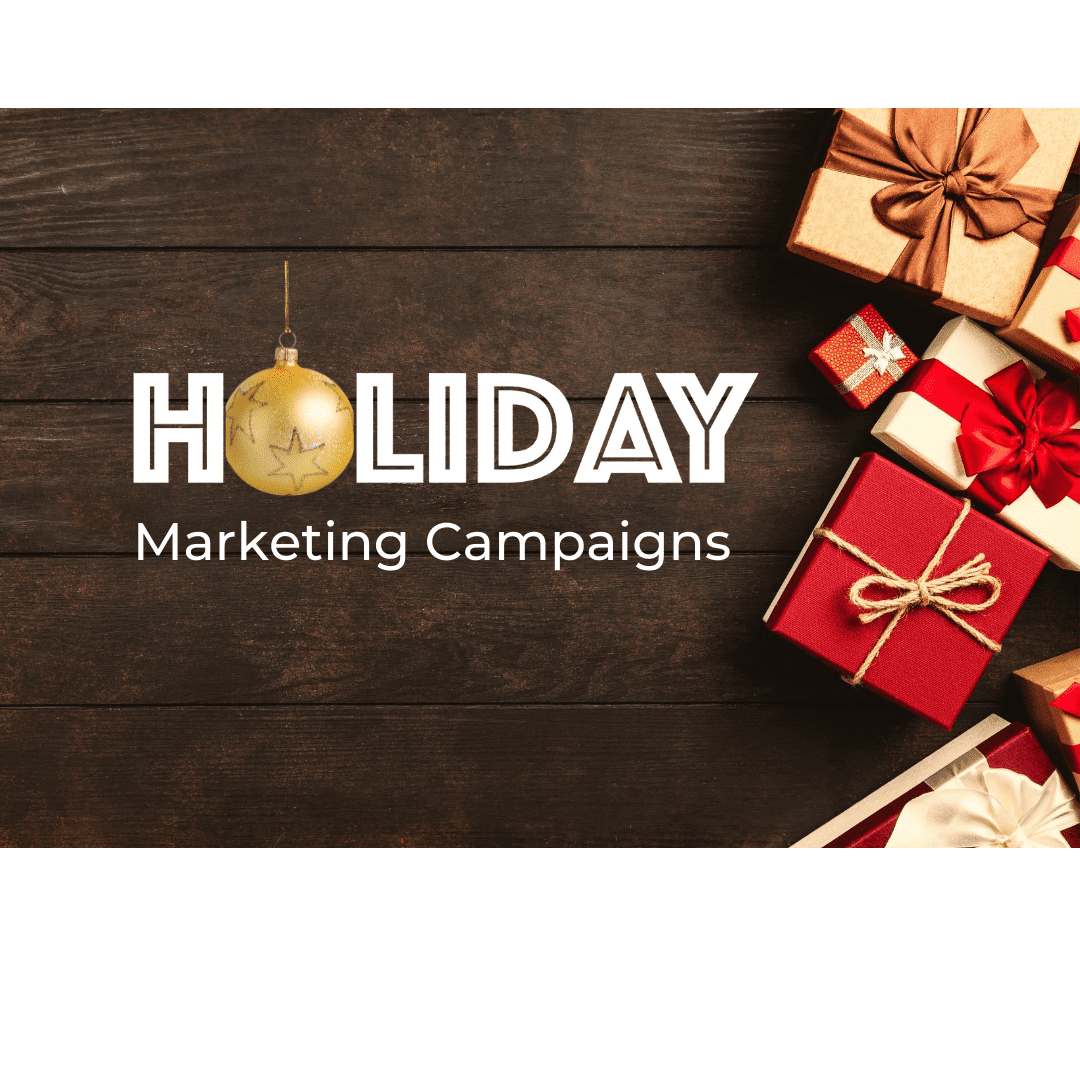
5 Steps for Successful Holiday Marketing Campaigns

Steps for Successful Holiday Marketing Campaigns

The holiday season is upon us—the most wonderful and BUSIEST time of the year, especially for those in e-commerce. By now, your holiday marketing campaigns should be well underway. Are your campaigns not leading to conversions as expected? Are you still dragging your feet on your holiday marketing strategy and don’t know where to start? Wherever you’re at in the process, don’t stress! Believe it or not, there’s still time to develop and run successful holiday marketing campaigns. 

With more people interacting online than ever before, the opportunities (and competition) to win customers is at its peak. Couple this with the massive global supply chain challenges we’ve been battling since the onset of the Covid-19 pandemic, business owners and marketers have had to reimagine how they can reach customers, supply the demand, and convert first-time shoppers into repeat customers. These rather unprecedented challenges led to an expanded holiday season in terms of marketing efforts.

This year, you may have noticed that many Black Friday sales began long before the traditional day after Thanksgiving. And some Cyber Monday offers are still going on strong. It’s turned into a month-long season of “deals” to motivate customers to shop early … and keep them coming back “just in case” a popular item is suddenly available. Amazon started promoting its “Deals for Days” in early October. Nordstrom opened its in-store holiday shops on Oct. 18. Lowe’s began its “Season of Savings” kickoff on Oct. 28. Even Target cleared the Halloween shelves and turned their big box store into a winter wonderland a week before Halloween.

And with the uncertainty of the supply chain, don’t be surprised if holiday marketing campaigns extend beyond the holiday season. So while time is certainly of the essence, if you’re in a holiday-season marketing rut, all hope is not lost! Here are 5 easy steps you can take right now to create successful holiday campaigns.


Step 1: Analyze previous holiday campaigns and successful campaign strategies

Before you do ANYTHING, you need a baseline. Assessing past successes and failures helps you quickly determine what worked and what straight up didn’t. Have you ever run an A/B test to determine which subject lines encouraged your readers to click into an email? How did participation in past giveaways or contests compare? Looking back at offers, did your customers respond more to free gifts, discounts, or free shipping? How have your customers interacted with you most—social media, email, web forums? Gather the data and analytics and look for trends.


Step 2: Define your goals

What is it that you actually want to achieve? Are you trying to sell a product? Is there a sales goal you are trying to meet? Or maybe you are trying to increase brand awareness and gain supporters? Whatever you do, make sure your goals are measurable. This will help you determine successes and failures when you’re planning next year’s holiday marketing strategy (or future campaigns, in general).


Step 3: Determine your ideal target audience and identify omnichannel marketing strategies that fit that demographic

During this step, pinpoint who has a need for your product or service … and who is most likely to buy it. Take a look at your current customers. Which demographics bring in the most business? Which ones follow through various call to actions, interact, or convert to a sale? Any demographic trends should be noted. Demographics you should consider include:

  • Age
  • Location
  • Gender
  • Income level
  • Education level
  • Marital or family status
  • Occupation
  • Ethnic background

Keep in mind, you don’t want to segment the market too much. If you are going after a very specific, niche market, you may not reach your desired results. At the same time, don’t be afraid to go after multiple demographics within a campaign. Just be aware that different demographics may require you to deploy different marketing strategies.

Once you know WHO you are targeting, you need to determine HOW to reach them.

In 2020, 67% of global online retail traffic was generated by mobile phones. In the fashion industry, the mobile share of traffic was even higher at 76%. According to Hootsuite, the latest data shows that social media has grown by more than half a billion users over the previous 12 months. This equates to roughly 13 new users every second. 

Find out where your audience gets their information, so you can amp up your efforts. Are they active on social media? If so, which platforms? Do they click on your PPC or paid social ads? Are they swayed by influencer recommendations? Do they prefer videos, polls, or sharable content? Whatever has worked in the past, start there. In the race against time, the middle of the busy holiday season is NOT the time to take risks or test your audience.


Step 4: Plan your messaging timeline

Open up your calendar and map out a plan. Running an email marketing campaign? Look at your analytics. Which day/time yields your best email open rate? Do you want to send a reminder email? If so, when? Which other marketing channels will you use and when? Include PPC, paid social, social posts, polls—every piece of your messaging plan should be mapped out and delivered accordingly.


Step 5: Create compelling content

Creating content that builds trust, gets people talking, and sells is not always easy. Fortunately, some big-name companies have paved the way, and looking at trends in their messaging helps. Here’s what we we’ve learned:

  1. A great holiday marketing strategy pulls at the heart strings. Emotions work … especially during the holidays, and especially in the midst of an ongoing pandemic when all of the feelings are at an all-time high.
  2. Keep it simple. You have SECONDS to capture your audience’s attention. Don’t waste that time. Be clear, be concise, and provide a call to action—tell them what you want them to do.
  3. Be ready to react and adapt. This is especially true in regards to social media marketing. Consumers expect instant, real-time, direct interaction. And on social platforms where like-minded individuals unite, voices are amplified. If something in your plan goes off the rails, fix it immediately. And make sure your customer service department is up to the task, as well.
  4. Your existing customers are just as important as new customers. They’re your link to fostering brand loyalty. Most likely, the customers you interact with during your holiday marketing campaigns will be a mix of new and returning customers. It’s important to remember that the path to converting a sale for a repeat customer is often different than that of a new customer. So make a plan for both.


Holiday Marketing Mistakes to Avoid

While there are many ways you can go about creating your holiday marketing campaigns, there are certain tactics you should avoid altogether:

  1. Don’t copy your competitors’ strategies. This is a big NOPE. You have no idea who exactly they are going after and why. And besides, they might be winging it. For maximum reach and the best opportunities for conversion/interaction, use the information that is currently at your disposal to determine the who, how, and when of your marketing campaigns.
  2. Don’t focus on only one marketing tactic. Even amongst a very targeted demographic, people shop and interact differently. With all of the marketing mediums and vehicles available to you, limiting yourself to only one tactic shuts out an entire world of opportunity. Omnichannel marketing campaigns extend your reach.

Don’t refuse to get help if you need it. Social Link’s team of digital marketing experts have decades of experience in all aspects of digital marketing—from strategic planning and management to design and content creation. We know marketing best practices and digital marketing solutions like the back of our hands. And perhaps the best news is that help is only a click away. Fill out this form today to learn more about how Social Link can help you achieve your goals or for a free estimate.

Categories
Blog

Why Logos Are Imperative for Businesses

Why Logos Are Imperative for Businesses

A well-designed brand logo is perhaps the most important, most under-rated advertising tool in your marketing strategy. Let me explain. Think about your favorite clothing brand, snack food, or automobile manufacturer. When you see that logo, you feel connected. In many ways, it represents you, defines you, and is something you can stand behind. But it took time, influence, and perhaps a positive customer service experience to establish that connection. 

While a good logo design not only looks appealing, professional, or fun, it often signifies something deeper.


A picture is worth a thousand words

People today are inundated with noise from every direction. Because of this, all of our marketing efforts need to be strategized with the realization that we have mere seconds to grab and hold a customer’s attention. How we fill those seconds is more important now than ever.


In 2000, Microsoft conducted a study measuring how long people can maintain focus on a single task over a specified period of time. The results showed the average person’s attention span was 12 seconds. Then, in 2015, Microsoft researchers found that the average attention span decreased from 12 seconds to 8 seconds—1 second shorter than a goldfish’s attention span. 


And while there isn’t research readily available to determine the current consumer attention span, it’s clear that it’s on the decline and strongly correlates to the adoption of smart phones and the introduction of the social media network. As marketers, we are constantly trying to scream louder than our competitors to grab the attention of our often-distracted, multi-tasking viewers who are overloaded with content on various platforms.


So what does all this have to do with a logo? A logo in its simplest terms is a graphic element that instantly symbolizes the name and purpose of a brand. And while you may not think that your company needs one, here are four reasons why you should have one.

Logo Marketing


4 Benefits of a Logo


  1. A well-designed logo establishes your brand’s identity. 

What is brand identity? Brand identity is what people see; it’s the visual piece of the brand marketing puzzle. A brand identity is the personality, look, and feel your brand presents to the world through visual elements and a consistent message that is communicated over and over again. How you establish your brand identity influences how your brand is perceived by potential customers. And a logo is the first thing a potential customer sees. 


  1. Logos help provide instant brand recognition.

A good logo design promotes brand awareness and allows the company to stand out from the competition. It presents the values and mission of the business … all through a simple, memorable visual image. When a customer (or potential customer) sees a company’s logo, it should conjure up the appropriate feelings about the brand, products, or services. 


And just as it is for you and your favorite brands, your audience will instantly recognize and associate your logo with your product or service, which helps build customer loyalty and determines how your customers will perceive your brand going forward.


  1. A logo builds trust.

Before a person tries your product or service, they assess your appearance. We all do it, especially now when we are bombarded with content by competing brands and knock-offs. Today’s consumers are in a vulnerable position, exchanging personal and financial information online often with unfamiliar companies. However, a strong logo can help you gain the trust of potential customers who don’t know anything about your business and inspire them to interact. In essence, a logo lets you quickly establish credibility so you can focus on content quality over quantity.


  1. A logo fosters brand loyalty.

Logos tell a story. Growing up, my family always stopped at McDonald’s when we headed out of town to see family. We piled into the conversion van, got settled in, and made our way to the nearest McDonald’s. We spent the next 30 minutes fighting over the light- and dark-meat chicken nuggets. (Remember when different shapes signified the different type of chicken meat? No? Just me? Okay, I digress.) The fries were hot, salty, and delicious. And my parents would spend 20 minutes at the first rest stop wiping sticky dipping sauce goo off our faces and the door handles and brushing the salt off the seats. Cleaning up the mess left behind by their children was nothing short of an Olympic sport. But I think about those road trips EVERY TIME I see those golden arches. And it’s a tradition we’ve carried on with our children. (Don’t judge.) 


That’s the power of a logo. Any experience we have with a brand is brought to the forefront when we see that logo. And positive experiences tend to lead to brand loyalty—a gradual process of choosing one brand over another.


Ultimately, people are driven by their experience with your business or feel a connection to the ideas your brand is promoting. Because of this, creating a logo is an important part of your marketing strategy—no matter how big or how small the size of your company.


Categories
Blog

Decoding the Marketing Tactics of the Macy’s Thanksgiving Day Parade

Every year on Thanksgiving morning, 50 million people across the US crowd around their televisions while another 3 million people flock to the streets of Manhattan for three hours to watch the annual Macy’s Thanksgiving Day Parade. It’s an American tradition that has kicked off the holiday season since 1924.

The Macy’s Thanksgiving Day Parade was originally created to promote the opening of the “World’s Largest Store.” In fact, the first parade wasn’t a Thanksgiving parade at all—it was called the Macy’s Christmas Parade, and it was a not-so-subtle reminder that the gift-giving holiday had arrived.

Today, the Macy’s Thanksgiving Day Parade is known for its larger-than-life, high-flying balloons, masterfully decorated floats, star performances, popular broadway numbers, and marching bands from across the nation. And finally, after three hours of wide-eyed wonderment and forgetting to blink, Santa Claus comes to town.

The spectacle pulls in millions of dedicated viewers holding tightly to that piece of nostalgia. And with this kind of consistent, devoted viewership, it’s a brand marketer’s dream.

The Macy’s Thanksgiving Day Parade team expertly crafts a marketing strategy to promote a product or brand by influencing a targeted market, encourage brand recognition, and invites viewers to interact on social media.

Reaching the Right Market—Product and Brand Promotion

The Macy’s Thanksgiving Day Parade’s marketing tactics are somewhat subliminal in nature … and they’re genius. Here’s how it works: first, brands sponsor balloons, floats, or performances. While there may not be a direct correlation between the sponsor and the design of the floats or balloons, the popular Today show hosts then mention the sponsor’s name on air and discuss the design in detail for 2+ minutes when the parade participant reaches the main stage of the parade route. This year, 40 brands will be represented over the three-hour event.

While the Macy’s parade wasn’t originally created to be a big brand marketing show, it’s obvious that the intended audience is and always has been children … and for good reason. The children are drawn to familiar character balloons, celebrities, and intricately designed floats, and then influence their parents on what to buy as the Christmas shopping begins.

Brand Recognition When It Matters Most

For the parents, the influence is a little deeper. Enter: the power of suggestion. When a brand is touted at a wholesome, charity-driven, family-oriented event by renown commentators, you conclude that it’s a brand you can feel good about supporting. But more than that, when a brand name is mentioned while discussing a particular piece that catches your eye (or during a favorite performance), it’s a name you’ll remember at 3a when you’re out elbow-to-elbow with the crowds on Black Friday. It’s brand recognition at its finest.

Super-Sized Audience, Honed In

While the audience is more than 50 million strong, Macy’s expertly makes the grand event feel personal and meaningful through a variety of digital marketing mediums, which maximizes the marketing impact and reach.

On their website, Macy’s calls the parade a “Watch Party,” which ignites a feeling of inclusivity to an exclusive event, and YOU are invited.

If you’re a history buff, you can go back in time and learn how the parade changed over each decade. If you want more, there’s even a podcast.

But how they really get people talking is through social media. As social media platforms take the world by storm, Macy’s has capitalized on the opportunity. Not only is their website bursting with excitement announcing all the parade details—from ballon specs, sponsor info, host bios, and more—they invite you to join in on the conversation with a hashtag (#macysparade) to be used across top Meta platforms—Facebook, Instagram, Twitter, and more. Since everyone has a voice on social media, they know that their marketing tactics have to be on point and delivered flawlessly.

So what marketing tips can we take away from the Macy’s Thanksgiving Day Parade?
Marketing strategy is imperative. Establish your brand identity from the get-go. Know your audience. And last but not least, expand your digital reach for maximum potential.

Categories
Blog

Social Media Marketing: What it is and why you need it | Social Link

We’ve all felt the effects of the COVID-19 global pandemic—at times shut down and shut in, connecting to a community and interacting with others the only way we could: through social media. According to Hootsuite, the latest data shows that social media has grown by more than half a billion users over the previous 12 months. This equates to roughly 13 new users every second. As the audience grew, so did the power of social media marketing.

With more people shopping and interacting online than ever before, companies are learning to utilize these social media platforms as digital marketing tools to reach potential customers and connect with existing customers in real time at any time.

What is social media marketing anyway?
Before we go into more detail about why you should jump on board the social media marketing train, let’s take a step back. What is social media marketing? Simply put, social media marketing (also called, “SMM”) is a form of marketing where you create and share targeted content through various social media platforms, such as Facebook, Instagram and Twitter, to name a few.

Why has social media marketing become such a big deal?
Compared to more traditional marketing strategies, SMM gives you the unique opportunity to reach the maximum number of potential customers in a single post—and it’s more cost effective to boot. But it’s even more than that. Here are three major benefits to adding social media marketing to your digital marketing strategy:

1. Builds Brand Awareness. SMM gives you the ability to establish your brand’s personality, to tell your brand’s story, and put a face behind the name. Plus, sharing relatable content that connects your brand with the target audience makes it easier for potential customers to find you, interact with you, promote your brand by sharing your content with their friends (and so on and so on), and provides you with the opportunity to blow your audience away with stellar customer service.

2. Increases “Ideal” Inbound Traffic. SMM is like targeted marketing on steroids. On social platforms, you can hyper-target potential buyers based on exact specific demographics. This means, you can lead the ideal customers to your site, which offers a greater chance of converting a click to a sale.

3. Let the Pros Spread the Word. Partnering with influencers is all the rage these days, and for good reason. When trusted influencers endorse your brand, others follow. (Not to mention, this helps you build inbound links, which directly affect natural search engine ranking. But that’s another topic for another day.) Fun fact: influencers often aren’t celebrities, but everyday individuals with thousands of followers who regard them as experts in their field. When they mention your product/brand and provide a link, more traffic is effortlessly driven to your site.

When it comes to incorporating SMM into your advertising strategy, the benefits far outweigh the risks. So what do you say? Ready to get started on your social media marketing strategy but not sure where to start? You’re not alone. Let Social Link help. Click here for a comprehensive guide for social media marketing beginners.

Categories
Blog

5 Steps To Avoid Monetary Sanctions For Marketing CBD Products

5Steps_Blog_Image

Not to be confused with marijuana, Cannabidiol or CBD is an active ingredient derived from the hemp plant. Its legislation is in the form of the 2018 Farm Bill, which allows hemp plant cultivation. 


The farm bill also allows CBD companies to possess, sell, and transport hemp-derived products. For example, CBD companies that sell full-spectrum CBD oil can legally advertise full-spectrum CBD oil for sale online or in stores. However, despite the freer legislation on hemp or CBD, more businesses are still prone to getting warnings and fines from the Federal Trade Commission or the FTC, mostly due to breaking the US Food and Drug Authority CBD or cannabis regulations.  


Do You Need To Comply With These Regulations? 


Definitely! Did you know that an FDA monetary sanction over a broken regulation could cost you over $80,000? Or did you know that you can also get fined for selling friendly cookies or natural supplements with CBD derivatives?


Besides, many online publications report company names for the world to see, and the last thing you want is bad press for your business. If you’re planning to join the CBD industry to sell an amazing CBD or hemp product, being cautious is the way to go.


Here are five simple ways to be certain that your brand and your investment don’t go to waste. 


1. CBD compliance: Any health or “medically proven” claims must include supporting, legitimate, scientific evidence or research


Understanding that hemp businesses are eager to spread the word about their quality CBD products, it’s a firm compliance regulation to not sell your product as a “cure” for specific diseases or illnesses. 
Despite the many solutions CBD provides to customers, hemp is not a one-size-fits-all substance, and you cannot guarantee results. It’s best not to get carried away and leave all the big claims to the experts, not your clients or trusted partners. 
Even if you believe it to be true (even if you vouch for personal experience), the law states that exaggerating CBD cannabidiol or cannabis products’ benefits is against FTC regulations. Sections 5a and 12 of the FTC Act states that “unfair or deceptive acts or practices are declared unlawful.” It is why including health claims that have not been supported by reliable scientific evidence is considered deceptive.
Even if experienced manufacturers say that cannabis or CBD oil use is a cure-all, or is the cure for aging, don’t be one of the many CBD companies that have received grave warnings due to poor compliance. To play it safe, do not state any poor-supported details on your labels or packaging.


2. Packaging must include a disclaimer and all relevant information.


When it comes to CBD compliance, regardless of the high quality of your hemp products or ingredients, rules are rules, and you need to follow the CBD basics. Compliance officers thoroughly screen CBD businesses through the most obvious approach: by the information found on their labeling. Hemp or CBD companies are prone to make the same mistakes when it comes to product packaging.      


Other than an ‘all rights reserved’ sign on your CBD product label or having a cannabis disclaimer, be sure to provide your customers and compliance officers all the information they need. 
List all the ingredients such as the THC level and other product information necessary. Also, disclose the site location or place where the cannabis plant was grown and any relevant processes applied to the hemp product. 
You can include a link or QR code to your website FAQ page or a phone number anyone can call for their CBD questions. More information is always better; when your clients and consumers get the right info about your CBD products and CBD use, the safer you are from violating state regulation. More CBD curious questions are better than having the FDA ask about your compliance. 
Another important detail to include in the label of your products is an FDA disclaimer. This disclaimer should clearly state whether the Food and Drug Administration has evaluated the product.


3. Avoid the use of exaggerated or fake testimonials.


Knowing that reviews and testimonials can make or break a business, you can stay clear of breaching any or more FTC regulations by keeping customers’ reviews off your CBD product packaging (or even your hemp website). 
Be wary in citing a CBD website that is unreliable or dubious; don’t link to them just because they say they’re marijuana or cannabis experts. As mentioned above, understanding that cannabidiol CBD or hemp derivatives use may benefit some consumers, not everyone will have the same results or experience. 
Since you cannot control or facilitate the application or use of your hemp-derived CBD substance or CBD products, it’s best to be wary of potential lawsuits for any side effects from the hemp or CBD product or substance. If you want a hassle-free experience in the hemp or CBD products industry, keep your information objective to stay on good terms with the FDA.


4. Religiously follow Food and Drug Administration (FDA) guidelines. 


Even though the 2018 Farm Bill has put no restrictions on the use, it still understands that these FDA regulations prohibit CBD products from being labeled as dietary supplements or a food additive (even if it’s just for cookies).
Considering that CBD products’ legalization is still fairly young, there are no sufficient studies or research that the FDA accepts for these products. For example, it would be unwise to advertise full-spectrum CBD oil or any hemp derivatives as an ingredient to other food products on your website. Although CBD products are different from marijuana or cannabis use, the FDA still regulates any hemp-derived substance and products regardless of place, site, or state. 


5. Explore different ways to advertise and market your products according to the FTC guidelines


It’s important to keep in mind the FTC guidelines when exploring different marketing ways and advertise your CBD products. These guidelines are set in place to ensure that companies employ well-planned marketing strategies that adhere to advertising laws and regulations. These guidelines also include examples of different situations to be mindful of as a reference. 
Digital marketing is a way to help your business reach a wider audience and make your online presence known. However, marketing CBD products can be challenging because of the regulations and restrictions you must consider. 
Some CBD businesses opt to do affiliate marketing, wherein famous people like influencers or celebrities mention your brand or website. CBD companies more often do affiliate marketing than direct marketing since social media platforms have specific restrictions on advertising CBD products.
Another way to put your business out there is to focus on improving your website and creating new content. This way, you get to establish your brand’s presence online while providing informational content that provides value to your readers-who are potential customers.


If you’re in the CBD or hemp industry, regularly checking the FDA website or page should be part of your routine. It pays to stay vigilant and alert for updates on THC or CBD law, the CBD industry itself, or new cannabis regulations. 


Always get updates on the 2018 Farm Bill for utmost compliance, especially when more and more CBD products are introduced to the market. In fact, due to the myriad of restrictions and such, legal experts might advise you to get insurance for your business and products for extra caution. 


When you are equipped with CBD industry information and education on state laws, you’ll be sure to avoid that warning letter or potential CBD monetary sanctions from the FTC. To guarantee that your CBD business utilizes different ways to market its products, make sure to partner with a digital marketing agency that understands your business and is flexible to its needs. 


Let Social Link be the solution for you! Social Link offers a wide variety of marketing services ranging from web development, marketing strategies, branding and graphics, social media, and so much more!


Image sources: 

Categories
Blog Featured Web Design Web Development

Your Website Will Probably Break Soon

No More Mixed Messages About HTTPS

Below is a press release posted on the Chrome blog. We highly encourage our clients to consider whether their site has been updated to prevent ‘stuff’ from breaking due to lacking the proper security being promoted by Google Chrome.

Please contact us if you need help with understanding your website’s current security settings. Our website development team is standing by ready to help you maintain and future proof your website content today.

Thursday, October 3, 2019

Update (April 6, 2020): Mixed image auto upgrading was originally scheduled for Chrome 81, but will be delayed until at least Chrome 84. Check the Chrome Platform Status entry for the latest information about when mixed images will be auto-upgraded and blocked if they fail to load over https://. Sites with mixed images will continue to trigger the “Not Secure” warning. 

Today we’re announcing that Chrome will gradually start ensuring that https:// pages can only load secure https:// subresources. In a series of steps outlined below, we’ll start blocking mixed content (insecure http:// subresources on https:// pages) by default. This change will improve user privacy and security on the web, and present a clearer browser security UX to users.

In the past several years, the web has made great progress in transitioning to HTTPS: Chrome users now spend over 90% of their browsing time on HTTPS on all major platforms. We’re now turning our attention to making sure that HTTPS configurations across the web are secure and up-to-date.

HTTPS pages commonly suffer from a problem called mixed content, where subresources on the page are loaded insecurely over http://. Browsers block many types of mixed content by default, like scripts and iframes, but images, audio, and video are still allowed to load, which threatens users’ privacy and security. For example, an attacker could tamper with a mixed image of a stock chart to mislead investors, or inject a tracking cookie into a mixed resource load. Loading mixed content also leads to a confusing browser security UX, where the page is presented as neither secure nor insecure but somewhere in between.

In a series of steps starting in Chrome 79, Chrome will gradually move to blocking all mixed content by default. To minimize breakage, we will autoupgrade mixed resources to https://, so sites will continue to work if their subresources are already available over https://. Users will be able to enable a setting to opt out of mixed content blocking on particular websites, and below we’ll describe the resources available to developers to help them find and fix mixed content.

Timeline

Instead of blocking all mixed content all at once, we’ll be rolling out this change in a series of steps.

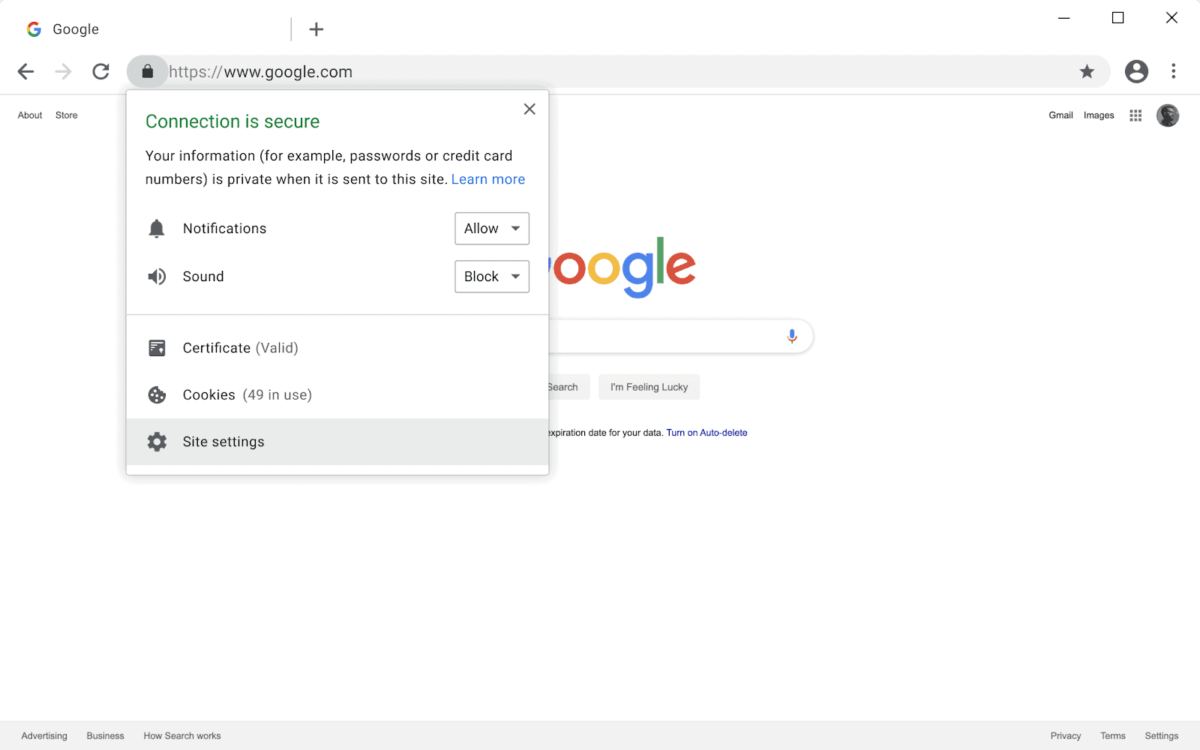
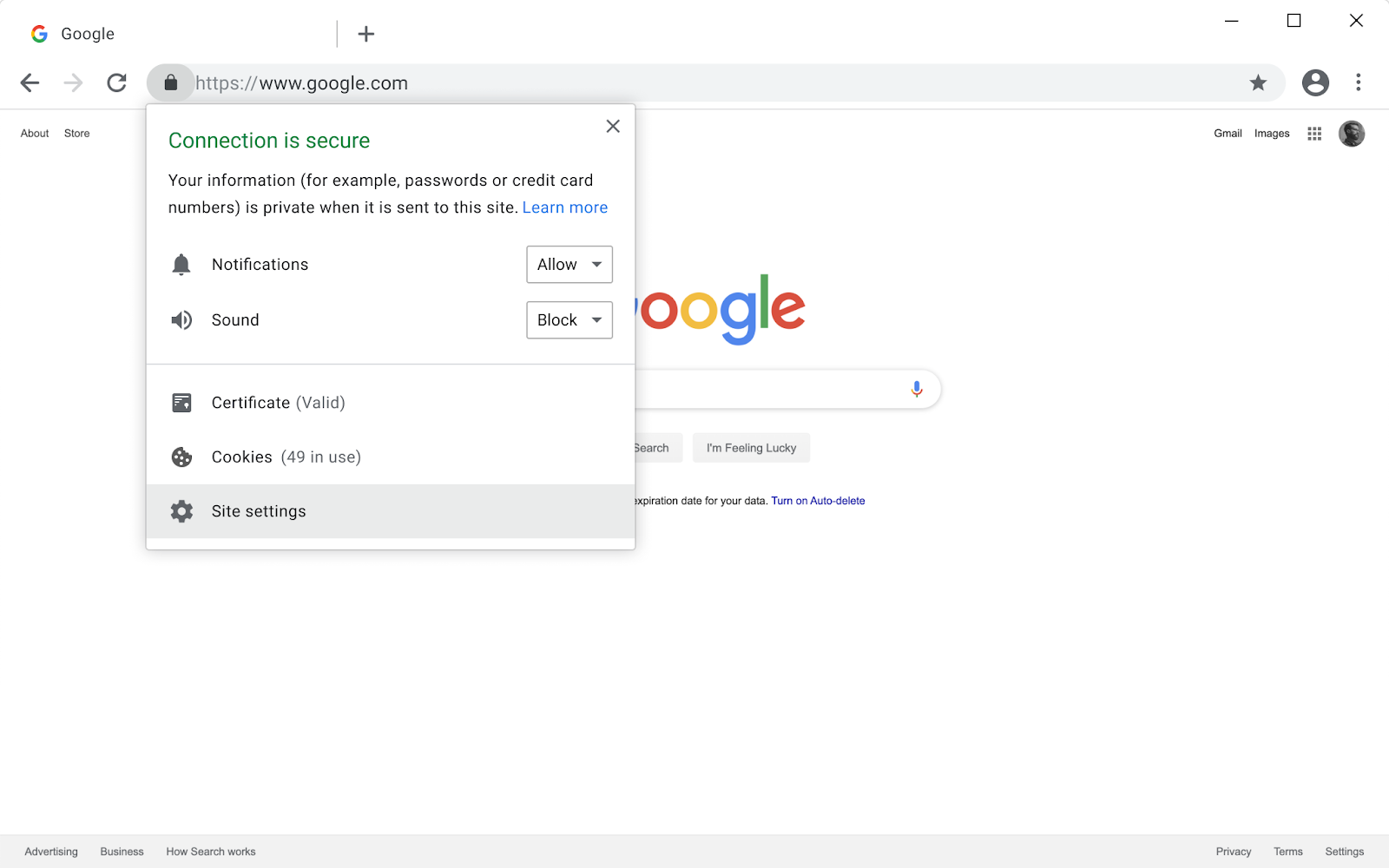
  • In Chrome 79, releasing to stable channel in December 2019, we’ll introduce a new setting to unblock mixed content on specific sites. This setting will apply to mixed scripts, iframes, and other types of content that Chrome currently blocks by default. Users can toggle this setting by clicking the lock icon on any https:// page and clicking Site Settings. This will replace the shield icon that shows up at the right side of the omnibox for unblocking mixed content in previous versions of desktop Chrome.
  • In Chrome 80, mixed audio and video resources will be autoupgraded to https://, and Chrome will block them by default if they fail to load over https://. Chrome 80 will be released to early release channels in January 2020. Users can unblock affected audio and video resources with the setting described above.
  • Also in Chrome 80, mixed images will still be allowed to load, but they will cause Chrome to show a “Not Secure” chip in the omnibox. We anticipate that this is a clearer security UI for users and that it will motivate websites to migrate their images to HTTPS. Developers can use the upgrade-insecure-requests or block-all-mixed-content Content Security Policy directives to avoid this warning. Here is the planned treatment:
  • In Chrome 81, mixed images will be autoupgraded to https://, and Chrome will block them by default if they fail to load over https://. Chrome 81 will be released to early release channels in February 2020.

Resources for developers

Developers should migrate their mixed content to https:// immediately to avoid warnings and breakage. Here are some resources:

  • Use Content Security Policy and Lighthouse’s mixed content audit to discover and fix mixed content on your site.
  • See this guide for general advice on migrating servers to HTTPS.
  • Check with your CDN, web host, or content management system to see if they have special tools for debugging mixed content. For example, Cloudflare offers a tool to rewrite mixed content to https://, and WordPress plugins are available as well.

Posted by Emily Stark and Carlos Joan Rafael Ibarra Lopez, Chrome security team

Contact Social Link to help navigate the updates necessary to ensure your site is secure from breaking after this release.

Categories
Blog Digital Marketing Tips and Tricks

10 Marketing Analogies to Use for This Image

10% is what you see…90% is what holds it up.

Success is only the tip of the iceberg…

You may know me, but you have no idea who I am.

We only see what’s on the surface.

IQ / EQ

A Film / A Book

What I Say / What I Think

Conscious Mind vs the Unconscious Mind

What you think I did, vs. what I actually did

Sales / Marketing

Thanks to Ingrid Miera for the awesome Pinterest board for inspiration. https://www.pinterest.com/imiera/iceberg-analogies/

And especially thanks to iam-citrus for the beautiful artwork that I was happy to purchase and promote for you 🙂 https://www.vectorstock.com/royalty-free-vectors/vectors-by_iam-citrus

Categories
Blog Email Marketing News Online Marketing

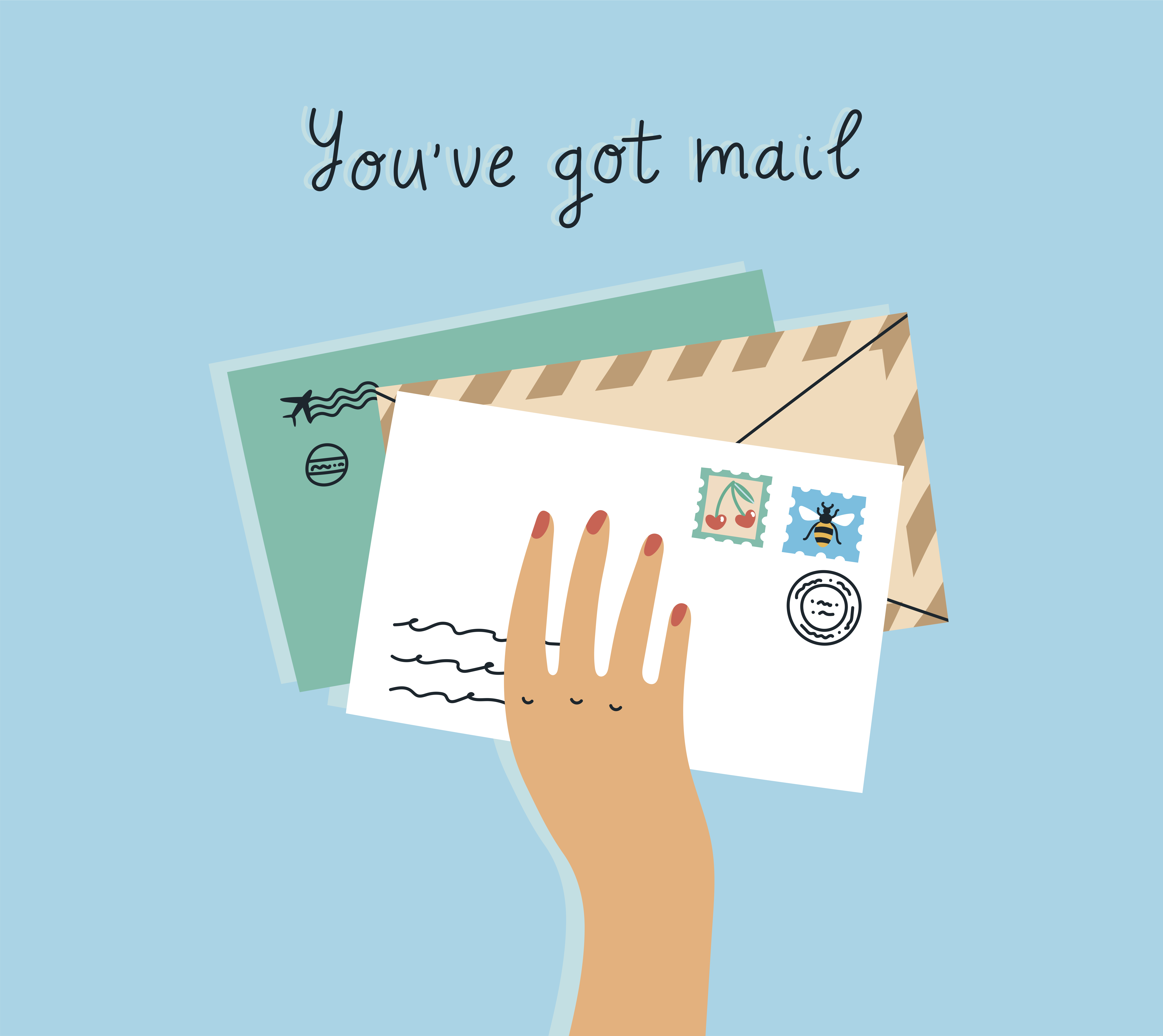
You’ve Got Mail: The Voice Behind AOL


You’ve Got Mail: The Voice Behind AOL
America Online celebrated its 35th birthday on May 24, 2020. If you can close your eyes and quickly conjure up the nostalgic sound of AOL dial-up and the iconic “You’ve got mail!” message, then you’re in good company. Whether you were an adult, teen, or kid during this time period, you likely have fond memories of AOL. 

For most of us, AOL was our first experience gaining easy access to the world wide web. Although “easy” is a relative term, given the amount of hours wasted sitting in front of a bulky computer monitor, waiting for the running man icon to connect us to our inbox while dial-up screeched and screamed in the background.

Remember arguing with your mom or sibling over whose turn it was to hog the telephone line by logging onto AOL? Back then, Instant Messaging friends or checking email was a revolutionary experience. We couldn’t even imagine the freedom that WiFi would one day bring.

Elwood Edwards is the man behind the legendary AOL voice. His wife Karen worked for Quantum Computer Services, which launched the AOL software in 1985. After overhearing company co-founder Steve Case discuss adding a voice to the program, Karen volunteered her husband’s services. Edwards worked as a voiceover actor for TV commercials, so it made sense that he landed the job.

He originally recorded the simple phrases we’ve all come to know on a cassette tape in his living room: Welcome. You’ve got mail. File’s done. Goodbye.

“I don’t think anyone had any idea what it would become,” Edwards explained on a September 2019 episode of the podcast Twenty Thousand Hertz. “Certainly, had I realized it at the time I would now be retired, but I’m not. Even today, I have an AOL account, an email account…When you sign on to that, you still hear me say, ‘You’ve Got Mail.'”

Edwards was paid $200 for lending his voice to the program. Now, he’s retired and sometimes makes extra money as an Uber driver. A few lucky passengers have recognized his voice and posted videos of their interactions with him.  

At one time, AOL was our everything. Since then, technology has advanced at such a rapid pace that we forget what a miracle it used to be to simply access an email inbox.

It’s astounding the advances we’ve made since America Online first debuted: WiFi, mobile hotspots, social media, smartphones, apps, Bluetooth, oh my! Also, no one even has landlines anymore.

Society has changed so much since AOL was our primary focus, but one thing that hasn’t changed is our desire to be connected to the world around us. The internet gives us access to communicate with friends in other states, watch videos filmed in other countries, and access everything from science lessons and history archives to celebrity gossip sites and makeup tutorials—all at a rapid pace. Long gone are the days of putting in hours in front of the computer to just read a few emails.   
 
We’ve come so far since Elwood Edwards first uttered, “You’ve got mail.” Who knows what the next 35 years will bring? 
Categories
Blog Digital Marketing Featured News Online Marketing Web Design

Diversity and Inclusion in Marketing

Current Events in Diversity and Inclusion in Marketing 

Diversity and inclusion in marketing have always been important. However, due to the current cultural climate and pandemic, these elements are even more of a focus for marketers than ever before. 

Why now?

Lily Zheng, a diversity, equity, and inclusion consultant explains it best, poignantly writing in the Harvard Business Review: “We are in two crises right now, an economic crisis and a people crisis, and organizations that acknowledge only one risk exacerbating the other. Diversity, equity, and inclusion efforts can be a powerful solution to both challenges — but the nature of diversity work must evolve to meet that charge. We need to broaden our definition of DE&I work to capture the new challenges of working amid a pandemic and develop an approach that focuses on solving real problems, not maintaining appearances.”

Diego Tuya, Creative Leader at an Argentinian advertising agency, stated, “We are at a pivotal point in society where we have the opportunity to use images that reflect a world we want to be part of. Images where diversity is key, where subcultures are celebrated, and where expected gender and societal roles are smashed.”

Room for growth.

NewsCred Insights found that over 91% of U.S. marketers agree with the statement, “there is still room for growth in using more diverse images by marketers.” Clearly many American companies have a diversity blindspot that could impact business growth.

It’s become increasingly apparent that many companies, big and small, haven’t fully embraced diversity and inclusion in their marketing campaigns—and they’re being called out on it. With all this at the forefront, many businesses are scrambling to right their wrongs, embrace diversity and inclusion, and put their best foot forward.

You want to be truly representative of a varied audience when creating marketing materials, right? It’s crucial that your brand is inclusive in its imagery, themes, and language. If you’re struggling with identifying your target demographic and knowing if your marketing efforts are diverse in a variety of categories— age, race, gender, body size, disabilities, etc.—you’ve come to the right place.   

Let’s get started with some cold, hard facts. Who doesn’t love a good statistic?

These numbers make it impossible to deny how critical it is for companies to focus efforts on diversity, equity, and inclusion marketing.

Definition of diversity and inclusion.

Diversity is defined as “the condition of having or being composed of differing elements : variety especially.” One of the definitions of inclusion is “the act or practice of including and accommodating people who have historically been excluded (as because of their race, gender, sexuality, or ability).”

But what exactly do diversity and inclusion mean in relation to marketing? 

Zebra Strategies, a strategic marketing and research firm specializing in diversity and inclusion marketing, explained: “When applied to marketing, diversity, and inclusion are all about respecting and appreciating differences. It ensures that everyone’s voice gets heard, no matter what their racial, socioeconomic, gender, sexual orientation, age, or cultural background is.” 

Customers need to relate to your brand.

First things first: you must understand who your demographic is and connect with them.

If potential clients go onto your website or check out your marketing materials and don’t see themselves represented in any way, they aren’t going to be too apt to become actual customers. 

“If your customers are different than you and they feel unrecognized, you will begin to lose them,” stated author Michael P. Crone in his “Diversity Marketing & Cultural Awareness” paper.

“Truly diverse and inclusive content – the kind that resonates consciously and subconsciously with your audience – requires far more than an image,” said Ann Gynn, a writer for the Content Marketing Institute. “It requires thinking more deeply, from your audience research to your team structure, from your style guide to your user experience.”

Take a look at the man (or woman) in the mirror.

It’s imperative that organizations assess themselves and take a step back to reflect. “If you seek to enter diverse markets, your organization must become the market you seek,” said Del Johnson, a principal at Backstage Capital, a venture capital firm that has invested over $7 million in companies founded by underrepresented entrepreneurs. 

“The more distance there is culturally between your team and the market, the less ability you will have to execute. We all fall into particular biases. That’s why you need to have culturally competent people in the room who have the power to affect decisions. By bringing in the talents of those who have traditionally been overlooked, you unlock true creative expression — and build an organization able to check its biases.”

Authenticity is key.

Consumers can tell when a brand is coming from an authentic space versus regurgitating what they think they should be saying. Your business needs to truly walk the walk and “reinforce its value proposition from the inside out if [you] want to drive change,” according to Shelley Zalis, CEO of the Female Quotient, a women-owned business committed to advancing workplace equality. 

People want to see a reflection of themselves in advertising. Make it believable, relatable, and brand-appropriate. It shouldn’t come across as forced or unnatural. It needs to make sense and reflect your audience. Don’t go overboard. For example, if you’re looking for marketing images for your maternity clothing boutique, don’t pop in a photo of elderly woman just to seem inclusive. Grandma isn’t getting pregnant; we don’t need her on your website. (No offense to Nana, of course). 

All shapes, sizes, ages, and abilities.

Don’t forget that diversity is more than just color and gender. Audiences want to see people of all shapes, sizes, ages, and abilities. A good example of a brand celebrating diversity is clothing company Aerie, which found great success with their #AerieReal marketing campaign. The ads feature diverse, non-airbrushed models with a wide range of body types and ethnicities wearing everything from T-shirts and workout outfits to bikinis and underwear. Their ads look more relatable and real than their competitors’ images. They also use models with disabilities, which is a huge win.  

Go beyond the rainbow.

When it comes to being diverse and inclusive for the LGBT community, “It is not enough to put a rainbow on a product and call it a marketing strategy,” said Sarah Kate Ellis, president and CEO of GLAAD, a nonprofit that advocates for the LGBTQ community. 

“Brands need to take the initiative to reflect the world we live in by showcasing the wide range of diverse identities within the LGBTQ community,” Ellis continued. “This includes transgender and non-binary people, as well as gay and lesbian parents with children. When a trans woman of color is represented in a commercial or ad, it builds understanding and sends a validating message to trans people everywhere.”

Casting call.

Don’t use models as props or a check mark for your diversity to-do list. If you’re casting actors or models for a campaign, popping one person of color into a sea of white isn’t enough, and you’ve clearly missed the point. It makes the multicultural person seem like a token you’ve used to fulfill some sort of quota, which is inauthentic and leaves viewers with a bad taste. 

Don’t create content that tries to shove a particular gender, race, or age in a stereotypical mold. It can be offensive and create a backlash, which is obviously the opposite of what you want. For example, you’re filming a commercial with an office scene. All the employees are played by male actors, with the exception of one female who plays a stereotypical secretary. That won’t bode too well for your ad. Push beyond the boundaries ingrained in your mind and brand.   

Stock photos galore.

Maybe you don’t have the marketing budget to create your own content from scratch. And that’s okay! There are lots of good options available at your fingertips. If you’re looking for diverse stock photos, explore the internet to find a whole range of potential images. Get creative with where and how you search for imagery. Some pros of using stock photos are it’s cost-effective, quick, and easy to find a variety of images that could work well with your brand. Cons? These photos won’t necessarily be unique to you, as other site users have access to them as well. You might not find exactly what you’re looking for, depending on how strict your parameters are; the more niche your marketing needs are, the harder it could be to find the perfect images.   

Here are some great stock photo options to get started:

  • PhotoAbility is a stock photography website specializing in pictures of people with disabilities in travel, leisure, and lifestyle settings. 
  • Death to Stock is an artist-owned co-op that provides users with the “freshest, authentic stock photos and videos with unlimited downloads and new work added every month.” 
  • TONL offers “culturally diverse stock photos that represent the true world we live in.”
  • Diversity Photos prides itself on being inclusive, authentic, and relevant, offering users a wide range of diverse photos.
  • Raw Pixel proudly states that they have design resources for everyone. 
  • Unsplash is a free (yay!) site powered by creatives around the world.
  • Stocksy has art-forward images showcasing a variety of races and cultures.

Think big.

When choosing imagery and graphics that reflect diversity, you don’t have to be literal—your brand doesn’t have to feature cheesy, trying-too-hard photos of people of multiple races and genders holding hands and singing Kumbaya. 

Diversity and inclusion marketing can be portrayed in a variety of ways, using everything from inanimate objects to color stories instead of faces, bodies, or hands. 

A diverse story can be told in a unique way with a wide variety of images if you think outside the box. 

More than marketing.

If your business needs to fix diversity and inclusion marketing problems outside of just the marketing department, Lily Zheng, the DE&I consultant mentioned earlier, has a few key tips. Lily suggests that leaders collect information on the opportunities that are most important, and then match problems with specialists as needed. Her recommendation is that businesses create a strong strategy at the top as well as allow individual leaders and managers to have the freedom to implement it within their own teams. She reminds organizations that diversity and inclusion marketing isn’t an issue with a one-size-fits-all solution. Flexibility is important.

Remember: it’s a journey.

This isn’t a one-and-done situation. Ensuring your marketing is diverse and inclusive is an ever-evolving process. It sounds dramatic to say that your diversity work is never done, but it’s true. There’s always room for growth, always room for improvement. 

Resources

Here are a variety of resources to guide you as you continue to navigate the waters of diversity and inclusion marketing.

Social Link is here to help.

If you’re looking for marketing help for your business, we’re here to help! From strategic planning and content creation to website design and development, Social Link has the marketing support you need. We’re your partner for progress and performance.

Potential accompanying photos:

https://www.pexels.com/photo/heart-fruit-form-708513/

https://www.pexels.com/photo/alphabet-blur-color-conceptual-1152661/

https://unsplash.com/photos/pMW4jzELQCw

Categories
App Development Blog

App Development: Getting Started 101

You had a brilliant idea, and your business has finally taken off. To take your success to the next level, you’ve decided that you need to go mobile and create an app. These days, it’s all about mobile apps. Even if your business is small, you can garner a lot of attention if you invest in an app. Keep reading to learn what to consider when you’re building your app.

Your Target Market

Before you can build an app, you need to consider the target audience. Businesses use mobile apps for different reasons, ranging from being able to make transactions to simply providing information. Apps make doing business just a little easier. Your specific niche also plays a role in the development of your app. For example, if your business sells material goods, then an app that allows customers to order from it is your bet. Also, according to OnPath Testing, you should consider questions such as what mobile operating systems your market uses more.

Choose Your App Type

After figuring out how your app will be used, you can begin the next stage of your app’s development. This stage is where you decide what type of app you want to create. According to Gist, there are three basic types to choose from: web, native and hybrid. Here is a brief list that offers more insight into these types:

  • Web-based apps: These are optimized versions of websites that are compatible with portable devices.
  • Native apps: This type is primarily used with a certain operating system.
  • Hybrid apps: This type uses the functions and features of both web and native apps.

Make sure you research all possible options before moving forward. The type of business you have and your goals all need to be considered.

Keep Your Competition in Mind

Whether you own a small business or you’re a corporate CEO, one thing is for certain: You’re going to have competition. In the world of business, there are plenty of other people out there with the same goals and purpose as you. They’ll continue to do whatever they can to make sure they don’t lose their customers. So, it’s crucial that you do the same, and making an app is a surefire way to stand out from the rest.

Building an app for your business takes research, planning and testing. Remember to take things slow and delay the release of your app until all the bugs are worked out. Creating the ultimate user experience is what matters most.

Looking to expand your business’s digital presence? Let Social Link take the reins!

Categories
Blog Online Marketing Tips and Tricks

Marketing Cannabis: We Are Here For You.

Marketing Cannabis: We Are Here For You.

Calling all cannabis companies! Is your business in need of a marketing agency? Look no further: we are Social Link, a one-stop marketing shop, and we welcome you. Whether you’re a plant-touching business in charge of cultivating and distributing cannabis, or an ancillary company supporting the growth, processing, and sale of cannabis products, we are here for you. 

At Social Link, we understand, admire, and respect the importance of the cannabis industry. We are dedicated to championing organizations within the marijuana sector by providing them with high-quality, cutting-edge marketing services that improve business, reach potential customers, and boost sales. 

weighing cannabis

Our “Can-Do” Approach to Cannabis 

We are your ally in the fight to destigmatize marijuana use, whether it’s medicinal or recreational. We are ready to bust myths, bring accurate facts and figures to the forefront, and clear up falsehoods and fables surrounding cannabis use. It’s time to open non-users’ minds about weed and educate people on the many products and benefits cannabis offers. 

We are your marketing partner in the ever-changing, rapidly evolving cannabis environment. We see you and support your mission, your business, and your goals. 

Marketing Marijuana? We’re ready.

Marketing, content creation, and advertising can seem overwhelming at first, especially within the formidable cannabis industry. However, we are here to help you every step of the way. You’re not alone. With us by your side, you have one less thing to worry about. We’ll take care of the hard stuff so you and your employees have the time to focus on the specific ins and outs of running your business.

Think of us as your right-hand man, your content guide, your behind-the-scenes magical marketing guru ready to swoop in and get your company headed in the right direction. Never fear: we are here to transform seemingly impossible roadblocks and potential obstacles into opportunities for success. 


Ready, Set, Grow!

The rules of digital marketing are constantly changing. We are here to help you stay ahead of the game.

We take you and your business seriously. There is much money to be made and plenty of success to be had within the cannabis industry, and we are the people to take you and your company to the next level. 

Whether medicinal or recreational, cannabis is a huge money-maker and we have the skill-set and resources to make it happen for you and your business. 

Here to Help

Social Link can help target your customers with relevant content that delivers what they’re searching for. We know how to put ourselves in your clients’ shoes. We make communication a two-way street, all the while driving ROI and channeling users into action. 

Ready to see what we can do? Let’s get started. Reach out to us today to learn more and get the ball rolling. 


Capitalizing on Cannabis 

As more and more states approve cannabis for recreational and/or medicinal use, a previously untapped market has quickly emerged. From medical dispensaries to recreational shops, marijuana suppliers are now serving a broader base of consumers. Capital from North American public cannabis companies totaled $394.1 million in January 2019, and that’s just the beginning. The forecasted growth of the robust US cannabis industry is slated to reach up to $80 billion by 2030.

According to Business Insider, the estimated total demand for marijuana is more than the $36 billion of video games and $19.9 billion of doughnuts sold in 2017, and approximately 55 million Americans are cannabis users. 


Best Buds

With newer marijuana markets embracing social equity programs and diversification enhancing profitability of marijuana product manufacturers, there has never been a better time to be in the booming cannabis industry.

The United States accounts for 90% of the global marijuana market, making this country the perfect place for budding cannabis businesses (pun intended) to truly thrive.

According to a recent report by Grand View Research, Inc., the “growing adoption of cannabis as a pharmaceutical product for treating severe medical conditions, such as cancer, Parkinson’s disease, Alzheimer’s disease, arthritis, and other neurological conditions is anticipated to drive demand for medical marijuana in the forthcoming years.” Another aspect that will boost the demand is the “increasing need for pain management therapies and growing disease burden of chronic pain among elders.”

Marijuana has quickly become a big business, which is why you need big marketing strategies to go along with it. This is where we can help: we are ready and willing to hit the ground running and maximize your company’s potential and enhance the great work you already do. 


Who We Are

At Social Link, we provide you with the full team of specialists you need to execute your digital marketing strategy to help you make informed decisions that affect your bottom line. We are your virtual marketing department. 

Established in 2008, Social Link has developed systems and approaches to social media and internet marketing that now maintain a level of quality unmatched in the industry. Social Link is committed to being the best of the best.


Looking for results? We drive them.

Our mission is to be the go-to marketing professionals for all small- and medium-sized organizations that need the proper resources to help grow their business. We excel at connecting the right people at the right time with the right brand messages. 

By concentrating on the essentials, we drive actionable results.  It’s important for us to keep the goals and strategy the focus, with an expert execution of deliverables to support them. Social Link lets the data tell the story and drive the decision making.  And as always, the client comes before the competitor. 


Not to brag, but we’re pretty popular.

We’ve worked with a wide variety of industries, from healthcare and retail to hospitality and real estate, going above and beyond for each of our clients. 

Our professionals work from home all over the country and even internationally. We believe that happy employees create happy customers. This also allows us to network with people around the world to find some of the best experts in their field. 

We never compromise our quality or cut corners. We always work with you to offer services that will be relevant to you and your unique needs by strategizing to fortify your marketing goals with a desired customer base.


What We Do

Welcome to Social Link. This is where big ideas begin. We define the outcomes, the offering, the customer, and the message. We help grow business. Our services include lead generation, SEO, web development, strategy, graphic design, social media, app development, content, and more. 

Looking for an engaging website? We build mobile-first, adaptive, fully responsive sites. On the hunt for infographics? We simplify complex information in a way that’s fun, visually intuitive, and inviting. Ready for content generation that gets the job done? We bring you big ideas—the ones that energize your campaign and get current and new customers excited. 


We’ve Got it All.

Social Link provides simple, at-a-glance tools for monitoring and optimizing traffic and conversion. We’ll make sure your content is 100% optimized. We’ve got the tools and expertise to attract, convert, close, and transform visitors into advocates. We tailor messages to the medium and customer—email, social, pay-per-click, blogs, and more. You’ll get seamless campaign experiences with unified marketing messages for your clients. Every team is led by a campaign strategist who keeps the whole mission on track and on time.


What are you waiting for? Get started today!

Categories
Blog Digital Marketing Featured News Online Marketing

How Much Could a Virtual Marketing Team Save your Company?

Marketing is expensive.

That probably won’t come as a huge shock. Budgets vary between companies, but it’s not uncommon to spend 5-10% of revenue on marketing.

Of course, it’s not really something you can avoid. No company can survive, let alone grow and prosper, without an effective marketing team. But boy, are they costly.

If only there was a way to save costs on marketing, without compromising on any of the benefits. What if you could access a skilled marketing team without paying the sky-high costs required to train and retain one?

Virtual marketing teams could be the answer. In our increasingly digital and globalized economy, they’re becoming increasingly popular and accessible, and with good reason.

In this post we’ll break down how they work, why more and more companies are turning to them, and how much money you could save by taking the virtual route.

What is a Virtual Marketing Team?

A virtual marketing team is a remote-based team that provides all the services of a marketing department without ever having to set foot in the office. They represent a shift away from the old approach of hiring a team on a permanent basis and having them stay in the office in exchange for a salary.

And they’re exploding in popularity. 16% of global companies are now fully remote, a trend that looks set to continue. The benefits for remote workers include increased flexibility, less time spent commuting, and more time with family, among many others.

For companies, they could also represent a major cost saving. Let’s break it down.

How Much Could You Save with a Virtual Marketing Team?

The amount you save will, of course, vary case by case. One study found that companies were able to save $2000 per employee when switching to remote workers. That’s impressive, but switching to a virtual team could save you even more.

Here’s why:

When you use virtual teams and agencies, you don’t need to hire employees any more. Instead, you can work with your virtual team on an as-needed basis, instead of paying multiple salaries year-round whether you need the work or not.

That translates to a whole host of benefits. Perhaps the most obvious metric here is pure salary savings. Let’s take a look at some common marketing jobs and their salaries:

  • Copywriter: average annual salary of $60,296 according to Glassdoor
  • SEO expert: average salary of $65,200
  • Web designer: average salary of $57,470
  • CMO: $173,120

Wow. These four members of staff alone would be costing you upwards of $350,000 per year. And that’s just in terms of raw salary; we’ve not even started on benefits like health insurance, pensions, and bonuses. Hiring and retaining a permanent, on-site team can be incredibly expensive.

There are other expenses to consider, too. Think about the physical office space required to house all these workers, the equipment needed for them to do their jobs, the heating, A/C, and staff parties. It all adds up, and fast.

Even the process of hiring and training staff is time-consuming and eats into the budget. According to the Society for Human Resource Management, the average cost to hire an employee is $4,129. You’ve already spent thousands of dollars before your new staff member has even started work.

How a Virtual Team Saves You Money

A virtual marketing team helps avoid many of these costs. Instead of spending time recruiting staff and paying for them year-round, you can work with a virtual team when their services are needed.

On top of this, you can shop around for specialists depending on the project at hand. Instead of hiring a team of permanent generalists and training them when the need arises, you can simply turn to a pre-existing group of experts. Not only does this save a huge amount of time and resources, it will also typically generate better results.

There are many benefits to working with a virtual team, and cost is one of the most obvious and important ones. The dollar figure amount that you will save is dependent on your company’s specific needs and demands, but in most cases it should be worthy of serious consideration.

Categories
Blog Featured News Online Marketing PPC Social Media Social Media Marketing

3 Facebook Advertising Agency Tips

All too often as marketers, we hear clients and potential clients say that Facebook Ads don’t work for their business. Maybe they believe that, in their industry, social media isn’t useful or maybe they’re one of the oldschoolers that thinks that social media marketing is a hoax in general. There are a million different things that we hear, but the truth is, they’re all excuses.

Facebook has billions of users. We’ll say it one more time. Facebook has billions of users. There are that many people using the platform on a daily basis and yet, people still have the audacity to say that reaching their target market on Facebook is an impossibility.

The truth is if you haven’t had success using Facebook ads, then you are not constructing effective ad campaigns.

So how do you create you effective Facebook Ads?

We are glad that you asked. There are three different keys to creating an effective Facebook ad campaign: Killer content, killer copywriting, and accurate audience targeting.

“So where do I start?”

Start with content. What’s the first thing that you notice when you are scrolling your Facebook feed? You notice the content! A well-written article or an inspirational quote doesn’t catch your eye. It’s the shocking video or the stunning photo on your feed that catches your eye and then draws you in towards the rest of the advertisement. Make sure that it is both quality and relevant content. Below are two examples of content. One is quality and one is not. Can you guess which one is which?

Okay, we know it’s pretty obvious. But you get the point. Focus on creating content that is consistent with the quality and the message of your brand.

Next…

Focus on quality copywriting. Too many brands and businesses are allowing copywriting to go by the wayside with the focus becoming much more on content creation. Whatever you do, do not underestimate the power of your copy. In the same way that your content creates a first impression for your brand, so does your copywriting.

There are many different tips and tricks to remember in regards to your copywriting, but the most important thing to remember is to evoke emotion in your audience. Rather than just providing a dull, lazy call to action to try and make a quick sale, try to write from the perspective of your audience. What are their fears? What are their insecurities?

If you were writing a headline for a weight-loss supplement, you could write something like this:

“Try Hydroxycut- the number one weight-loss supplement in the world.”

Why would you ever click on that? You wouldn’t. It evokes no emotion and is clearly just a lazy advertisement.

But, what about something like this?:

“Tired of not being able to fit into your jeans from last summer? Try Hydroxycut- the number one weight-loss supplement in the world.”

That is going to be way more effective, because to someone who struggles with their weight, not fitting into their clothes is a giant insecurity of theirs that they will pay to alleviate.

Last, but not least…

Without the proper audience targeting, all of the work above will be useless.

You can have the greatest content and the most phenomenal copywriting in the industry, but without the proper targeting you’re not going to hit the right audience to sell products or services.

For those of you who are new to audience targeting, follow the steps below to create your ideal audience:

You will first see the audience creation dashboard:

Now it’s time to select a gender- Whatever you do, make sure that the gender you select matches the product or service that you are selling!

How old are the members of your audience?

Location, location, location- This is a part of the audience targeting that we constantly see being screwed up. Too many business owners think that the wider the audience, the better their ad will perform, and that’s simply not the case. If you’re are a roofing company in Arizona, why on Earth would you be targeting the entire United States? Think about who you serve and decide what makes sense for you.

Who is your audience?- If you’re just starting off with Facebook ad campaigns, you’re going to want to use interest-based targeting. Target interests that are related to your business, because these are going to essentially target “warm leads” for your business!

Now, put it all together!

We’ve talked about creating killer content, writing killer copy, and now using accurate audience targeting. It’s important to remember that using just one of these strategies will not produce your most effective ad campaigns. You have to put all of them to use in the same ad campaign, and that is where you are going to see the most significant results in running your Facebook advertising campaigns.

We’d also be happy to talk more with you about how to optimize your current Facebook Ad spend. Just shoot us a note!

Categories
Blog Digital Marketing Online Marketing Sales Social Media Tips and Tricks

Content is King: Digital Storytelling Basics

In a rapidly evolving digital environment, producing high-quality content is more important than ever. Good content tells a story, which enables your business to connect with a wider audience, share new ideas, and stand out from the crowd.


Make Your Brand into a Story

First things first: your organization needs to tell a story. This simple move can increase brand awareness and add a personal component to your business that resonates with customers. The more familiar someone is with your brand, the more likely they are to trust you and be a returning customer. Your story doesn’t have to be long or complex, but it should answer a few simple questions. How did you get started? What makes your business special? What inspires you and your employees? The answers to these questions can help form an authentic, unique identity and even drive a higher conversion rate.

Make it real, relatable, and honest. Fluffy descriptions and meaningless words will only fall flat. Authenticity is key. According to Ad Week, “91 percent of consumers are likely to reward brands for authenticity and share the brand with friends and family, and 62 percent are likely to purchase from or show greater interest in purchasing from a brand that authentically expresses itself.”

You can be professional without being stuffy. Just be yourself—there’s no need to try to be something you’re not. What works for one company doesn’t necessarily work for another, so while it’s easy to compare yourself to another brand, resist the temptation.


Popular Forms of Content

Forbes discovered that people find videos, blogs, and instructional media to be the most valuable forms of content. 54% of consumers want more video content from a brand or business they support. Due to shortened attention spans, internet users are increasingly interested in media that combines images, text, audio, and videos. Depending on your resources, producing multiple forms of content may seem overwhelming. Luckily, it’s easier than ever to add short-form videos or high-resolution photographs to a blog post or landing page. 92% of marketers make videos with assets they already have, so you don’t necessarily need a production team or camera crew to beef up video content. Play around with a variety of strategies to determine what resonates the most with your audience.


How to Create Strong Content

To keep engagement levels high, you need to offer simple, straightforward, and succinct content that also provides value, like an educational video or how-to blog article. Content is the most impactful when it’s clear, concise, and purposeful. You want to produce materials on a frequent, consistent basis, but don’t publish something just for the sake of it—quality still beats quantity.

The most important factors to consider are what your audience wants and needs. What will they enjoy consuming, what problems are they trying to solve, and how can you help them? If you have more than one target audience, don’t be afraid of segmentation. By tailoring your content to specific groups, you can forge stronger connections and make more of an impact.

As a final tip, don’t forget that proofreading is imperative. Everything in the digital landscape is so fast paced that it’s easy to overlook a mistake, but nothing derails your content train quite like a simple grammatical error or embarrassing typo.

There’s real power in storytelling. Generating quality content enables you to accomplish marketing goals, reach a wider audience, and increase your digital influence. If you’d like to learn more about how Social Link can help you strategically create a content strategy that converts to revenue drop us a line today to get started.

Categories
Blog Digital Marketing News

Social Link Named Among the Best Branding Agencies in Nashville

best branding agencies in Nashville

In recognition of our commitment to excellence, Social Link has been named among the best branding agencies in Nashville by Expertise.com. The decision is based on extensive research performed by the Expertise.com team. Twenty-five different variables (across five categories) are assessed in order to identify the best-in-class organizations. The five categories are:

1) Reputation – A history of delighted customers and outstanding service.

2) Credibility – Building customer confidence with licensing, accreditations, and awards.

3) Experience – Masters of their craft, based on years of practical experience and education.

4) Availability – Consistently approachable and responsive, so customers never feel ignored.

5) Professionalism – Providing service with honesty, reliability, and respect.

After reviewing 105 branding agencies serving the Nashville area, the results placed Social Link in the top 12 companies.

About Expertise.com

Expertise.com uses proprietary research to identify the top service professionals across the United States. Their process starts by compiling a large group of companies within a given geographical area. Next, they use public data, custom tools, and in-house software to narrow the list down to high-quality organizations. Finally, they conclude with a deep manual review to determine which companies are truly the best.

What makes Social Link one of the best agencies in Nashville?

At Social Link, our clients come first—and we have the expertise to deliver what they need. We’ve been providing a full spectrum of marketing/branding services since 2008, which includes strategy, design, content, SEO, web development, and more. We take a truly individualized approach with each of our clients, and strive for the highest levels of attentiveness and accessibility through the entire process.

Our work has not gone unnoticed. In addition to raving client reviews, we’ve been recognized as a top agency by Clutch, PromotionWord, and DesignRush. We’re proud to add this latest accolade from Expertise.com to our growing list of accomplishments.

What our clients are saying…

“We needed branding, design, marketing, and consulting. We wanted to modernize our brand and develop a strategy for the future. We had a small budget, so we needed a firm that would work within that budget but deliver good work. We selected Social Link after an extensive interview process. They’re adaptable and they prioritize our strategy preferences. Brady does not try to impose his will on us.” – Maegan Martin, Tennessee Association for Home Care

“Social Link is a necessity in building a business. Each person you work with gives you individualized attention to understand your business and where you want to take it. Brady, Amber, Kelley Shaye, and the whole Social Link team exceeds my expectations each time we communicate.”Laura Borris, Minnesota Girls Academy

Categories
Blog Online Marketing SEO Tips and Tricks Web Development

How a Content Management System (CMS) Works—and Why You Need One for Your Business

There was a time when adding new website content required a web developer. To update the website, a developer would create a file on their computer, then transfer the file to a web server via an FTP program. It was far from a user-friendly experience.

Fortunately, those days are long gone. Today, content management systems allow users to create, edit, and publish content to their website without any technical complexities. By far, the most well-known and widely-used CMS is WordPress. It’s estimated that WordPress powers around one-third of all websites on the internet.

Other popular CMS platforms include Wix, Weebly, and Squarespace. These website-building applications have empowered virtually anyone with basic computer proficiency to create and manage their own website. But how do content management systems work? In this post, we’ll explain what’s going on “under the hood” of a CMS application—and why it’s a must-have in today’s digital landscape.

What is a content management system?

CMS platforms enable users to create websites with relative ease. But what are they exactly? Simply put, a CMS is a software application that streamlines the content management process with easy-to-use interfaces. For example, if you want to publish a new blog post on your website, a CMS interface makes that as effortless as typing a word document.

Here’s what the back-end of WordPress would look like to a user that wants to create a new blog post:

[Source]

As you can see, the user is able to add text, format the post, upload media, and publish with the click of a button.There can be many other features and functionalities included in a CMS, but this example demonstrates one of the most essential concepts.

How does a content management system work?

To understand how a CMS works, you must first understand how a website works. Your website is powered by the data within its database. That database is made of tables, which contain information for how your website should be displayed. Every page on your website is rendered based on information from one of your database tables. There’s a data table for your home page, your ‘about’ page, your blog posts, etc.

To modify your website or add new content, you’ll need to update the tables in your database. That’s where a content management system comes into play. A CMS is a graphical user interface that allows you to manipulate the data in your database. The interface is designed to be as easy-to-use as possible. So, by using the interface of a CMS, you can modify your website’s database without any knowledge of coding or database structure. For example, if you create a new blog post within your CMS interface, that post is automatically entered into your website’s database for you (making it an official part of your site).

two women at desk looking at laptop
 

Content management systems are built around the WYSIWYG concept (what you see is what you get). They allow users to create/edit website content as it appears, rather than dealing with the code behind it. At the end of the day, this makes managing web content easier, faster, and more accessible.

Why do you need a content management system?

As we’ve seen above, content management systems are all about ease-of-use. With a CMS, adding new web content and blog posts is relatively effortless, allowing you to publish more content at a higher frequency. But why does constantly adding new content matter to your business? Two words: Content Marketing.

In the digital age, web content is a valuable marketing asset for businesses of all sizes. Publishing new content has direct business benefits, including:

  • Increased search engine traffic
  • Increased engagement with your target audience
  • More inbound leads (resulting from the two notions above)

A strong content marketing plan requires fresh content to be published on your website—which is part of the reason a CMS is so important for your business. A CMS helps you implement your content needs efficiently, which allows you to make the most of your content marketing efforts.

At Social Link, we specialize in elevating businesses with proven digital strategies (including content marketing and web development). If you have any questions about content management systems or would like to learn more about how Social Link can grow your business, request a free consultation.

Categories
App Development Blog Digital Marketing News Sales Social Media

Instagram Launches New ‘@Shop’ Account: What It Means for Retailers

Instagram recently unveiled its latest development in the push toward a more e-commerce oriented platform: @shop. But while the social media giant has released groundbreaking shoppable features in the past, @shop doesn’t appear to be anything revolutionary. That’s because it’s simply an Instagram account (run by the IG team). In this article, we’ll break down what this new account is—and what it means for e-commerce brands.

What is @shop?

Instagram’s new @shop account is an internally managed profile that features a curated collection of up-and-coming brands. The account is primarily focused on products from the fashion, home decor, and beauty categories. Featured brands all share a notable commonality: they’ve been very successful at leveraging IG to promote their company. Instagram has selected these brands to demonstrate the massive e-commerce potential of the social platform.

Community Driven

Another important aspect of the collection is that it’s driven by community trends. In Instagram’s own words:

“@shop is a celebration of small businesses and the creators behind them. The content on this account is inspired by our community of shoppers — you. @shop is a real-time reflection of our community’s interests across top shopping categories like fashion, beauty, home decor and more. ” [Source]

Tagged and shoppable

As the name suggests, @shop is all about shopping. Every image on the @shop account includes a shopping tag, which allows users to browse product collections, view the brand’s IG profile, and visit the company’s website. Shopping tags are a critical piece of Instagram’s ongoing effort to integrate with e-commerce. The tags are a move toward the capability for direct, in-app purchases, blurring the line between social media and online shopping.

What does @shop mean for retailers?

@shop represents Instagram’s ever-increasing e-commerce potential. The platform is extremely influential and has already facilitated the explosive growth of countless new brands. This trend isn’t showing any signs of slowing downand will continue to present huge opportunities for retailers.

A familiar place

Part of Instagram’s appeal lies in its familiarity. Like Amazon, Instagram has become a “comfort zone” for internet users. With this familiarity already in place, IG is poised to become a trusted e-commerce hub. And since Instagram is a primary source for product discovery, the increased emphasis on e-commerce creates a more holistic shopping experience (from discovery to purchase).

Looking forward…

If trends continue, people will eventually view Instagram as an easy, convenient shopping platform. Purchasing will become more seamless, enabling businesses to reach potential customers where they’re already spending time—and without disrupting them.

Capitalizing on Instagram: How to Get Started

E-commerce brands with a lackluster Instagram strategy are missing out. Failing to keep up with the “Instagram wave” will leave money on the table and allow competitors to gain the upper hand. If you haven’t already, consider the following:

1) Recognize. Small companies in the e-commerce space are achieving huge success on social media. See this, acknowledge it, and ask yourself what your company can be doing get more out of Instagram (regardless of company size).

2) Stay in-the-know. Familiarize yourself with the latest Instagram developments. Use the platform regularly and pay special attention to e-commerce brands and shopping features.

3) Experiment. Digital marketing is a never-ending process of experimentation. Test new features, try new strategies, and analyze the results. Your customers are spending a lot of time on Instagram…it’s up to you to figure out the best way to reach them there.

Categories
Blog

Why Communication Between Sales and Marketing Teams is Key to Business Growth

In a business environment, even when the company is small, there are going to be a variety of opinions, experiences, and strategies presented by the team’s members. The two most important departments of a company are probably sales and marketing. The sales team brings in your company’s revenue, and the marketing department disperses your company’s name to the public. Ideally, the two departments will work hand in hand without any disruptions, but one is dealing with expectations while the other is dealing with reality.

Expectation vs. Reality

It is important to remember that every department in a company has to deliver in some way, shape, or form. This puts stress on them to perform. In the battle between the sales and marketing teams, the marketing team is dealing with expectations based on research, feedback, and focus groups. The sales team, on the other hand, deals with the clients and potential customers. This group deals with rejections and deals that fall through the cracks, which is sometimes out of their hands because customer service is important. When figuring out your marketing strategy, it’s important to keep these things in mind so that both departments can contribute without repeating each other’s actions.

It Conserves Resources

Keeping your sales and marketing teams on the same page is important for a number of reasons. First and foremost, this continuity helps conserve resources. According to SoloFire, on average, 43 hours per month are wasted by sales reps trying to find information, and over half of them can’t find the content they need from marketing to send to their prospects. So, they make their own materials and spend an average of 30 hours per month doing it. On the flipside, 80% of marketing content is never used by sales reps. Therefore, finding a system that syncs up both teams without stepping on each other’s toes is worthwhile for the workload as well as the budget.

Finding a Solution Through Software

For companies who have not embraced technology or software, keeping the peace between the sales and marketing teams, as well as conserving resources, may be the motivation you need. A centralized online system helps the marketing team upload their research and information packets. Then, the sales team can easily download them for use in other projects.

All Talk Training says that technology also makes it easier for employees to communicate from various locations. This helps make sure that important information isn’t lost when employees are traveling or working from home. Additionally, all sales transactions can be recorded so that important information no longer falls through the cracks and so that a great customer experience is delivered.

It is possible to keep the sales and marketing teams on the same page without wasting resources and stepping on each other’s toes. Doing so will make your company more cohesive and efficient.

Categories
Blog Digital Marketing Online Marketing Web Design Web Development

3 Tips for Building a Healthcare Website that Works

A guide to healthcare digital marketing

More than ever, consumers are making healthcare decisions online—and that means healthcare digital marketing is more important than ever. An astounding 89 percent of internet users search for health information online, according to iHealthBeat. 55 percent of users will even use the internet to find a specific medical treatment or procedure, and nearly the same number will search for information about doctors or other professionals online.

It’s crucial that healthcare companies market themselves well to online consumers. Healthcare websites can’t just meet minimum standards. They’ve got to stand out. That means implementing the best practices of web development and web design, then tailoring for the specific needs of the healthcare industry. Here are three web development and web design tips that will help your healthcare website convert visitors into customers.

1. Know your audience … and yourself

It’s one of the first principles of content marketing: know your audience. When you start to dig into that during web development, and you’ll find that to define your audience, you must first define your own organization. Who do you want to target? If your website should speak more to established customers, you’ll want to highlight your patient management system most, with a prominently placed login option. If you’re looking to bring in new business, you’ll need something else featured on your site.

You need a holistic view of customer behavior, including both quantitative measurements and a qualitative understanding of the needs that drive them. This knowledge should inform your web development and design. And just as the healthcare market is always changing, the needs of your audience (and maybe the audience itself) are always changing. Your audience analysis efforts must be ongoing and adaptive.

The best websites create an immediate action for users, whether it’s as simple as clicking through to another page, or as complicated as making an appointment. Your content strategy and homepage layout will need to be carefully calibrated to achieve these goals.

2. Create content that offers value

The best way to attract visitors to your website (and keep them there) is to immediately provide them with something of value. Blogs are a popular and effective way to do this—just be sure to share material that your potential customers would find interesting. For the best healthcare digital marketing results, consider everything you know about your customer, then provide content that addresses their needs. Guides, tools, case studies, and other resources that relate to your specific service are particularly influential.

The Cleveland Clinic and Mayo Clinic are two great examples of traditional blogs that use patient stories, informative articles, explainers, and even recipes to engage readers. Articles like “Poor Posture Hurts Your Health More than you Know: 3 Tips for Fixing It” provide relevant information that visitors can put to use right away. Professional resources and tools are another powerful method to activate customers. Medical records management provider HealthcareXL makes free white papers and tools available on its website, including a cost-computing spreadsheet that medical practices can download.

Health system Banner Health produces infographics with titles like “Concussion Myths and Facts” and “Winter Poison Safety” aimed at both individual visitors and at health practitioners, who can use them as posters or educational tools. Arkansas Children’s Hospitals maintains an Industry Prevention Center with safety guides and videos for parents. Your content can also be used to drive ongoing campaigns that involve customer participation. United Healthcare’s 2015 We Dare You initiative challenged visitors to complete challenges meant to increase healthy lifestyle choices and post the results to social media using the hashtag #WeDareYou, then randomly selected winners to receive weekly prizes.

Lastly, don’t discount simple entertainment as a way to show a more personal side of your business—getting a visitor to laugh has its own value. For an example, see Becker’s Hospital Review healthcare-themed Valentines (a sample: “Roses are red / violets are blue / I love you as intensely / as doctors hate meaningful use stage 2”).

Whatever the content of your website, make sure it is professional, relevant, and useful to the visitor. If your site becomes a resource for online readers, it’s likely that it will soon become their provider of choice as well.

3. Design your site to balance the modern and the timeless

Everyone consumes content visually. The web design of your site will create visitors’ all-important first impression. Indeed, surveys by Adobe have shown that nearly 40 percent of all internet users will leave a website if they find the design uninteresting. So you’ll need a look that says something. It’s not enough to simply “make it look good.” Your website needs to look good—for a purpose. Thoughtful and intentional design is critical to a successful healthcare digital marketing strategy.

For best results, consider two important aspects of healthcare that are most visible to customers and patients: technology and personal care. Customers want the cutting-edge technology of advanced medicine (think a gleaming white labs and brightly colored brain scan), paired with the individualized attention and empathy often associated with an earlier era of medicine (like the personalized touch of a familiar family doctor). A thoughtfully designed healthcare website can convey both.

Informed web designers should be able to impart a current, clean, and sleek look to your site. A modern site will convey that your organization uses the most modern technology; an outdated website will lead visitors to assume your medical care is equally outdated. At the same time, knowledgeable designers should use photo choices and illustrated elements that give your site an inviting feel—that’s the bedside manner that projects warmth and personal care to your potential customers. Balance the modern appeal of technology with the caring feel of that personal touch, and users will be inclined to become customers on their first visit to your site.

The Goal: Build Trust

All the tips listed here aim towards a singular goal: building trust with your customer. Know your audience, create content that offers them value, and then present it all with an effective design. In the healthcare industry, trust is even more critical than in other businesses—your customers may literally put their life in your hands. If you’re looking for a healthcare digital marketing partner that can help you build trust with your customers, give us a call. Social Link is an award-winning, full-service digital marketing and mobile development agency. Get in touch at 615-873-0707.

Categories
App Development Blog Digital Marketing Web Development

The Nashville Internet of Things: What Business Owners Need to Know

[et_pb_section admin_label=”section”]
[et_pb_row admin_label=”row”]
[et_pb_column type=”4_4″][et_pb_text admin_label=”Text”]

The Nashville Internet of Things: What Business Owners Need to Know

The Nashville Internet of Things is already here.

The Nashville Internet of Things wants to buy you peanut butter. Next time you need some chunky Jif, your trashcan will order it for you. That’s the promise of the GeniCan, which attaches to the inside rim of your garbage and scans the things you throw away, then orders replacements through online grocery delivery services.

The Nashville Internet of Things (IoT) is already here. The GeniCan is just one device in the ever-expanding IoT: the collection of common items built with internet connectivity and app capabilities that used to be reserved for computers and mobile devices. Your trashcan is only the start. Increasingly, appliances, clothes, buildings, and even public spaces are all being constructed with smart IoT capabilities. Here’s what to know about how the Internet of Things is taking over Nashville, and the world.

IoT is Here—And It’s Only Getting Bigger (Even if You Don’t Know it Yet)

A recent study by the Franklin, TN-based connectivity software-development firm Metova found that 70 percent percent of consumers own an Iot-connected device, and yet a mere 20 percent said they had a good understanding of what the IoT actually was. So while most people might not know it, their devices are talking to one another—and companies are connecting more and more of their products to the IoT.

Swedish telecommunications giant Ericsson projects that by the end of 2018, there will be more IoT connected devices than mobile devices in use around the world. Consulting firm McKinsey thinks that by 2025 IoT could have an economic impact of more than $11.2 trillion. IoT is not going away—but what does it all mean for the Nashville Internet of Things?

Going Public

The IoT isn’t just relegated to fitness trackers and home appliances. It will also connect our public sidewalks, gathering areas, and transit networks. Research firm IoT Analytics expects that “Smart Cities” will be one of IoT’s hottest sectors in the next six years, with a 54 percent compound annual growth rate.

Nashville’s WeGo Public Transit already features real-time GPS tracking of city buses that riders can follow on the system’s app, along with route-planning and service alert features (not to mention expanded WiFi in certain stations and vehicles). Now, they’ve announced a new IoT technology aimed at reducing noise pollution in populous areas and around sensitive locations like hospitals, schools, and universities. Each bus outfitted with the upgrade will automatically switch from its diesel engine to its electric batteries when it senses that it is entering one of these areas.

San Diego-based IoT network provider InGenu recently installed the next generation of connective networks in Nashville (they call it “the Machine Network”) built specifically to handle the data needed for IoT devices. It uses random phase multiple access (RPMA) technology, which is more energy efficient and allows for longer transmission distances than traditional mobile networks. The system’s 9 access points enable IoT connectability for more than 99 percent of Nashville’s population.

Healthcare

By 2020, more than 80 percent of all healthcare customer service interactions will take place using the IoT, according to IDC Health Insights. Many hospitals and providers already have telemedicine services in place that provide physician appointments using video calls on smart devices, especially for ailments that require a visual inspection but aren’t life-threatening. With a robust healthcare industry in place, Nashville is well positioned to leverage the IoT for its existing businesses.

Nashville’s Emids Technologies, a healthcare IT consultant and services provider, announced last that it would dedicate resources to developing specific IoT solutions for healthcare companies. Emids is especially interested in how IoT devices can leverage the ambient user experience—the sum total of the information gathered in the background by connected devices as a consumer goes about his daily life—for better medical decisions. Imagine your fridge, your thermostat, and your smartwatch all sending updates to your doctor, then alterting her of health or lifestyle changes that warn of possible impending problems. Other applications could improve the patient experience, streamline drug development, and provide better remote care.

The Analog Strikes Back

As every action in the physical world becomes connected to a wealth of information in the digital realm, people will be looking for experiences that feel authentic and genuine–even if they’re still backed up by online connectivity. This is part of the promise of the Iot: you don’t need to sit at a computer or stare down at a phone screen to get the benefits of all that modern technology has to offer. Still, consumers will be looking for experiences that help them focus on the moment around them, not the conversation online.

The MILK App (tagline: Milk the Moment) is designed to encourage people to leave behind the distractions of the virtual world. Created by Nashville entrepreneur Courtney “Coko” Eason (formerly the entrepreneur-in-residence at the Nashville Entrepreneur Center), it rewards users for refraining from using their mobile devices in public spaces. Simply for turning off their phones and interacting only with the world around them, the app will give you gift cards to movie theaters, restaurants, Uber, Walmart, Amazon, and more. Even as Iot connects us all, consumers will look for services and products that provide a feeling of genuine tactile engagement with the real world.

Businesses Will Need New Marketing Strategies

The internet of things will open new venues for businesses to interacting with their customers, and a wealth of new data about consumer preferences and behavior. But to leverage that access and information correctly, they’ll need marketing messages that take into account the full context of specific consumers, and speak strongly to that experience. The best marketing agencies will be those that are agile enough to change with this new environment—those that merge the traditional creative skills of content and design with an understanding of the new digital development challenges presented by IoT.


Are you a business owner looking for a marketing partner that can help you navigate the world of IoT? Social Link is an award-winning, full-service digital marketing and mobile development agency. Give us a call at 615-873-0707.[/et_pb_text][/et_pb_column]
[/et_pb_row]
[/et_pb_section]

Categories
App Development Blog Digital Marketing Downloads Email Marketing Featured News Online Marketing PPC Remote Sales SEO Social Media Social Media Marketing Tips and Tricks Web Design Web Development

Thank You from a VirtualAF CEO

“You’ve got to start with the customer experience and work backwards to the technology.”

As Social Link grows and drives forward with a beta launch of its first software product since the beginning in 2009, it seems like now is a good time to revisit our vision as Jobs brought to light in this video.

The obvious customer? Our business clients. Without them we would not been able grow and learn how to adapt to a variety of industries in 27 states and four countries. They’ve taught us to be disciplined, remain humble, and keep us sharp. For that we thank you!

The not so obvious customer? Our team. They’ve taught me about loyalty, growth, and unity. Without their support and alignment in Social Link’s vision, none of this would be possible. Thank you (current and past) for being the best VirtualAF team I could ask for. Your dedication and commitment is what gets me out of bed in the morning and keeps me up at night.

Social Link is focused on changing the way people work. We look to provide the tools and resources to employees for freedom to do what they love from anywhere there is an internet connection…and to clients for accessibility to their marketing team and business assets whenever needed.

Join us today and try the desktop version of our beta platform at https://app.sociallink.com. Look for it in your mobile app store in just a couple of weeks.

Brady O’Rourke

VirtualAF CEO

Categories
Blog News Web Development

Google Chrome 68 Error Message: Secure Your Website

[et_pb_section admin_label=”section”] [et_pb_row admin_label=”row”] [et_pb_column type=”4_4″][et_pb_text admin_label=”Text”]

There’s a message you may have seen pop up on your WordPress admin email recently, which talks about how your site is not secure with the release of Google Chrome 68.

This may be confusing to some people, so let’s break down what is happening and what this means for businesses with a WordPress site:

What is Google Chrome 68?

Google Chrome 68 is the latest update of Google’s Chrome web browser.

Why am I getting this message?

For a while now, Google has been encouraging websites to use the HTTPS protocol instead of the standard HTTP. To provide some background, protocol is the process of transferring data from a website to your web browser. That last ’S’ in HTTPS stands for ‘secure’ because it has an added security feature that makes it difficult for third parties to hack into the data transfer and find out what information is being exchanged. However, many WordPress sites still use old HTTP protocol, which does not have the security feature. Chrome 68 will mark all of these websites as ‘not secure’ for any visitor who clicks on them using the new version of the browser.

What does this mean for my website?

Chrome is one of the most popular browser with an estimate 1 billion users. Therefore, businesses with websites that are stuck on the old HTTP protocol are likely to see a drop in traffic and potentially business activity. Most businesses who provide services online or via ecommerce will already be protected, but everyone else will need to take measures to update their sites to provide secure browsing and resume a steady flow of internet traffic.

How can I update my site?

To make the shift between HTTP and HTTPS, a new secure socket layer or SSL needs to be setup and installed. If this doesn’t happen, the error will keep being repeated for the customer trying to access the site and the business’s website will decrease in search rankings and customer visibility, which could all have a negative long-term impact on business operations and revenue.

Google Chrome 68 is being released in July. Businesses who have received the message that their website will not be supported with the new browser update need to act fast to make sure they are not left behind and that customers can still access their websites. Social Link has been making sites ready for HTTPS since the update was announced and we can help set up the new SSL that will prevent customers from going to competitors who have already made the shift. If you’re in need of our help, don’t hesitate to contact us.

  Need help making your site secure? Contact us today and we will help install your SSL and remove the Google Chrome 68 security error message.[/et_pb_text][/et_pb_column] [/et_pb_row] [/et_pb_section]
Categories
Blog Tips and Tricks

Why Sleep Is Important For Productivity

Why Sleep Is Important For Productivity

Imagine spending long hours on a project, say optimizing a client’s blog. You have no room for breaks and depend on coffee to stay awake. By the time you head home, it is already midnight, but there is a catch, you must be up by 4 am to wrap up and deliver the work.

You are at your desk by 8 am and work comfortably with a tea and lunch break. By 5 pm or 5.30 pm, you are on your way home where you supervise the kids’ homework, have dinner, watch TV or read a book. By 11 pm, you are deep asleep and are guarantee eight hours of sleep.

Which of the two ‘persons’ would you prefer? Sleep deprivation can seriously hamper your productivity. You need an average of between 7-9 hours of rest, in our case, sleep. Experts’ advice that you should make getting sufficient sleep a part of your career. Does sleep enhance your productivity?

Improved memory

With a good night’s sleep, your mind gets to absorb and store the things you have been learning all day. The lack of it impacts your memory.

Fewer mistakes

Lack of sleep reduces your response time. Besides, it hampers your rate of accuracy particularly with figures.

No burnout

Less sleep at night causes your body to feel fatigued. The mind zones out too, and you can hardly focus on anything.

Less anxiety

A loss of sleep causes your mind to be more volatile resulting in the inability to control fear, anger and other emotions. With such, you cannot handle pressure from clients or team members.

Categories
Blog Digital Marketing Featured News Online Marketing Sales Tips and Tricks

If You Want A Following, Lead: Why Copying the Competition Doesn’t Work

Do what you do best

Your biggest competitor just rolled out a new social-media campaign, and it looks like it’s drawing in a ton of visitors. Or maybe they’ve redesigned their website, so everything about it is bright and shiny (especially the conversion rates it’s getting). Meanwhile, your company seems to be stuck in stasis, plying a strategy that just isn’t achieving the success that the competition has.

It can be very tempting to decide that the way to get similar results for your own organization is to copy what’s worked for someone else, and change your whole marketing approach in order to keep up. But this strategy only looks appealing—and, at the end of the day, it’ll do your brand more harm than good.

Your rivals don’t know everything

In all probability, your competition has no idea why their approach is bringing in better results. Let’s say they’ve redesigned some of their landing pages, and are getting higher conversion rates out of the new look. Most likely, they haven’t done much testing or data gathering to figure out why that is the case, and that alluring new layout was dreamed up in the first place either by a committee of opinionated employees who didn’t look deeply into the data or by a web designer who was pressed for time and made something based on their own opinions about what’s functional and what looks pretty on a screen. 

Often, your competition has cribbed their marketing or design moves from one of their competitors, who also probably don’t know why a particular tool or strategy works the way it does. And the last thing you want is for your own online presence to come across as a third- or even fourth-hand imitation.

You’re not a magic 8-ball

Unlike that astute device, you don’t know all, see all. You have no way of knowing what’s going on behind the scenes at a competing organization; what looks to you like a fantastically successful campaign may not actually be going so well for the people running it. External stuff like site layout or social media advertising tells you nothing about the internal workings of your competitor’s strategy, so don’t assume that something is great just because it looks snazzy.

Your brand gets lost in the shuffle

Even if they’ve done consistent A/B testing and figured out what’s making their marketing campaign tick, and even if things are running as smoothly under the hood as they appear from the outside, what works for your competition won’t necessarily work for you. You’re in this business because you believe your brand has something unique and valuable to offer, right? So why would you compromise on that vision in the very places where potential consumers encounter it for the first time?

Imagine that you work for a company that makes bath products—body washes, bath bombs, etc.—and you’re trying to build a following on Instagram and Twitter. Your biggest competitor has recently started racking up more followers seemingly by the minute, by making image-heavy satirical posts that reference current events and make jokes about “keeping it clean.”

Before you start writing copy like you’re submitting to the New Yorker cartoon caption contest, check in with your brand’s innate personality, values, and marketing goals. Maybe funny doesn’t work for you, or maybe you’ve committed to an image centered on providing a product that transcends its era. Long after your competition’s humorous reference points have faded into yesterday’s news cycle, your company will still be making classic bubble bath, not just for an age but for all time.

Lead the way

It’s easy to forget about your brand’s unique strengths and goals in the rush to get the results the competition’s getting by doing what they’re doing. But that kind of copying means that you’ll miss out on the chance to be an innovator in your field. Your organization is better-off, in the short and in the long term, with a marketing plan tailored to its own goals, and designed to help them lead. Every brand is different—so why should you settle for a campaign like everyone else’s?

Need a marketing plan that’s tailored to your brand’s goals, but not sure how to get started? SocialLink’s virtual marketing department has you covered.

Categories
Blog Digital Marketing News PPC Remote Sales SEO Social Media Social Media Marketing Tips and Tricks Web Design

Virtual Marketing Departments Are the Future. Here’s Why.

What comes to your mind when someone mentions a market? Of course, you will visualize a place where suppliers have brought their wares for sale and consumers flock to pick and buy what they need. That is as far as a non-specialist would go. From a professional marketing perspective, the marketplace involves more than buying and selling. A marketer should not only know their product and target consumers but also be able to outsmart the competition. Marketers of the future must be well conversant with emerging trends, changing cultures, working without barriers and this is the point where virtual marketing enters the foray.

Why are these departments the future of advertising? Below are the specifics.

Independent thinkers not constrained by space

People who work independent of in-house marketing departments have better thinking and problem-solving ability. Their exposure to working with different clients helps them develop an unusual understanding of concepts. Working from a remote location enables you to use your mind without barriers or constraints. You do not get stuck in a cubicle sitting and waiting for instructions. Besides, sitting in surroundings that inspire creativity yields more fruits than one would ordinarily expect when working from an office. Virtual marketing departments helps a professional touch base with marketplaces and interact with technology that makes it happen.

Fearless and open-minded risk takers

Established companies are now adopting the approach of harboring virtual marketing departments where no employee needs to come to the office. Remotely working people are productive since:

  • They have more exposure than their indoor peers
  • They can take risks without fear
  • Work in a stress-free environment
  • They are an open-minded lot

Look at in-house marketers, do they have time for learning about the latest brand promotion, content curation, SEO or social media interaction? You bet they do not. How can they when there are mountains of daily tasks that leave them with little room to evolve, change and grow?

Massive investment in trending and current tools

On the contrary, virtual marketing deparments allows agencies the opportunity to invest their time and monetary resources in learning about trends, technologies and existing options. They have endless learning opportunities and do not charge you anything extra for this. Recall that at the onset, we mentioned something to do with working remotely. Not having a physical office helps channel the resultant savings to clients.

No fretting over marketers’ salaries and benefits

Looking at marketing from a cost perspective, marketing professionals do not come cheap. If you decide to hire a fully-fledged team here’s a sneak peek of what you might need:

  • Web designer
  • SEO marketer
  • Graphic designer
  • Marketing manager
  • Social media manager
  • Content writer

If you decide to pay these professionals a salary, you cough up to between $300,000 and $400,000 a year. Mark you, these are only the basic emoluments. There are other staffing costs such as training, paid vacation and health care. Hey, do not forget days where you lose productivity when employees call in sick and those that go on maternal leave. Virtual marketing department professionals do not cost this much. Instead, an agency will negotiate a retainer or stick with agency commission.

Tapping into the hitherto discovered internet potential

Much of brand promotion these days takes place online; that is an undeniable fact. Here then comes the problem; the internet is home to billions of websites and a similar number of information-hungry consumers. How do you draw their attention? Some of the tactics you need include:

  • Newsletters
  • Posting key-word optimized blogs
  • Banner Ads
  • Running online events to gauge customer interest
  • Creating content that links your URL
  • Converting leads to sales

The result is that you not only get traffic but you also need to use it valuably and quickly. In-house marketers may find it overwhelming since they must keep shunting from strategy to monitoring and evaluation. However, leave this task to a virtual team, and you will be surprised at the results.

Virtual marketers as a one-stop shop

For any campaign to succeed, you cannot separate marketing and strategy. A virtual marketing department offers you:

  1. Top-notch Communication

If you want to grow your customer base and increase sales, you must keep differentiating your value. Sadly, if customers are unaware of the added benefit, they remain adamant. Assume that you are in the soft drinks industry and would like to offer your product in a slightly higher quantity but at the same price. Your target consumers need to know this, and it can only come from a carefully executed strategy.

  1. Analysis of the market

To understand your market, you must go out of your way and conduct market research. Part of it involves interviews, questionnaires and brand activations. If done intensely, the feedback helps in understanding what customers want. Moreover, you can use this information in tailoring your strategy in future.

  1. Development of advertising tools

One of the principles of marketing is to keep bombarding your prospects with brand images and information. You could use print or TV ads, digital signage, billboards and online banners. As the people on the ground, virtual marketing departments help you create content that targets your niche or audience explicitly.

  1. Search engine optimization (SEO)

Building a website is a step in the right direction. However, you should not sit comfortably thinking that you have now hit a goldmine. The site needs optimizing, i.e. getting the consumer to find it in an online search. Marketing professionals use different approaches for this, but the most basic is by use of keywords.

  1. Management of advertising budgets

Usually, businesses set aside enormous budgets for marketing purposes. Unfortunately, much of this ends up getting wasted owing to poor strategy, using unnecessary media and targeting the wrong people. However, virtual marketing departments help cut you the slack by devising well-researched and meaningful advertisement. You may have good ideas but fail to capture the right channels. Part of the dilemma could be:

  • How do you get your ad to run on TV?
  • Must the advertisement be on TV, why not radio?
  • Is internet a better option than other channels?
  • Would a billboard do any better?

To answer these questions, professional marketers have in their stable media managers, planners, executives and buyers. Since they engage with media platform owners on a day-to-day basis, they can expertly identify what serves you best. Besides, you stand to benefit from discounted rates and well-placed ads where target audiences will see them. Such an approach saves you money and yields better returns on investment.

Independent contractors, reduced operating costs

With a virtual marketing agency running your advertisement needs, you save a great deal of business operating costs. First, there are no full-time employees to keep in mind. Second, you do not have to worry about salaries, medical care and other benefits. Running an advertising campaign involves other costs like the use of graphic design software, shooting a TV commercial, photography and so on. Marketing agencies either have these resources or know where to find them cost-effectively. Since they engage these services on a large-scale basis, you do not spend much money as compared to what you could have paid if you went out solo.

Wrap-up

The fact that virtual marketing departments are the future of advertising is not in dispute. Remotely working marketers are free-minded people who are not held back by rigid rules in an organization. They are free to brainstorm and try different things before finding out what works. At the same time, they are not afraid of taking risks. You have nothing to lose here since you are a recipient of the final product.

The future of marketing belongs to those entrepreneurs that have invested in the right tools that have kept up with the present times. Moreover, rental office space can be costly and inconvenient. Virtual marketers are flexible enough and can work from anywhere if they have laptops and fast internet connectivity.

Regarding remuneration, marketers command high rates. Hiring your in-house team is costly and could pose an organizational challenge. However, with an independent group for your assistance, it is none of your business how they manage their affairs. All you care about is that they deliver on the agreed objectives.

The internet remains mostly untapped. From where you sit as a business owner, there are areas you have never ventured into and perhaps, never will. A virtual marketing department brings together talented individuals who are at the top of their game. Each one is a specialist in SEO, social media, graphic design, ad placement, analytics and so on.

Besides, these professionals are like a one-stop shop where you get everything you need under one roof. Once you hire them, you not only enjoy economies of scale but also stand to benefit from a wealth of experience in a cost affordable way.

You can, therefore, see why virtual marketing departments are the future. Advertising is dynamic such that what works today may not be viable tomorrow. You need people that keep adapting to change and innovation. Of primary concern is getting value for money without spending more than you had initially budgeted.

Categories
Blog Featured News Online Marketing PPC Social Media Marketing

Do our devices show mobile ads based on our conversations?

Does Social Advertising Pop Up After A Conversation? Here’s Why.

Have you ever experienced a case where you talk about a certain product and the next thing you see online is an advert for the exact product? Many people have. The advancement in technology has brought diverse approaches to marketing. Targeted and user-generated advertising is one of such approaches although it has been around for a while. There are a lot of concerns that people should be careful with whatever they do online including signing the “Never-ending Terms and Conditions” which in most of the cases, nobody reads fully, and only rushes to click the “Accept” button. This article covers a comprehensive discussion on how social ads pop after people’s conversion, as well as the reason for such occurrences.

Digital marketing has brought new marketing approaches

It is an undeniable fact that the digital age is the cause of the new changes experienced in the way business market their services and products. A lot of advancement is notable in the manner in which advertising is carried out nowadays. Nevertheless, it is no doubt that online advertisements and the general approach to marketing have become so specific in comparison to the usual ads that you are used to seeing, which apparently, depending on your Google searches. There are many advertisements, which you will come across that have a close relation to the things that you have not searched online, any other time, but most likely, things you have had a conversation about. Such cases are common among users of the common social media platforms such as Facebook and Instagram. The only natural question when one sees adverts on things they have been talking about on phone is whether social media platforms are listening to their conversations.

Is social media targeted advertising based on our conversations?

With the seemingly endless social media platforms as well as the available customization options, the social advertisement is becoming a common way for brands to create awareness of their products and services. Such advertising approach is incredible profitable but requires the input of social media marketing experts to bring out the necessary aspects of social media ads for it to make the necessary impact as far as achieving the goals and objectives of a business is concerned. Nevertheless, the concerns about targeted advertising are becoming common. Why do the ads pop up after a conversation about the given product or service? Probably, there are several reasons to account for such events but the most plausible ones are two –one, the possibility that companies are eavesdropping on conversations that people make through mobile microphones, or two, there are sophisticated algorithms in use.

Do you think about the information you leave online?

The online space is full of all sorts of people and machines. Some machines are data-hungry and in spite of this, we keep feeding them with sensitive information without being cautious of what happens when we are logged out of the online platforms. Some of the machines have tracking capability and troll on you and the information you feed them. The increased use of tracking applications such as the GPS and other apps is to blame for some of these leakages. Did you know that your phone could keep a track of your location and conversation details? The information that you manually input on the devices you use everyday can be a significant way to which companies can track what you really need next. The devices we use every day know much about our daily patterns.

For the past years, there have been cases of reports on social media platforms being suspect to spy and listen to people’s conversations via microphones installed on mobile phones. While such actions are at times done for good reasons, the challenge comes in when we do not know the percentage of such information shared with the world. Specifically, how do these companies learn about our conversations?

  • They obtain information through our phone’s microphones

The first assumption is that the companies sending out targeted ads learn of our conversations is that they are listening to people’s conversations through the phone’s microphones. In spite of this, Facebook and Google have, in the past rejected the clams that they use our phone’s microphones to listen to our conversations and later created targeted ads. Nevertheless, the rejection of such claims is not an assurance that it does not happen. According to a report by Terra Ferma Media, Google listens and records all the conversations for people with android phones. Perhaps, the same is happening to Apple users. In 2016, Facebook issued a statement to deny the allegations that it does not listen to people’s conversations to create newsfeed or targeted ads. Considering the fact that Google owns Google Maps and YouTube, while Facebook owns Instagram and WhatsApp, it is no doubt that these two companies have many details about the users of any of these social media platforms. If need be, they can use such information for their own benefit.

  • The use of clever algorithms

All social media platforms are based on algorithms. For example, Twitter is known to run on a fast algorithm, which shows trending issues depending on several rules such as the number of people engaging the conversations about certain topics. The same concept of the algorithm might be in play in the other social media platforms such as Facebook, YouTube, etc. Have you seen a case where Facebook classifies your friends depending on how close they are? In such a case, it bases such categorization on the interactions you have with your friends on Facebook. Perhaps, you have a close way of thinking with your friends, which implies that you and your friends will tend to have interest in similar topics, events, etc. The assumption here is that, whatever topics your friends are hiding, liking, reading, or searching, and making follow ups, could be of similar interests to you, and hence Facebook and other related social media will show you such ads related to your close friends’ searches. This is how clear social targeted advertising works.

On the other hand, it is not possible to overlook the wealth of information companies advertising through social media have regarding their target audience. With such information, it is possible for these companies to do selective adverts depending on people’s interests, their gender, location, etc. Undoubtedly, such are the approaches that companies are using to make targeted advertisement on social media platforms.

  • Cookies and remarketing

Even though, there is no doubt about that targeted advertising on social media is a product of either company eavesdropping on conversations, or the use of cleaver algorithms, it is important to be aware of how cookies and remarketing works. A cookie describes a small code that any website you visit asks you to leave and leaks information to the owner of the website on the pages that you visit. For example, if you are a constant user of Amazon, you will notice that some products you clicked will start being advertised on your social media platforms. The cookie application reminds the website the products that you were searching and hence, you are shown them regularly. As such, the combination of the use of cookies and remarketing can be considered an effective way why you see products on social media sites that you might have searched for them elsewhere such as on Amazon. Irrespective of the time you searched for a given product on Amazon, it will at one time advertise that product and similar others to you in your lifetime.

So, what conclusion can we have? Google and Facebook, the two internet giants have denied their involvement in social media targeted adverts, but it is still hard to believe it. On the part of the use of a clever algorithm, there are a few aspects that make the highest contribution. First, there is a possibility that the sophisticated algorithms that the majority of the social media companies use can collect data from people’s close groups and use it to predict one’s preference. Secondly, companies that advertise on social media platforms have a wealth of data on social media users, enough to make targeted advertisements based on certain characteristics. Thirdly, it is likely that social media platforms store data regarding the habits of the users and use it to make customized adverts. Despite the fact that it might be hard to come to a comprehensive answer about why social media ads pop after conversations, it suffices that the combination of the above three factors plays a significant role in targeted social ads. While, Google and Facebook might have denied their involvement in listening to our conversations, it is not like they would shout that they are really doing it to make their advertisement. So what can we do? We are not going to stop talking or avoid searching information and products online but be cautious. After all, there is no harm in getting targeted ads. The only harm is the thought of your information being used in the wrong way. It is important, though, to be careful about the sites you leave your sensitive data with.

Categories
Blog Digital Marketing Email Marketing Featured News Online Marketing PPC Remote Sales SEO Social Media Social Media Marketing

8 Reasons To Hire A Virtual Marketing Agency

Running business operations requires much effort and time. It could leave you exhausted and at times, you end up with little or no enthusiasm. To avoid burning out just when you badly need results, you need to outsource some of the critical functions. Presently, everyone has embraced digital technology, and if your entity is not in line, you may end up lagging behind in your line of business. However, computer-driven media does not necessarily mean ditching the old platforms such as print media. Nonetheless, marketing can take many forms, but it is the digital ones that have a high potential for results.

How virtual agencies work

As the name suggests, virtual marketing agencies do not operate from a brick and mortar office. Every professional hired by the entity works remotely, but they are all interconnected online. If one has got internet linked via back office software, the workflow does not get interrupted. However, from time to time, the team needs to, and they do indeed meet up to map out their clients’ strategies. Their meeting place can be anywhere from your boardroom to a coffee break at an eatery.

Remain relevant

Whether you have any marketing background or not, you don’t need to be told that you must carry out intensive industry research. Launching a campaign of any magnitude without studying consumer behavior can have a severe backlash. You must understand the industry. Take for instance the print magazine that people used to love. Most of them have now stopped publishing hard copies and have moved their publications online. If you are in this sector, it would be detrimental to continue churning out volumes of papers and taking them to newsstands. Few people will buy them, but there are millions of readers online. Marketing agencies know about these developments and can guide you on the right strategies to adopt.

Does this leave you feeling scared of losing out in the competition? If so, there are compelling reasons for you to hire a virtual marketing agency.


You tap into the endless creativity

Virtual marketers can be a weird lot. If you have never met them, you should walk into their offices one day. They are the type of guys that come to work dressed in rugged jeans and t-shirts. You hardly see creatives adorning in suits and ties. However, you should not mistake this for a fun club since these are some of the most talented people you could ever meet. Their diversity regarding education and work experience makes them the go-to persons. Furthermore, their technological know-how and innovation in solving problems are second to none. Their teams come fully equipped with:

  • Creative directors
  • Skilled graphic designers
  • Copywriters
  • Media buyers
  • Media planners
  • Office assistants


Competitor evaluation

Virtual marketing agencies have an in-depth knowledge of the market where businesses operate. They know the approaches that work as well as those that do not. Following an intensive interaction with different clients, they can quickly adopt strategies that can easily turn around your fortunes. Take for instance campaigns that target millennials. Placing print ads for such a group might result in their getting ignored. However, buying media on online social platforms will get the attention of these youngsters. Only an outsourced agency can evaluate and know this. The marketers will:

  • Help identify where your target audience hangs out
  • Determine the most appealing content
  • Streamline your campaigns on social media
  • They research on keywords, analytics and search management


No staffing headaches

To succeed in your marketing efforts, you must be consistent. An employee who suddenly falls ill when you are running a crucial campaign can ruin everything. That person who takes leave of absence for unavoidable circumstances could be the best that you have. For example, he or she might be the only one who understands how to curate content and optimize blogs. Besides, the timing of their leave could coincide with an important festive season when you had hoped to cash in on consumer spending. With a marketing agency, such worries do not exist.

  • No need to carry out recruitment, the agency hires its team
  • Agencies have their way of dealing with staffing issues
  • If one of their employees falls sick or goes on leave, that becomes none of your concerns
  • With a virtual agency by your side, none of the matters affecting employees can bring your campaigns to a halt. You expect them to deliver come rain or shine


Data analysis, monitoring and research

Following the emergence of internet platforms, there is a high potential for gathering data and analyzing it to your advantage. An in-house team may not be of much help here. However, digital marketing agencies go out of their way to study and gather market information. They finance or procure data on consumer behavior. Out of the results, they identify trends that help in understanding why people opt for product B as compared to C or the other way around. With such feedback, virtual marketing agencies, can restructure your web content and ensure that prospective clients visit and engage your company by buying your product or service.

  • All you need is develop key performance indicators and share them with the marketers
  • They then figure out performance against your measures
  • Agencies identify metrics that they can monitor in different channels
  • They provide you with reports on a monthly, bi-monthly or quarterly basis


No training needed

Agencies come fully equipped with a team of content writers, web developers, marketers, media monitors, graphic designers, SEO professionals, you name it. If you were to hire all these yourself, it could end up being a huge gamble or counterproductive. Moreover, such people may take time to fit into your organization’s culture. This is not the case with an outsourced marketing agency. They come fully loaded with a skilled team that is passionate about what they do. You do not need to take them for seminars or hire people to train them. On the contrary, they are always ready and raring to go; all you need is to give them a little shove by way of a briefing.

  • You save money that could have gone to staff training
  • The company saves time that could have gone towards arranging for seminars
  • There is no need to invest in software


The aspect of an outside perspective

Employees working inside an organization may not have a wide knowledge of what goes on outside. On the other hand, someone could be having brilliant ideas but holds them for fear of making his or her bosses look bad. Marketing agencies consist of people who brainstorm consistently and come up with solutions on how best to achieve results. They approach your problems from the outside view; a consumer’s eye. It might be difficult for you to ‘step out’ of your organization for a while and look at it from the other side. Virtual marketers are your best bet.

  • You eliminate bias and promote out-of-the-box thinking
  • People no longer remain frozen in the notion that they can keep doing things the same way as before
  • An outsider sees things differently since they do not know you or any of your employees


Helps you focus your energy where needed

Running successful online marketing campaigns requires hiring an experienced and deeply motivated team. Plus, you need to re-focus your attention towards ensuring that the new hires understand what you do on a day-to-day basis. All this takes time and you could spend much money on in-house training. Your efforts could result in strained resources and reduced profits. Why not let a virtual agency take the burden? The resources you could have spent can go a long way towards growing other aspects of your business. With an outsourced marketer, you only must appraise them on your needs, objectives and timelines. You need not train or manage anyone.

  • Running a business requires your commitment, time, and energy
  • Agencies have all the time to run marketing aspects on your behalf since that is their area of specialization.
  • They take time to understand your business and deploy measures for the right marketing tactics


Reduces costs significantly

When faced with the prospect of outsourcing or grooming an in-house team, many organizations make comparisons and opt for the latter. However, you eventually realize that a virtual agency is less costly. Do you know why? Part of the reason is that these agencies do not have physical offices. Their employees work from home most of the time. They can even meet at a coffee house and develop a strategy in no time. As a result, they charge you a retainer or commission that is much lower than what you would have paid your internal team. Another cost aspect is that you need not subscribe to marketing tools available online. Most agencies already have them.

  • Virtual agents do not have to work from an office
  • They pay no rent for use of premises
  • No need for them to buy furniture or office equipment
  • Every team member works from the comfort of their home or wherever they feel most productive
  • Part of their cost comes from internet subscriptions or online coordination tools
  • They pass these benefits over to their clients through reduced fees


In a nutshell

Many companies prefer to hire in-house marketers, and with good reasons. Part of this stems from the fact that insiders know the brand better than others. Besides, they live, breath and eat the organization’s culture which makes it hard for outsiders to match these aspects. However, having an external point of view helps expand your vision. The level of expertise found in virtual marketers is unmatchable. These are people drawn from the best pool of professionals in the industry. They bring with them unrestricted passion and the desire for results.

At the same time, outsourced agencies are more in touch with reality. They view your business from an outsider’s point of view and with no bias. Ordinarily, your in-house team may feel constrained by the fear of making you feel disappointed. Also, every so often, an employee will fall sick or take leave, and you cannot deny them this. It will be a massive setback if the person who goes away is the one you highly depend on to drive the advertising strategy.

Agencies have their unique way of procuring data from their peers or carrying out their research. They use an array of tools that would be expensive if you were doing it alone. Fortunately, they can leverage this by offering you up to date statistics that are measured and found to work. Hiring your team also means that you must take them through training and induction. Virtual marketers need none of this as they come fully equipped and only need a briefing on your expectations.

Running a business requires focus with no room for distraction. In-house marketers can divert your attention, and by the time you come around, you will have lost much ground to competitors. Agencies take and bear the burden for you. Someone else receives the beating and fights to get you ahead. In the meantime, you are more than happy to concentrate on your area of specialization. You only begin to see results trickling in as if by magic.

Every organization worries about cost minimization versus revenue maximization. Here, a virtual marketing agency is your best bet. Outsourcing your marketing work can significantly reduce your running costs. Since these professionals save money by way of not having a physical office, they pass these benefits to your company.

Lastly, by their position in the market, virtual agencies are more in touch with reality than you. They keep up with the current trends and are also on the lookout for emerging ones. Reputable agencies will tell you what strategies can work well in the present. They bring new perspectives into things you were doing before but yielding little or no results. They can determine where to find your audience and target it correctly. In the end, your brand remains relevant.

Categories
Blog News

Cool Businesses That Are Making Nashville a Hot Place to Live

Over the past ten years, Nashville has seen a population boom… and the country is taking notice. Major businesses, as well as trendy startups, have begun opening branches in the Music City attracting more and more creative and marketing talent. Here are just a few of the businesses that are making Nashville the cool new hub for art, entertainment, hospitality, technology, and medicine.

Third Man Records

We’re already on the record as big-time Jack White fans. Opened by former White Stripes front man Jack White in 2009, Third Man Records has since evolved into a record studio, storefront, event space, and record label with a talented and eclectic line-up. White is a leading figure in the current renaissance of vinyl records. In the famous Blue Room concert venue, artists can record their performances directly onto vinyl records. He also opened a vinyl pressing plant in conjunction with the record label’s second location in Detroit, boasting the first new pressing machines to be built in thirty years.

InQuicker

Building on Nashville’s burgeoning medical technology industry, InQuicker consolidates front of house scheduling services into one easy to use web-based interface for patients and health care providers. Founded in 2006, the company has charted significant rises in patient enrollment and online patient conversions for their customers and is now used by over one hundred health systems nationwide.

Ingram Content Group

We’ll confess to a bias in Ingram’s favor—some of our people used to work there. But it’s not just us bragging about the company that reinvented publishing. It consistently ranks high on lists of the coolest companies to work for in Nashville. The company doesn’t just distribute physical and digital books… it also gives back to the community through volunteering and education assistance programs.

Nerdy Talk Trivia

Every night, somewhere in Nashville, groups of friends team up for Nerdy Talk Trivia. Middle Tennessee State University alum Seth Tidwell started Nerdy Talk Trivia in 2009 as a passion project and now the company hosts game nights at fifty locations in three different states. What sets Nerdy Talk Trivia apart is that the questions (all written by Tidwell) are all designed to be on the tip of your tongue—not too hard, never too easy. In addition to carefully curated questions, Tidwell hand- selects the hosts and forms partnerships with radio stations and the city’s thriving restaurant and bar scene.

Lyft

They’re not Nashville native, but they’re definitely making friends around here. In 2015, San Francisco-based ride sharing service Lyft opened its doors to a new customer experience center in downtown Nashville. This new office created new jobs in both tech development and custumer service, making Nashville a destination for innovative tech industry workers. With Nashville’s public transportation system struggling to keep up with a rising population and a lack of affordable parking, Lyft’s peer-to-peer ride-sharing services are a popular and safe way to connect Nashville’s sprawling neighborhoods.

Our headquarters are in Nashville… our virtual talent works across the country… and our marketing services are effective everywhere! If you’re looking to join the ranks of amazing Nashville startups (or wherever you happen to be), we’ll help you get there.

Categories
Blog Featured News Sales Tips and Tricks

A Beautiful Relationship: Why Selling the Product Is Only The Beginning

Advertising in the Mad Men era was all about building brand loyalty based on who you wanted to be. This car made you look confident; that TV dinner made you feel like a better parent; this suit made you feel successful. Those days, fun as they often were, are gone. Today’s customers are better informed, aware of their value, wise to the tricks. They may not even think of themselves as customers: they’re loyalists, believers, devotees. These pivotal customers don’t want products to show them who they want to be. They’re looking for brands that resonate with who they are.

This new purpose-driven relationship between customer and brand provides a challenge that inbound marketing is uniquely designed to serve. In place of seduction, it offers authenticity. Rather than attempting to allure, it seeks to persuade. Above all, it’s based on making your brand a trusted source of information and value that the customer can consciously embrace.

Dove’s Real Beauty campaign is a perfect example of this new approach to brand loyalty. It started ten years ago, not merely as a campaign but a movement that empowered women to define beauty for themselves. Soap and body wash were no longer just products to sell. The became fuel for a story that many women were able to share for the first time in their lives. Today, Dove is the only major beauty company on the market that has been able to change the way society talks about female beauty. In turn, women viewed Dove not so much as a company, but as a trusted authority and advocate.

Recently, Sprint has undergone a major rebranding. Historically, they’ve struggled in the shadows of Verizon’s superior coverage and T-Mobile’s cheaper plans. Yet instead of going after the competition, they repositioned themselves as the phone company for millenials. Their #LiveUnlimited campaign capitalized on growing online communities through social media, leading to key partnerships with influencers like Lele Pons and superstar Jay-Z. The objective was to create a network of support for authentic products that millennials love. In so doing, Sprint was able to provide incentives for their target group to buy in. The product was now a means to continue the fun.

These campaigns succeeded because they were so much more than campaigns. Their real strength wasn’t in the advertising, but rather in the unique social content that supported them—invitations to learn more, participate, and personalize their experience. This is the unique strength of inbound marketing.

Although it defies conventional wisdom, these purpose-driven campaigns succeed precisely because they make the relationship more important than the product. Real Beauty doesn’t sell Dove soap, it advocates for women, and in so doing it attracts loyalty from millions of women who will choose their products first. In the same way, TOMS Shoes—which donates one pair of shoes to the homeless for every purchase—isn’t appealing just to the consumer’s desire for better shoes, but for their desire to feel good about buying them. Every purchase deepens the customer’s own commitment to doing the right thing.

We at Social Link are great believers in the power of data-driven brand storytelling. We seek to understand not only what the product is, but what it means—or could mean—to purpose-driven consumers. If this is a challenge we can help solve for you, let’s talk and start telling your story today.

Categories
Blog Digital Marketing Online Marketing SEO Social Media Marketing

5 Content Marketing Tips From Video Game Designs

When we’re not working hard for our clients, many of us at Social Link love playing video games. Not just because they—and they are—but because all the time we’re fighting zombies and bashing koopas with Mario, we’re also learning a lot about audience engagement. A website is doing very well if it keeps your attention for mere seconds. Social videos can attract your eye for as long as a minute. Video games can keep you engaged for hours.

It’s a good thing we never listened to Mom when she told us to put down the console and go outside, because now we can pass our wisdom along to you.


#1. There’s Always a Bigger World to Explore

Designers knows that part of every player’s objective is to inhabit a completely different universe. The more complete the video game’s world feels, the more likely the player will stay engaged. Doors lead to nowhere. Objects show signs of rust. The world’s logic and rules are complete and consistent. Whether you’re meeting enemies or friends, the encounters are always memorable.

In the same way, great content isn’t just about the article or video in front of the customer’s eyes. It’s the first step in a greater journey. One article should always lead to the next. Details and examples must be highly relevant: don’t just quote statistics, explain why they matter. Introduce human faces wherever possible—your company’s spokespeople are the heroes and allies of your content universe. When people consult your library, they’re not just looking for facts. They’re looking for guides to a bigger world.


#2. Twitch Gameplay

Twitch gameplay is the game developer’s term for situations where the computer forms its own response to a player’s ability to react. Let’s say you’re playing a shooter game and the player is just a little too slow on the draw. The computer will adapt and slow down its next attack so they player doesn’t get frustrated and give up. On the other hand, if the player’s hitting too many targets, the computer will speed up its response time to make sure that the player doesn’t get bored.

Smart content has its own version of “twitch play.” For example, if you’ve developed a support library to help customers discover your product, help them self-segment so that they start at their own appropriate level of knowledge. Include lots of opportunities for feedback (“Did this article answer your question?” “Need more?”) and make sure there’s always a human being whose name is attached to the answers. This will help your customers stay engaged at a pace that’s natural for them.


#3. Make It Story-Driven

Video game designers have many techniques to keep a player immersed in the game, but it’s only when everything presented as part of a story that meaning begins to emerge. Plots progress with each level and mission. Relationships with other characters are formed as they tackle challenges together. When the climax finally arrives, it’s genuinely satisfying because a story’s central conflict has been resolved.

Content marketing should always build towards a greater purpose. Doing so helps people see that their decision to engage was time well spent. When someone steps away feeling like there was something of value, you can always guarantee they’ll be back for more.


#4. Create Levels

Is there any feeling in the world that compares to mastering a difficult level of a video game? Not if you’ve fallen down the same rock face a hundred times while aliens shoot at you from the clifftops. The feeling that you’ve “won” a level creates a sense of triumph—as well as an incentive to move directly on to the next level of the game.

Great content should also bestow a sense of accomplishment. How-to guides should be task-based: not, “Learn how to use X feature” but, “Using X feature to create Y.” People don’t go searching for information they don’t immediately need… so make sure that your content always answers their need to achieve a specific outcome.


#5. A Reason to Return

Bad games never get finished. Good games get played through once. Great games get played many, many times over. Sometimes it’s because they’re fiendishly difficult, or because they create a fully realized universe, or a way to engage with friends. Some games tell great stories, while others are simply about blowing off steam. But they always focus on creating a reason to come back.

Customers will seek out your content because they have a specific question or are looking for a particular solution. If you don’t have the right answers, they’ll leave quickly and never come back. But even if you’ve got the right answers, don’t assume you’ve got a friend for life. To win their loyalty, you need to build trust in your ability to deliver a consistently superior experience. That’s as much as about how you deliver information as the content itself. Do you put a human face on your writing? Is the content correctly tagged and segmented? Are the instructions easy to follow? Is there always somewhere to go for questions? If so, you’re giving your customers many reasons to seek you out the next time they need help.

Whatever game you’re playing—ecommerce, lead generation, or branding—Social Link has the in-house expertise and resources to translate your brand story into tangible results. Get in touch and let’s get started!

Categories
Blog Featured Online Marketing

Inbound Marketing Skills to Master | Social Link Marketing

Inbound Marketing Skills You Need to Master

Technology and social media has influenced not only how people interact with one another, but also how customers interact with businesses. Today’s customers do independent research, use search engines, and read up on products before they make first contact with a sales representative.

As digital marketing continues to evolve, here are some tools to help generate leads and turn leads into sales.

Create Content Your Buyer Persona Wants to Share

Shares on social media (such as Facebook and LinkedIn) are free advertising that’s boosted with the credibility of a personal recommendation. People are more likely to trust a link from a friend or coworker than a random headline. In theory, that seems pretty straightforward. But getting that recommendation is harder than it looks.

Social media is about social proof. Users don’t recommend content because of what it says or shows: they share it because of what it says about them. That LinkedIn contact who’s always posting articles from the Harvard Business Review? She’s trying to look like a smart hire. Your friend who shares cool tech product videos on Facebook? He’s making not-too-subtle hints about what he wants for Christmas. When you’re creating content, don’t just ask, “What does my target user get out of watching/reading this?” Ask, “What does he or she get out of sharing it?”

Meet Buyers At Every Step of tTheir Journey

Because so much of the sales process has shifted off of the shoulders of dedicated sales teams and onto the actions of independent buyers, your company needs to find a means to meet potential customers at various points along the way. A concise and clever blog post can make a customer aware of your services. A video tutorial might show them how your services can solve their problems, and an online questionnaire can help them decide what specific service or product fits their needs best.

Keep the Conversation Growing

Don’t assume the journey’s ended when they reach the site—it’s barely begun. The job of your site isn’t always to make a sale. On its face, a sale is simply a transaction. If you’re successful in capturing leads, then you have the opportunity to create a conversation (through drip email campaigns) that can lead to many sales over time.

Stand Out In the Search

The rules of Search Engine Optimization (SEO) are forever changing, but one thing doesn’t change—most companies are found through search, and customers won’t find you if you’re not close to the top of the rankings. Tools such as Google Analytics help you discover where your business already stands out in online searches. Avoid short, generic words when tagging your content in favor of long-tail keywords or phrases that add context to your product. Put yourself in the shoes of your Buyer Persona and mimic their language.

Make Smart Advertising Decisions

Pay-per-click advertising is exactly what it says: you pay only for the clicks you get, which means every penny you spend is guaranteed to result in a site visit.

Social advertising has come a long way. Pay-per-click ads on Facebook, Instagram, Twitter, and LinkedIn are a low-cost, highly effective way to reach consumers with sophisticated targeting (by region, demographics, and interests). Because it’s promoted content, social advertising is less likely to be viewed as invasive. Even better, various platforms offer some interesting marketing tools. For example, Facebook Business now allows you to target lookalike audiences—targeting your ads to the same demos that are already just like your current customers.

Document Your Content Strategy

Tie all of these marketing tools together in a Documented Content Strategy. Be intentional about what content you create, who it appeals to, how it can be shared, and at what step in the buyer’s journey is it most useful. Perhaps you are marketing towards multiple buyer personas. The purpose and format of your content may vary, but still needs to tie into a unified marketing message. Diversity is necessary in inbound marketing, but it can only be effectively achieved when planned, balanced, and documented. If this is something we can help you with, let’s talk—it’s what we do, in 2018 and always.

Categories
Blog Online Marketing Tips and Tricks

Free T’s, Facebook Banners, Business Cards, and SE-O My!

There ain’t no party like a Black Friday party!

We are prepped and ready for the big shopping weekend. We will be giving away 50 free #virtualAF Tee’s, free Facebook banners, free business card designs, and SEO audits with a free blog to go! Be sure to follow our Facebook, Twitter and Instagram accounts for special promos through the end of Cyber Monday. While supplies last so check back often!


**Only while supplies last. All revision requests will be billed at normal rates. Standard size only on creatives. Must have a business website or URL to qualify.

Categories
Blog

Thank You: A Personal Message From Brady O’Rourke

There is so much to say about the future of Social Link.
Last Friday, I was speechless.
As many of you know, I am rarely at a loss for words. But when I came home to find a surprise party waiting —a celebration of the launch of Social Link’s new website and new home at a .com —I was simply too overwhelmed to express exactly what that moment meant to me.
I can say it now in a single word: grateful.
I am grateful to everyone who’s encouraged me to take a dare on myself, and supported me through the long journey to bring Social Link to life. I’m grateful to the clients who put their trust in us, and who are committed to growing with us. And I’m grateful to my incredibly talented, hardworking team. You guys bring your A game to every project, and you’ve labored so hard since June to bring the new Social Link site to life. Cheers to you all!
Most of all, I’m thankful for the future that’s ahead of us. Our new website is only the first of many great things to come at Social Link.  We are developing a new suite of tools for client and internal communication, a partnership program for new business, tools for management of our virtual teams, a backend social platform for all of our daily activities, and a brand-new app. All of these are coming this winter! Here’s to being #virtualAF!
It’s taken us the better part of seven years to purchase the sociallink1.wpengine.com domain… we are nothing if not persistent! We kept at it because it’s more than just a handy URL to us. The name Social Link is our statement of belief in the power of social connections. By taking ownership of this domain, we’re planting our flag solidly on the side of inbound marketing, and everything that the digital medium can do for emerging businesses. It is, after all, what brought us all together!
One of my favorite authors, Roy T. Bennett, wrote something that’s kept me going over the years of building this company: “There are five important things for living a fulfilled and successful life: Never stop dreaming, never stop believing, never give up, never stop trying, and never stop learning.”
The years to come will be amazing. We’re going to have so many reasons to dream, believe, strive, succeed, and learn.
And there will be so much for us all to keep talking about.

To celebrate the relaunch we are offering $150 credit towards graphic design. If you’d like to take advantage of the offer just click get started or chat us on our website.

Always,
Brady O’Rourke
Founder and CEO, Social Link
Categories
Blog Online Marketing PPC SEO Social Media Social Media Marketing Tips and Tricks Web Design Web Development

Tips on Helping Your Website Visitors To Convert

Building Sites That Convert | Social Link

Is Your Site Converting Sales?

The first generation of business sites was all about building awareness. The second generation was about handling transactions. Tomorrow’s digital marketplace will be dominated by sites that bridge the all-important middle ground between these two ends of the sales funnel: customer conversion. This is where your site truly becomes a working tool for your sales force. Here’s six critical steps to building a site that sells.

#1. Know Who You’re Talking To

Your site doesn’t have to speak to everyone in the same voice. Coordinate your paid search and ad strategy to target customers by profile—geography, age, gender, profession, interests—then build landing pages geared toward their specific needs and interests.

#2. Make It Mobile (But Don’t Diss Desktops)

In spite of the massive growth in mobile usage, only 15% of all sales are made on smartphones. One reason is that many e-commerce sites are simply not optimized for mobile. Is your site truly mobile-adaptive? Are phone numbers set up for tap-to-call? Are payment methods, forms, and product displays simplified for mobile? Does it have location-based and notification features? If not, it’s time to redesign, because there’s one thing an app can do that a desktop can’t: it follows your customer everywhere… even when they’re in your competitors’ stores.

#3. Upgrade Your Content

Your sales force relies on good content just as much as your customers. Videos, blogs, infographics, and social posts are a great way to show your product’s benefits… they’re a great conversation-starters for sales calls… and they’re much more SEO-friendly. Small wonder that content marketing generates more than three times as many leads as outbound marketing (with a conversion rate that’s six times as high).

#4. Go For Relevant

With inbound marketing, the path is as important as the destination. Is your keyword strategy geared to your customer’s immediate needs and interests? Are you clearly showing the difference that your product makes in your customer’s lives? Is your promoted content appropriate to the space it’s filling in your customer’s day? Your site is only effective if your advertising is relevant enough to motivate action.

#5. Make Offers, Not Monologues

Outbound marketing announces; inbound marketing invites. To be effective, every piece of content on your site needs to offer something of value to the customer, and invite an interaction in return. This can take the form of shareable content, an email sign-up, product upsells, or loyalty premiums. Don’t settle for explanations. Start conversations.

#6. Keep Them Talking

One of the oldest rules of selling is still valid: the longer you keep the conversation going, the more likely you are to make a sale. With sophisticated email marketing, cart abandonment doesn’t have to be the end of the road. You can pinpoint the timing and content of emails to your customer’s buying patterns, make special offers, and guide them back to more relevant content.

We build sites (and campaigns) that build sales! One call is all it takes to put your virtual marketing department to work for you. Get in touch and let’s get started!

Categories
Blog Online Marketing Tips and Tricks

Convert Transactions Into Relationships With Sales and Marketing Alignment

Decision Comfort: Turning Transactions Into Relationships

Here is a customer experience nightmare we all live with. You’re in a long line of passengers waiting for coffee, minutes before a flight. You don’t want coffee, you need it the way a gator needs a slow, fat bird. Yet as the line refuses to budge, one word is flashing through your caffeine-starved brain: leave. The airport coffee bar has abandoned you. Your flight is maybe seconds away from abandoning you. So you abandon the line. Just like millions of online consumers abandon their shopping carts every day.

Your decision to quit the line has nothing to do with your loyalty to the brand. You love Brand X Coffee. Just seeing the logo reminds you of rich, bold flavors and everything that is good about life. Too bad for you that everyone else in line had the same thought. And so you run for the gate and settle for a cup on the plane. It will be bland and watery. It will not be the coffee you wanted. But it will not make you miss your flight.

Brand loyalty did not fail. The transaction failed. And bad transactions kill relationships. But there’s a simple fix—one that has nothing to do with efficiency and everything to do with human psychology.

Closers Are For Coffee

Let’s go through that coffee line again… only this time, a barista is working the line with an iPad. The moment he or she asks, “What can I get started for you?” you feel an immediate surge of relief. You’re still miles from the counter—but you’re getting something started! This coffee is going to happen. Then again, you expect nothing less from good old Brand X coffee.

Isn’t this just a mind trick? Of course it is. It even has a name: Decision Comfort. It doesn’t bring your coffee any faster, but it allows you to imagine a happy ending to your coffee ordeal, so your expectations relax. Studies show that consumers are more comfortable with a decision once they’re able to visualize its outcome. By establishing that comfort, the barista with the iPad has changed nothing… except how you perceive your relationship to the brand.

Let’s Get Uber There

You’re marketing a new ride-hailing service like Uber and the boss wants to focus on “faster pickup and delivery” as a key benefit. Is this the right approach? In theory, yes: time = convenience, and shorter wait = lower abandonment. But in reality our sense of time is actually quite fluid. Fifteen minutes in line can feel like fifteen hours if you’re worried about missing your flight. On the other hand, if your order’s already been taken—or if you see a sign that reads, “Expected Wait From This Point: 20 Minutes” and it only takes fifteen—then it will start to feel like time is back on your side.

Uber has mastered the decision comfort game. It doesn’t get you a driver that much quicker than phoning for a cab used to, but it can show you a little icon of your driver coming your way. How long did it take? Exactly as long as Uber said it would.

The Short and Winding Road

There is nothing to be lost by speeding up a transaction… unless it costs you the chance to advance a relationship. Suppose that your retail site wants an add-on to help you reconnect with first-time customers. Which of these will do the job at the lowest risk of cart abandonment?

  1. Offer the option to save credit card information to simplify future purchases.
  2. Include an opt-in for your newsletter (which you’ve helpfully pre-checked).
  3. Offer a discounted bundle with other related items
  4. Offer a chance to save 15% on the order by filling out a three-question survey.

The first three options will not slow the transaction by more than a second, but they share a problem: they all force the customer to think into the unforeseeable future. Do I really want these people having my credit card number? Do I need another newsletter? How much am I going to want these other items that I didn’t plan to buy? It’s the equivalent of asking, “Would you like to pre-order coffee for your next flight?” or, “For a discounted fee, would you like to add two other destinations you didn’t plan on visiting?”

The fourth option (the survey discount) might seem like the least desirable. It adds time to the transaction and it costs you money. And yet it has a big advantage over the others. The customer knows exactly what they’re being asked for and what they’ll get in return. They don’t have to plan ahead or rethink an earlier decision. And what you’re getting in return—valuable information about your consumer and a reason to reconnect—is surely worth some discount. As with Geico’s “Fifteen minutes could save you fifteen per cent or more,” a clear choice is a strong motivator to action.

What can we get started for you? One call is all it takes to put your virtual marketing department to work for you. Get in touch and let’s get started!

Categories
Blog News

Social Link Reinvents Retail For Lake It | Virtual Marketing Agency

Lake It Duluth Retail

Reinventing Retail: A “Virtual Marketing Department” For an Up-and-Coming Lifestyle Brand

In theory, online retail is an open game. In practice, major players still hold most of the cards. Large retailers can afford to build marketing expertise—and market share—without crushing their bottom line. So where does that leave startups?

Possibly stronger than ever. As emerging retailers like Minnesota’s  Lake It are learning, there’s a way to amp up strategic marketing support without firing up the burn rate. The retail site we recently developed for Lake It is the tentpole of the company’s new customer acquisition strategy—and the test case for a different kind of agency-client relationship.

“We’ve come to think of Social Link as our virtual marketing department,” said Justin Steinbach, Lake It’s CEO and president. “Like us, they understand that the future belongs to virtually networked organizations that can scale and adapt much faster than traditional retailers.”

Time to market is the critical factor. Virtual agencies like Social Link have access to a nationwide base of top talent—and can onboard quickly, providing the same calibre of strategic support as an in-house marketing team with far less overhead. Lake It entrusted us with all aspects of customer experience: visual identity, brand storytelling, social strategy, dashboard reporting, and pay-per-click. We’ve even taken a hand in developing new products to enhance the company’s new positioning as a lifestyle brand.

“There’s a niche for every kind of product, as long as you know who you’re trying to reach.” So says our CEO and founder, Brady O’Rourke. “For Lake It, we developed a customer profile around the idea of ‘lake culture’… a whole way of life that was born in Minnesota, and that high-end consumers across the nation are beginning to embrace. Every part of our digital strategy is designed to drive sales and qualified leads with this affinity group.”

If you’ve got big plans for your brand, then let’s talk. We’re ready to bring them to life.

Categories
Blog Email Marketing Online Marketing PPC SEO Social Media Social Media Marketing Tips and Tricks Web Design Web Development

10 Nashville Internet Marketing Trends

With Nashville’s tourism market at an all-time high, we thought it might be worth noting 10 Nashville internet marketing trends to watch. Getting involved in current internet marketing trends could mean the difference between your business making a profit and going into the red. Up your game by looking out for these 10 internet marketing trends:

1) Video Marketing

With the number of tech businesses in Nashville steadily climbing, it makes sense for business owners to include video in their marketing strategy. As business leader Angus Andrew says, “The play button is becoming the most compelling call-to-action on the web.” Why is this? Experts believe that video marketing content is more appealing to people than written content, because of its entertainment value. It also allows tech companies and other businesses to show their customers, and potential customers, what they have to offer and what they are working on to build excitement. It’s a common misconception that video marketing is out of reach for small businesses; the fact is, it’s easier now than ever to create videos for the web with apps such as Magisto and Vimeo.

2) Social Networking Tools

Social networking sites are invaluable marketing tools, because they enable professionals to connect with each other worldwide. Networking sites, such as LinkedIn, give Nashville employers the opportunity to connect with people who could be potential candidates for a job. It’s important for small businesses to take part in social networking sites to spread the word about their growing company. If a business makes dozens of professional connections online, it will increase word-of-mouth and consequently, sales.

3) Social Media Platforms

Social media platforms such as Twitter, Instagram, and Facebook have become leaders of current marketing trends, and the numbers don’t seem to be going down any time soon. The reason is simple: Customers like to be treated like people. Social media sites enable businesses to connect with the customers on a personal level. People are sick of in-your-face advertisements and pushy calls-to-action – they want to see that your business has a human behind it, and jumping on board with social media platforms is the perfect way to show that.

4) Facebook Pay Per Click (PPC)

More than 1 billion people are currently active on Facebook. With those kinds of numbers, it’s no wonder Nashville business owners have begun to take advantage of the Facebook Pay Per Click (PPC) campaign. PPC is an internet advertising model used on websites. It’s different from other advertising campaigns because PPC advertisers only pay their host when their ad is clicked. More and more people are turning toward Facebook PPC because it allows business owners to keep track of how much they want to spend on advertising on a day-to-day basis.

5) Search Engine Optimization (SEO)

Every small business should be concerned with their market’s SEO. For those who haven’t heard of it, search engine optimization (SEO) is the process of getting website traffic through “natural” or “organic” results that have been earned by the website in real time. Payment isn’t involved, unlike paid search ads, so SEO cannot be changed based on a business’ budget. There are many reasons your small business should invest in SEO – it promotes readability, user-friendliness, and the overall success of your website.

6) Mobile Optimization

People are spending more and more time on mobile devices each year. Studies have shown that mobile media time has exceeded desktop and other media time. Ensuring that you take full advantage of the booming mobile optimization market can be a key factor in the success of your business. Mobile optimization is applied to your business’s website to ensure its design, page layout, download speed, and other factors are all working to their fullest extent. In today’s world, a business whose website doesn’t translate well onto a mobile device signals to customers that the business may be behind the times.

7) Blogs

What is commonly referred to in the digital realm as the “blogosphere” is an important internet marketing trend to be a part of in Nashville. Blogging promotes an up-to-date, progressive feel for your business’s website and allows customers to be notified continuously about what your business is currently promoting, selling, studying, etc. The best business blogs, such as the popular blog for the Owner Media Group, focus on informing their customers based on what interests them. Blogs are meant to show your customers that your small business is interested in its customers and that your business is relevant.


8) Content Marketing

If you haven’t already, now is the time to jump on the content-marketing bandwagon. Small businesses have seen a generous upsurge in business after paying more attention to the content of their web pages. It may seem obvious, but with better content comes more readers. Websites that offer smart, engaging content and valuable information, like the ever-popular how-to articles, get an increase in website traffic, which of course leads to more business. Gone are the days when a business website can be business only – it’s time to embrace an age of truly interesting content.

9) Email Marketing

Email marketing is making a significant comeback – in the last few years, small businesses have wised up to the fact that people don’t read redundant emails. Instead, businesses are sending emails that are full of content that their customers actually want to read. Much like content marketing, email marketing is becoming more about connecting with customers, not just another sales pitch.


10) Wearable Technology

Places like Nashville’s Entrepreneur Center are promoting a sense of technological growth throughout the local business sphere. In this era of tech growth, the Number 1 most predicted trend for 2016 is wearable technology. This includes devices such as the Apple watch and Xiaomi, which allow the user to wear the device they’re using. Wearable technology has been on the upswing due to easy of use, a heightened sense of fashion, and being able to combine technological devices to be more productive.

Categories
Blog Online Marketing SEO Tips and Tricks Web Design Web Development

Web Design Trends in Nashville Tennessee

Start Thinking About Your Web Design Strategy with These Trends and Industry Forecasts

This year’s theme in web design Nashville, and across the world, has included simplistic design features, focused on a streamlined user experience. If you are a little behind in latest design trend, now is a good time to get started and learn more about the trend forecast for 2016.

Web design goals are different from company to company. Stay up-to-date with the latest trends and developments, but remember to stay true to your brand and adopt designs that mesh well with your company’s culture and personality. Your online presence makes the ultimate statement about your mission, brand, and culture, so make it stand out by recognizing the trends that are waning and focusing on some of the new developments and projections for the future.

Design Trends That Are On the Way Out

Web design changes quickly, and keeping up with the trends can be difficult. Luckily, most of the trends that are fading from the limelight are easy fixes for your site.

  • Autoplay – People use online content for work and personal use in a variety of environments. Many of us are accustomed to opening and browsing through several sites at a time on computers and mobile sites. Those that feature autoplay music and videos create annoying noise and distract from the overall user experience. Always give users the option to listen to your content instead of forcing it on them when they click on a link.
  • Cluttered parallax – Parallax scrolling design involves layering content so that certain layers move differently when users start scrolling to give it a 3D effect. When effectively designed, parallax features can be eye-catching and fun. At its worst, the feature can make users feel motion sick or over-stimulated. Websites that opt for parallax scrolling today should carefully consider the user experience.
  • Splash pages or modals – Today’s internet users are in a hurry. Most skim content rather than reading it in-depth. Any design features that prevent access to content create annoyance and are counterproductive to a site’s mission. Avoid forcing your users to click through popups or a splash page before accessing your content. There are many other, more effective techniques for advertising, earning subscribers, and getting your message across. Some would argue they are effective at grabbing user emails and they are probably right – but were they annoyed?

Give These Trends a Try

Other popular trends that were highlighted at the end of 2014/beginning of 2015 have expanded and are still going strong into the second half of the year. Most highlight the user experience with minimalistic designs and flat graphics. Make your web design in Nashville stand out from the crowd with these beautiful and user-friendly design trends:

  • Flat design – This trend will likely keep its footing in web design for many years. The simplistic nature of the design provides faster content delivery while improving the user experience through engaging, but easily digestible, visual and written content. Find inspiration for flat design with these 75+ examples.
  • No header background imagery – Highlight flat design by foregoing background photography or other visually complex imagery. Focus on typography, color scheme, and a few simple accent icons or images to make your site memorable to users.
  • Micro-interactions – Autoplay video and music are on the way out, but micro-interactions of all kinds pique visitor curiosity and encourage online engagement. Anytime you hit a “Like” button, add a star rating to a product, or click through the people you may know, you’re participating in a micro-interaction. They serve as natural engagement facilitators and help companies add more information on a page without inundating a visitor with stimuli.
  • Infographics – Infographics provide the perfect marriage of visual and written content. Make complicated information easy to digest with interesting infographics. Try an interactive infographic that users can click on or engage with to reveal more of a storyline. A well-developed interactive infographic should be fun and easy for visitors to uncover new and interesting information.
  • Grids – Pinterest, retailers, and several news outlets are using grid-layouts to break up written content with interesting imagery. Whether you choose to go full grid or add a grid to showcase your blog content or product offerings, the technique offers clean lines that are easy to browse through and engage with.
  • Ghost buttons – In the beginning of the year, many web designers were in favor of flat, colorful buttons for social media, CTAs, and other button-content. Ghost buttons are low profile. They feature outlines in a slightly different color than the background imagery, but do not interrupt the visual experience. Ghost buttons are great for websites that feel “too busy.” To effectively use ghost buttons, make sure the action step is a focal point of the page
  • Mix and match fonts – Handwritten, vintage, and other visually interesting fonts stand out on flat designs. Draw attention to your written content and branding by taking the time to find the perfect font personality for your site. Change up font types and sizes on a page to keep text visually interesting without having to rely heavily on additional graphics.  Just don’t go too crazy! 🙂
  • Responsive web design – More of a design staple for web design in Nashville and throughout the world, responsible web design provides user experience consistently across all devices. When used in conjunction with other trending design elements, responsive web design can make searching for and taking in content easier and faster. Limited mobile sites of the past can’t compete with the complete experience offered by responsive web design. Our mobile responsive design is included in every website we build now. It’s to the point of embarassment if you launch without a mobile responsive website!
  • Long scrolling pages – If you have a large quantity of information to share online, consider long scrolling instead of click-heavy navigation. With better internet service and smarter web design features, websites are no longer restricted by the content they place on a page. You can keep your site speed while providing prioritized content in an easy-scrolling format so that all your site visitors have to do is start browsing through your page.
  • Sticky features – Sticky website elements remain with a page regardless of how far down you scroll to read content. Popular sticky elements may include navigational cues, calls-to-action, micro-interaction pieces, headers, or social media buttons. If you have a particularly long page for users to scroll through, a sticky arrow can help visitors move from the bottom or middle of the page back to the top with one click.

2016 Forecast for Web Design

Get the most out of your investment in web design in Nashville by evaluating which trends are fads and which are most likely to stick around through the New Year and beyond. There are surely more innovative and game-changing trends to arrive as time passes, but designers and marketing specialists are already starting to predict what next year will look like. Consider these predictions for what’s to come as web design evolves:

  • Originality will be rewarded – One challenge with popular trends is the tendency towards homogeneity. Every site is visually beautiful, but they all start to look the same when they use the same design elements. Look for 2016 to showcase a variety of different techniques that are customized for an individual’s or organization’s personality and culture.
  • Flat design will evolve – Designers are already starting to incorporate shadows with hard edges to a few choice elements. Look for other subtle nuances to traditional flat design that will start to change the way designers approach flat design in 2016.
  • Bright colors will set sites apart – In 2015, color palettes have been neutral and toned down. Bright color combinations and accents will start to become more accepted in a variety of industries in the future. Patterns may also become a popular go-to design influence to help websites set themselves apart.
  • The Internet of Things will change design – As more functional systems start to go online, web design will start to accommodate an increasingly versatile range of interfaces. Whether you’re accessing a site on your refrigerator, a pair of glasses, or from your television, you’ll start to see improved and consistent design features across all online devices.
  • A focus on shortened experiences – Action-oriented sites will start to use apps within apps to drive user engagement. There may be several different calls-to-action on a site that range widely, but will streamline the user experience for each pipeline. The navigational cues will also improve measurement and analysis capabilities.
  • Long scroll may fade – Websites will start to design their websites more around the content. Some will hang onto long scrolling trends, but others with content-rich pages may choose to abandon long scrolling in favor of individual pages or sections.

Choosing Web Design Trends

Some trends will come and go, but the ones listed here will start to fundamentally change the way users interact online. Talk with our marketing agency for web design in Nashville about the elements that will complement your business or online goals the most before signing up for every trendy design element in the news.

Try to change up your web design every few years at a minimum to keep your designs current and engaging. Aim to go through the website every 6 months to check for outdated material and design influences, and invest in newer designs as needed.

Ultimately, the colors, layout, and content of a great website should be custom-designed for ease-of-use, clarity, and visual appeal. Whether you prefer a modern or futuristic layout or a more traditional style, mix and match the design elements that really speak to your brand and audience to make the most out of the online experience.

For more information about choosing the right web design trends, get in touch with our team of web designers at Social Link in Nashville.

Categories
Blog Online Marketing Tips and Tricks Web Development

Trending Nashville Web Design – Make Your Site Sticky

Sticky sites encourage visitors to stay just a little longer each time they click on your landing page because they have features that remain constant throughout a site visit. Applying tactics used on sticky sites is critical because you only have seconds to make your Nashville web design stand out from the other search results.

Long scrolling sites are here to stay. Without sticky web elements, you could be missing out on potential engagement. Which sticky features are more likely to get you noticed right now?

  • Page navigation buttons – On mobile devices and desktop computers, scrolling up from a long page can become annoying fast. Give your visitors a little help with a simple arrow button to facilitate navigation to the top or bottom of your webpage.
  • Social media icons – Give your readers every opportunity to turn your content into something shareable by leaving social media buttons pinned in place on your website. Opt for the websites your audience engages with most, and let your site visitors do some marketing for you! Nashville web design trends are focusing on making content sharing a natural part of the website engagement process. The ShareThis tool is great and offers a variety of social sharing sites to chose from so you can be selective of where your audience is.
  • Headers – Sticky headers can include navigation cues and may or may not highlight the main heading of an individual page. For longer pages, make sure to stick attention-getting headings at the top. The longer a person is exposed to the visual and written content, the more likely the image will remain in his or her head and encourage action behaviors later on.
  • CTAs – Choose specific pages to include a sticky call-to-action. Keep it simple and make it a natural part of the design theme. Your visitors should always have an opportunity to “reach out,” “call now,” “learn more” or “subscribe to a newsletter”.

Flat visual design, simplistic elements, and concise written content are all trends that have remained strong through the first half of 2015. Use your choice of sticky features with elegant, eye-catching, and engaging Nashville web designs that will keep your audience on your site.
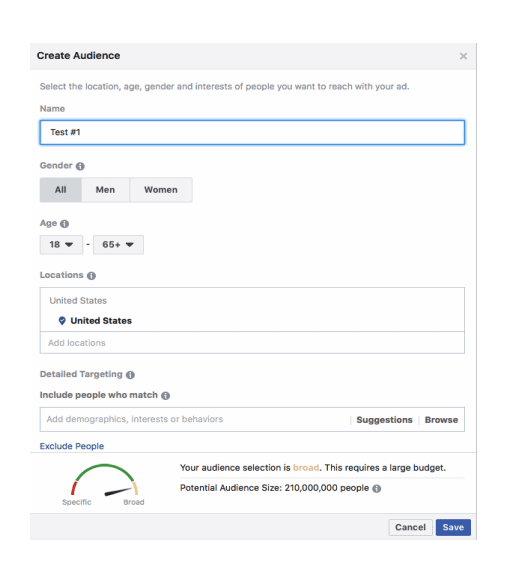
If you found this post helpful please review Brady O’Rourke here. 
Categories
Blog Email Marketing Online Marketing

Why You Should Consider Selling Online

We have truly entered a new age of commerce. Online marketing and sales are at an all-time high, and many businesses operate solely through a virtual platform. If your company does in-person work, it may be a good idea to look into getting involved with online sales. Here are a few reasons that selling online can greatly help your business and your image.

– The internet is a great venue for vendors. There is an ability to generate new clients without leaving your office, the opportunity to open your company up to a much broader geographical range, and the increase of potential inventory. Online marketing opens many doors with relatively low cost.

– Online shops also offer an easy buying experience to customers, allowing them to peruse a wide variety of items and make quick and easy purchases.

– Selling online allows you to be open 24 hours a day. There is no reason an online shop should ever close, so you are able to make a sale while you sleep or on the weekend without cutting into your private time.

– An online presence gives you the ability to provide your customers with an increased level of service. You are accessible to buyers on a new level, meaning that any issues with products or questions about purchases will be addressed quickly. As an added benefit, your customers will be more satisfied. You can also utilize online marketing to keep customers abreast of new developments from your company.

There is a wide range of benefits to conducting business online, from visibility and accessibility to increased customer care and decreased costs. Moreover, online sales do not have to negate the physical presence of your store, so what are you waiting for? It’s time to give your business a boost by taking it to the web.

Categories
Blog

Nashville Marketing Agency Trends

The economic trends in Nashville seem to be on the rise as of late. Nashville is a growing city, and the region is ever expanding. In fact, over the next few decades, the size of the city is set to grow to almost the size of Denver, which is a great expansion from where the city began. That growth is positive for the city and its residents. Nashville is gaining recognition far beyond the established perimeters of its musical claim to fame. With new workers flocking to the are, the job market is rising to match.

Another notable trend in Nashville is the recognition of the high quality of life it provides its residents. The city has been ranked in the Top 100 Places to Live in America, a designation that takes into consideration a multitude of factors. In order to qualify, a city must have exemplary employment statistics, education, housing, and recreation options. Nashville also ranks as one of the most affordable cities in the United States, allowing its residents to enjoy the low-crime city for a fraction of what other metropolises would cost residents.

In addition, the Today Show recognized Nashville as one of the five friendliest cities in the United States. This designation makes sense, as the low unemployment rate and generous opportunities give residents the ability to live comfortably within their means. Nashville is truly expanding, and its growth is poised to couple well with its long and storied history as a landmark of the Southern United States.

Categories
Blog

Meadowbrooks Farm Selects Digital Marketing Agency

Exeland, WI May 3rd, 2015 – Meadowbrooks Farm is springing into action this month with a brand new e-Commerce store. The beloved family farm recently announced its intentions to partner with the digital development company Social Link to launch a new web site.

For years, the Meadowbrooks family farm has grown some of the finest cranberries in Wisconsin. Locally, Meadowbrooks is celebrated for its homemade products. It produces superb jams, mouth-watering chutney, and a slew of other products.

Yvonne, the owner of the farm, is excited for the upcoming changes.

Soon, all of Meadowbrooks nonperishables will be available through its online store at www.meadowbrookfamilyfarms.com. Social Link is helping Meadowbrooks Farm imprint its brand on the site and roll out a splendid new design. You can find all of the events on the farm.

Scheduling, hours, and contact information will all be available. All of its products, from dried cranberries to cranberry chutney, will have product and pricing information. This will enable its devoted customers to order pie ingredients from the comfort of home.

The community is excited about the move, too.

All of its products have been made within the family for several decades. The Meadowbrooks name is built on freshly-grown cranberries and some of the best cranberry chutney in Wisconsin. Anyone familiar with Meadowbrooks will recognize the freshness of its food and the pointed tart taste of its pastries, and anyone who has spent time at the farm knows how much they care about what they do. That infectious, positive passion has bled into the site’s design, as well.

If you are looking for a new source of homemade treats, check out Meadowbrook’s new website. Feel free to stop by the page, drop an email, or find it on Facebook.

Meadowbrooks Farm is excited to be a part of the online conversation.

Categories
Blog Social Media Marketing Tips and Tricks

10 Important Social Metrics You Need to Watch

Choosing which social metrics you will follow can be a difficult choice. Part of the challenge lies in the fact that sales are not directly influenced by social media interactions, but they definitely help. Since following the numbers spit up by Facebook and Twitter is an inexact science, social media marketing comes down to following the most important numbers and understanding why it is happening.

We are providing you with the metrics our company has found to be the most important. It is up to you to use those numbers to improve audience interaction.

1.   Influence Score. Knowing your number of subscribers can be helpful. Audience size does positively correlate with business success but some subscribers are more vital than others. This metric tells you how influential someone is on a social media site. In other words, if Michael Jordan tweets about your product, more will listen than if average Joe tweets.

2.   Audience Share. This is the percentage of your target market your brand reaches when compared to competitors.

3.   Voice Share. This is how much of the conversation you have, as compared to competition.

4.   Amplification Rate. The more your posts are shared, retweeted, and reposted, the more your voice is amplified.

5.   Applause Rate. This metric records how many people enjoyed any given post, or number of posts over a time period, by measuring the number of likes, favorites, and other favorable actions.

6.   Virality. Virality increases the faster the content is shared throughout different social media sites. This is a great way to measure how successful your online marketers are at reaching customers.

7.   Bounce Rate. When customers visit your landing page then immediately click back, that is called “bouncing.” The higher your bounce rate, the less engaging your landing pages are. A high bounce rate will also hurt your SEO ranking.

8.   Sessions. The “session” metrics judge interactions between you and your web traffic. If multiple people visit your website because of a Facebook post, that is considered a session. The duration of the session can also be judged. This can be very helpful when hosting online events, webinars, or sales.

9.   Conversion Rates. This metric looks at how many conversions are made within a time period, as well as the going rate of conversion based on number of customers.

10.   CPA. Important to marketing, you need to know how much it costs for your marketing and advertising teams to land new leads.

Categories
Blog Online Marketing Social Media Marketing

50 Social Media Marketing Agency Tips for Small Businesses

The crux of marketing to people on social media is entertaining, valuable content. Yet viewers are fickle, and reaching customers can be all about employing the right strategy at the right time. Different social media sites provide different methods of engaging users. Twitter tries to pull people in and move them to another location to view videos, images, and news stories. Facebook lets you provide simple tips and opens up longer discussions.

Remember that the goal of social media is connection and the biggest social media platforms compliment one another rather nicely. The goal when reaching out to consumers is to give them a texture by using the sum of your parts, something they can reach out and engage. We offer these fifty tips to improve each individual part of your social marketing strategy so in the end you have created a full personality.

Facebook

1. Complete your profile. Banner pictures should show the best parts of your business, whether it is a new product, your store’s exterior, or a patently original aspect of your personality.

2. Not every post should be about your business or users will start to ignore your posts. Consider using Facebook as a place to have open conversations. Businesses strong in their community can share big, local stories.

3. Tidbits should relate to your business. You are a friend, but also a business. Never share irrelevant information.

4. Facebook provides a feature that allows you to poll users called “Question.” This actively invites participation, and keeps users coming back.

5. The more your page is visited by a person, the more often your updates appear in their news feed. This is not an active step you can take, but helpful when remembering how much audience engagement matters.

6. Always respond to questions from page visitors. When someone has a concern about your product, you need to let them (and everyone else!) know their concerns are being heard.

7. Facebook will share text-based posts more than posts that also include outbound links or images. While images are definitely more engaging, you may want to stave off using an image when promoting for an important event so more followers see the message.

8. Delete bad comments and spam. This one may be a no-brainer, but if you are unable to remove bad comments in a timely fashion, your business will suffer.

9. Incite competitions. Art contests are hugely popular in the online community, and winners love bragging rights. Competitions, especially as they relate to your business, are great at building brand loyalty.

10. Your email blasts should always click a link to your Facebook page. If you have online coupons, post them on Facebook and direct customers there.

11. Twitter should always be proudly displayed in your profile.

12. If something big is happening on Twitter, or a hashtag for your business is picking up steam, you should advertise the fact (and vice-versa).

Twitter

13. Keep track of your Twitter followers. Tweepi.com is a great way to engage your most influential bloggers and critics who have something to say about your business.

14. With Twitter, the more followers you have is the key to success. Find as many as possible. Look up hashtags trending in your industry and follow the most influential and relevant people. In general, staying an active part of the conversation will net you new followers.

15. Tweet constantly. This goes hand-in-hand with generating followers. A Twitter account that only posts once or twice a month may as well be deactivated. Work to get your frequency up to twice a day.

16. Get your content in the hands of the people who will care. All of your posts should contain hashtags to relevant stakeholders. Use groups, lists, and topics. Social media management is about reaching the right audience, not everyone.

17. There are many online software programs that allow you to automate retweeting so the best and the greatest of your tweets do not get buried under a pile of new content. This is an effective strategy for handling recurring events.

18. If you find bloggers that constantly deliver quality information, you can automatically retweet their content, too. This improves your tweet output without making Twitter a strenuous, ongoing activity.

19. A Twitter retweet best-practice is to always include the original poster’s name in your tweet.

20. There is no such thing as too much content. The life of a tweet is exceedingly short, so brazenly flood the market without fear of repercussion.

21. Follow anyone who says great things about your brand, this is a great way to gain good will.

22. Twitter provides lists that lets you keep tabs on your competitors. Make a list of all your competitors and set the list to “private.”

23. Use Twitter to provide expert knowledge on your area of expertise. Like Facebook, you can show what you know.

24. Give shout-outs to regular customers. They will become even stronger advocates of your establishment.

YouTube

25. Annotations are your very best friend. Adding them lets you link your video, in turn, showcasing relevant products and services to the right demographic.

26. Add all of your social media contact information to all About sections in all of your videos. Social media is about drawing customers in, making them hungry for more, and then redirecting them.

27. Find the influential people in your industry or business, and invite them to sit down for an interview. You can share these meetings via video.

28. Always automate video sharing to your other social media accounts, it saves time.

29. Use TrueView Advertising. YouTube ads are great because you only get charged if someone watches the whole video – yet viewers are able to skip the ad after five seconds. There are only two people who watch the whole video, those that leave their computer, and those interested in the product. However, this is an effective way to get your name out there by opening the video with your name and brand.

30. Keep titles consistent. If you have a regular series of how-to or self-help videos, the name of the series should be proudly displayed so users can quickly identify with the label.

31. YouTube videos appear on search engines, so remember that video titles are essentially mini keywords.

32. Likewise, every video should include keyword tags.

33. YouTube has Analytics tools, just like Google. You can keep track of when people stop watching your video, if they skip to a certain part, and more. This information is great for optimizing your content, because over time you can get a feel for what is working and what fails to engage. Above all, video content should be engaging.

34. The over-achievers have a brand-specific, brief segment at the end of their videos that tells more about their business. This is a great way to wrap up each segment, like the epilogue of a novel.

LinkedIn

35. Your profile should be public. A staggering number of businesses forget to do this.

36. Some businesses find it prudent to add a FAQ or Q&A with answers that lead back to their website, blog, or other relevant site.

37. LinkedIn has perhaps the best targeting services of any social media site. Their advertising platform almost always reaches the correct demographic. Groups on LinkedIn are also notoriously active, which means that well-constructed ads are highly shared.

38. Consider adding a separate LinkedIn profile for your blog. What this does is better identifies the expertise that is writing for your company.

39. LinkedIn allows you to showcase important pages. Introduce new products, provide an additional place to show off best-sellers, or even pair with a complementary brand.

40. LinkedIn accounts can have apps added. You are able to upload blogs and Twitter feeds, special services, and other helpful brand-specific tools. Slideshare can also be added, if you have active, continually updating downloadable content.

41. Your profile needs to include skills and services. It creates a great impression with users and better identifies your specialties.

42. Campaigns that are seemingly dead in the water can be paused and re-launched to refresh ads. This keeps your company from constructing multiple ads and essentially lets you try a second time.

43. LinkedIn allows you to opt out target groups of peoples and interests, funneling your ads toward the correct market.

Blog

44. Blogs are incredibly important for businesses. Not only do you get to show off your knowledge, but they also provide additional chances to incorporate keywords important to your company.

45. Be as candid as possible when constructing blog content. Patting yourself on the back will only alienate readers. Remember to show rather than tell. Transparency in your writing increases the chances that visitors will trust what you have to say.

46. Do not insult competitors… directly. “Bashing” the methods of others is never the correct approach, it makes your business seem petty. Always remember to frame differing methods as the “weaker” and “stronger” approach. Specific insults can also result in lawsuits.

47. Blogs are the foundation of your knowledge, personality, and industry leadership. In other words, you need your content to be top-notch. You should never produce filler just to get a post out there, nor should you write drab, incoherent puzzles. Readers should feel excited and engaged to be learning from you. Remember, there are hundreds of other internet experts they can turn to, but they found you.

48. A good headline will draw in readers, and it also contributes to your SEO. List-
based articles are known for drawing in readers, and they also provide a built-in template for your content.

49. Signing up for your email newsletter or subscribing to your blog should be very easy. As your readership increases, they will want the announcements for your new posts to be immediate and automatic. Limit to just email or email and name if you can.

50. Guest posts are a great way to get other industry experts involved with your business and website. If you can land a name that is easily-recognized, you stand a good chance to receive a temporary (and hopefully permanent!) influx of traffic.

Categories
Blog Email Marketing Online Marketing

Smile! How to Market With Personality

Consider what holds your own attention in a website. What about the services and personality of your favorite website has drawn you in time and again, giving you a digital home? Chances are you are involved with at least one website that has built a connection with you. The key to a successful online business lies in forging a bond with regular readers.

Our internet marketing company is in Nashville, and we would not be where we are today without our community. We have gotten to know our customers and web readers overtime by building relationships. Over time, we have learned how to reach consumers, and hope you can, too.

Here are few tips on how to generate a relationship with your customer base:

• Generate compassion. The first step to building trust with your web traffic is by making them see you as people, rather than a faceless robot spitting out impersonal content. Consider using Twitter. Some companies even use Twitter to inquire about what their readers want. A food company that asks about table settings or a call for blog topics engages users shows you are also listening.

• Be active and charitable. Provide free information that helps users. Small businesses that utilize a blog with great information will build a regular readership. There are a number of ways to charitably reach readers, consider how Home Depot and Lowe’s both provide free “how-to” videos. Pest control companies might provide advice on tracking pests, curbing infestations, and eliminating small problems.

• Stay Personable. Even as a respected business need to keep open communication with their customer base. Actively engaging with consumers creates a line of communication they will access when ready to purchase.

Your “about” page is a great place to start a customer/business relationship. This page isn’t formal, so feel free to inject some personality. Maybe tell a joke or two. Once you have readers’ attention, move the conversation to a more relaxed setting. Social media outlets are great for getting to know your readers.

Categories
Blog Online Marketing SEO Tips and Tricks

A Quick Guide to Optimizing Your website for Bing

Companies are so focused on the importance of optimizing their search results for Google, they often forget the power in including Bing in their online strategy. This could be a mistake, however, since last year Bing held nearly 20% of the search market.

Bing may not surpass Google anytime soon, but while your competitors are busy chugging away at Google SEO, now is your chance to pull ahead in this growing search market. Take advantage of this opportunity for Nashville search engine optimization and capture a new, largely unexplored market.

Bing’s Focus: What Matters

Keywords Matter (More). Google’s algorithm is pretty advanced. It excels at sifting through all the text on your webpage and figuring out content reliability. Bing locates your site by focusing more directly on what is typed into their search box. If your business works in a highly-specialized field, you want to focus your efforts around specific keywords.

Anchor Text and Internal Links. Google is great at judging where your links send users. Outbound links and backlinks are less-favored than using internal backlinks with anchor text focused on your keywords.

Visual Media Reigns King. The impressive range of decisions Google’s algorithm makes when a search is typed allows Google to judge websites on the text. To separate themselves, Bing has focused their efforts on celebrating the websites that utilize audio, video, pictures, and other visual media. It is great at sifting through pictures, and uses a special technique called entity understanding. This allows the search engine to discern whether the picture is a person, place, or object.

Disavow Links. Bing has provided websites with the ability to disavow links that you do not want to be associated with. This is a great way to mitigate the damage done by excessive link-building practices, associations with websites that are spamming lots of SEO links to you, or removing any connection with a flagged website.

Categories
Blog SEO Web Development

How Google’s Recent Changes Necessitate a Mobile-Friendly Site

Mobile-friendly technology is becoming more vital. By not having mobile capabilities, your website’s ranking decreases. More than half of internet traffic comes from mobile devices. As of today, none of the major search engines actually directly penalize you for not including mobile capabilities, but that seem soon to change. There are also many ways you get penalized if your site is accessed from a mobile device, which in turn imparts a bad user experience.

How You Lose Ranking without Mobile Capabilities

Google is likely to include penalizations in the near future for companies failing to launch mobile websites. They already practice the following:

  • Google uses bots to scan sites as if they were a smartphone to see how user-friendly the site is.
  • New Google Analytics tools allow marketers access to more specific mobile traffic data.
  • Loading speed is very heavily penalized by Google, so a mobile phone loading too much data will hurt your ranking.

The Benefits of Mobile SEO

At the very end of last year, Google revealed a new search feature: websites that give great mobile experiences include a tiny “mobile friendly” icon. This announces to readers that if they visit the site, they are more likely to find what they want without hassle. Google’s new distinction trains people to perform mobile searches through them.

Mobile sites are more-often bookmarked because users want to type less into their browsers. A higher chance of being bookmarked means more repeat traffic; another criteria for rank in search engines.

As your mobile ranking rises, your sales will increase. More click-throughs and more sales translates directly to better ranking across all your keywords. Get your responsive design as soon as possible to keep from falling behind!

Categories
Blog Online Marketing Social Media Marketing Tips and Tricks

Meerkat, the Video-Based Social Media Site Companies Should Watch

The new social video app called Meerkat is quickly gaining popularity. You have likely heard of its incredible versatility. Launched in February earlier this year, it began gaining traction around the beginning of March.

At the end of March, Meerkat already has more than 120,000 users. With this app, users stream live videos, uploading the content to Twitter which then invites followers to the stream.

There are a few explanations for why this app is so popular:

  • Our brains are predisposed to connect to others via faces when learning new things. Users are far more likely to retain information when they can see the face of the person imparting the content.
  • Aesthetic appeal matters to our eyes. Hollywood uses pretty people to reach us at our basest levels.
  • Body language imparts more information than words. What this means for marketing is that if the person showcasing a product is excited, followers will get excited, too.

How Can Your Business Use Meerkat?

First, let us answer why you want to stream directly to customers. The answer is very simple: users want personalized content. Internet marketing in Nashville is no different than anywhere else in the country, so consider wide reaching techniques. To be successful anywhere, you must capture your audience directly with personality, and there is nothing more personal than engaging someone directly. Meerkat allows customers to speak to marketers and business owners directly via Twitter and ask questions while the stream is still live.

Consider these specifics instances where Meerkat could help your business:

  • Events. If you are hosting or advertising an event, your company can keep people that live far away from missing a conference, special reveal, or important information. You can provide videos that show things “behind the scenes.” Treat it like the ever popular special features on DVDs.
  • New Products. Major video game companies wait until E3 to show off their new products. Apple regularly holds product launch events to display new iPhones, tablets, and other devices. Meerkat allows companies to not only show products directly, but also answer questions consumers may have been directly addressed. Companies can also release important promotional material or talk about upcoming sales.
  • Interviews. Great leaders make themselves accessible. Instead of sending blasts from the CEO or doing reddit AMAs, company leaders can speak directly to their consumers.

The possibilities are endless, ranging from telling stories, launching new hashtag campaigns, or giving tips on using products. Get involved!

Categories
Blog SEO Social Media Marketing Tips and Tricks Web Development

15 Link Building Ideas for Better SEO

I was recently working on a project where I had to really dive deep into the link building strategy for a particular client. While doing my research I ran across everything from tactics in 2006 that have thrown some website into a Google purgatory to all the white hat must dos in 2015.  I have always found SEO Moz, SEO Book, and Search Engine Land to be great resources in general for all things SEO.

So without further ado here are the top 15 link building ideas I found most helpful.

1. If you need to build a post with a lot of content build a top “101 list”. A lot of times these will get Dugg or shared on social and can provide some pretty decent link juices to your site. If they are useful enough others will link to it naturally on their blogs.

2. For quick and easy posts do a “top 10 tips and tricks” [ehm]. Its quick and easy for the user to get the information and go. They also have high incentive to share if useful to the user and the niche they serve.

3. Make a list of extensive resources for a specific topic. Use your bookmarks and stay organized with all the tools available to you. There are a lot out there.

4. Flattery is the best form of incentive to share. Find experts in the field and make them part of a top 25 list. They would love to tell everyone they made it!

5. Do the opposite of #2 and create a list of myths or common misconceptions in your specific industry.

6. Join your local business sites and directories. Join the Better Business Bureau, Chamber of Commerce, City or Government sites, LGBT sites, local libraries, etc.

7. Review relevant products on retail sites like Amazon, eBay, Alexa, ePinions or whatever you niche is in.

8. Link to other blogs. Its good to have friends in low places. Its better to have friends in high places.

9. Become a sponsor of something. Maybe a local charity, something seasonal, or community driven. They almost always feature you as sponsor on their site.

10. Create original and useful tools. A calendar for show times, a traffic estimator, or price comparisons.

11. Footer links are generally frowned upon. But in my industry its appropriate to link in the footer. In this case, point it to an internal page.

12. Offer something free for a review, feedback, or mention.

13. If you have the resources…. Launch a firefox or chrome browser extension.

14. Anyone can take formal pictures. It’s the drunk celebrities and people in their underwear that makes for great link bait on social media. I decided to test the truth of cats and clicking for this post.

15. Make sure whatever it is you create – videos, tips, tricks, infographics, etc – make sure it is useful. Quality and originality equals virtuality.

Categories
Blog SEO Tips and Tricks

Breaking SEO News: What’s in the Headlines

Learning the latest SEO tips and tricks is great, but it’s also crucial to simply maintain a basic awareness of SEO changes, trends, and events. Keeping up on industry news will strengthen your knowledge base and help you apply the latest information to your own SEO campaign where appropriate. Here’s what’s happening:

Google Penalties

Google is not particularly forthcoming regarding its issuance of penalties. Some site owners and managers don’t even know they’ve been penalized until they find that their content is no longer near the top of search engine results. Websites that feature guest bloggers, such as MyBlogGuest, are the latest to figure this out. Google’s Matt Cutts reports that this type of content has been frowned upon because it has become more of a “spammy practice” over the years. This isbecause they largely function as a way to gain links – not as a means of distributing high-quality content that is relative to their industries.

Web Conversion Tips

While there are countless techniques for web conversion, some options have emerged as the most ethical and effective out there. These include contact forms on home sites, whitepapers available for download, user-friendly shopping carts, newsletter subscription capabilities, and compelling calls to action. These are the areas in which visitors settle into the top of the well – known “conversion funnel.” Without them, even the best businesses, services, products, and websites are ineffective. Whether B2B or B2C, these useful tools have solidified their roles in the marketing industry.

Shopping Campaigns

Google Shopping Campaigns are on their way to replacing Google’s current ad format. Both of these platforms display products from advertiser inventories. Not only will there be differences in format, however, there will be adjustments to campaign structures. Consider these features:

• Multiple Ad Groups. Products can be segmented into groups with specific attributes, like “best sellers.”

• Bid Simulator. If bids are too high, this feature will report the potential losses that may result from a difference in cost.

• Impression Share. This component of the new shopping campaign provides competitor information that can be used to optimize strategies.

These renovations are also excellent opportunities to further test and sharpen existing nuances, such as geo-targeting, mobile compatibility, and dayparting.

Predictions for the Future

Google’s penalty standards are ever-evolving and advancements in web conversion will likely continue. Shopping campaigns are not the only online marketing features that are predicted to change. Video marketing, for instance, is not a new phenomenon. However, all signs point to new and improved changes to its use. Facebook has introduced an enhanced version of its mobile ads platform. Video marketing combined with the best potential for mobile compatibility will result in continued growth.

The diversification of social media platforms is another area that will continue to thrive. It’s no longer about Facebook, YouTube, or even Twitter. Instagram, Pinterest, Vine, and a host of others have solidified their online presence and reputations. Due to their credibility and stability – not to mention their effectiveness thus far – B2B and B2C businesses alike will not pass on the custom engagement and humanizing possibilities they offer.

Categories
Blog Tips and Tricks

From the Experts: Tips for Increasing Brand Awareness

Boosting brand awareness online is a primary motivator behind launching an internet marketing campaign. What steps has your company taken to spread the word about your brand? Take a look at these expert tips from a recent survey:

Go beyond the blog. Pat Flynn, a successful entrepreneur, recommends going beyond the blog to incorporate videos, podcasts and webinars.

Become the customer. According to Declan Dunn, acting like a new customer and searching the internet can provide valuable insights into your next brand awareness strategy.

Focus on value. One tip from Kristopher Jones is to “focus on adding value” to your content. It’s not all about the sale.

What tips do you have for increasing brand awareness online?

Categories
Blog Social Media Marketing Tips and Tricks

Optimize Facebook For Your Business

facebook21

Linking It All Up: Making Business Connections Through Facebook

In today’s high tech marketplace, using social media can make the decisive difference between a business that is growing and one that is stagnating. At the forefront of the social media scene, with over a billion users, is Facebook. While it may have gotten its start as a central destination for college students, today’s Facebook users come from all demographic groups. This makes Facebook a critical tool for any business looking to actively grow its customer base and build brand loyalty. Facebook offers a wide variety of possibilities for engaging customers over the internet. Try these tips for optimizing your business’s Facebook profile, and watch the returns roll in.

Use a Vanity URL

One feature of Facebook is that users can customize their URL, rather than using the randomly generated combination of numbers and letters otherwise assigned to profiles. Choose a simple vanity URL using your business’s name. This will make it easier for potential customers to find your business’s Facebook page. Make sure to add this URL to all of your company’s advertising communications, such as business cards and newsletters. You want everyone who works with your business to be reminded to check out your company’s Facebook page.

Create a Landing Page

When businesses think about Facebook, many erroneously believe that all Facebook pages look the same: contact info, a few links, and that’s about it. But it doesn’t have to be this way. One way to draw customers to your Facebook page is by creating a landing page or welcome screen that appears to any new visitor. Your landing page can invite users to like the page and often offers them an incentive for engaging, such as coupons or entry into a contest.

In addition to offering promotions, a Facebook landing page can also be graphically interesting, displaying a well-designed advertisement or other image, for example, rather than just the usual Facebook skeleton. Once customers like your page, they can then move on to the more typical Facebook structure, displaying your posts and business information. But that first incentive to engage with your page is important – once customers “like” your page, they subscribe to your posts, integrating your business into their individual Facebook experience.

Gather Customer Data

Another feature that can be added to a business Facebook page is a customer information form. Just like a form on any other website, a Facebook form can allow customers to enter things like their demographic data, email, birthday, and phone number. This kind of information can help businesses get a sense of who their audience is and can also be used for other business promotions, such as birthday coupons. Customer data is extremely valuable for understanding who your business is reaching and better targeting your outreach and advertising.

Share Photos

Do you have photographs of your staff at a company event? Or of satisfied customers using your product? Sharing relevant business photographs on Facebook is a great way to build your brand. Informal photographs help to make your business seem real and friendly to potential customers. Invite customers to submit photographs of themselves using your product and make sure to capture company events on camera, like holiday parties or office birthday celebrations.

Play The Expert

One thing that your business should absolutely be sharing on Facebook is industry insights. Post links to articles about innovations in your industry to demonstrate your engagement with the field. Your Facebook communications do not need to all be explicitly about your specific business, but should reflect the position of your company in the larger marketplace. Posting this type of information also encourages other businesses to engage with your Facebook page, not just individual customers. In the same vein, “like” the pages of allied businesses to create a larger picture of your company’s place in the industry.

Create Content

Facebook content can come in a variety of different forms. Some of it, like links to relevant articles, is produced by people outside of your company. The majority of the content on your business’s Facebook, however, should be company specific and created by your company. Post short updates daily or every few days that tell customers what your business is doing. Did you just get a shipment of a new product? Are you collaborating with another company? Are you offering a promotion? All of this should be shared as status messages on your Facebook.

Another type of content to focus on for your company’s Facebook page is blogs. Publish blog posts at your main website and link it to your Facebook. This allows you to share longer form information about your business and can help redirect customers from your Facebook to your main website. By engaging customers in multiple online forums, you increase their familiarity with your business and make potential customers more likely to become actual customers.

Use Widgets

What’s a widget? A widget is a tool that can be embedded in your web page to increase functionality. Companies like ShortStack offer widgets for you company’s Facebook page that can make it do an assortment of new and exciting things. For example, ShortStack offers a widget that can help your company run contests through your Facebook page. The widget allows your Facebook page to collect customer information so that you can choose a winner. But that’s not all widgets can do.

Widgets are great for improving the ability of customers to interact with your company’s Facebook page. ShortStack, for example, will not only help integrate YouTube, Vimeo, SoundClound, and more into your Facebook page, but will also offer a wide variety of ways for your visitors to engage with all of this media. ShortStack’s widgets are free for small business pages and cost as little as $15 a month for businesses with more than 2,000 Facebook “likes.” This makes widgets a low cost way to get a huge return on investment.

Integrate Your Social Media Presence

Another way to integrate your social media presence and draw in customer interest is by taking advantage of the different formats that each platform specializes in. For example, a customer might ask you a question on Twitter. Since Twitter is a short-form platform, try writing a blog post on your home webpage, answering the question. You can then link this blog post to Twitter, answering the question, and post both to your Facebook page. This may sound like a lot of steps, but in reality, combining your social media presence in this way will reward your business with much greater customer involvement.

Making The Most Of Social Media

Managing your social media presence is a critical part of running a business in the 21 and one of the great things about social media is that it is essentially a level playing field. Even the smallest business can have a dynamic Facebook presence with just a little time and effort. That means that whether you have 200 customers or 2 million customers, social media can benefit you. A strong social media presence can help to build brand recognition and loyalty, particularly because it puts a personal face on every business. With Facebook, you can treat every customer like a friend.

Categories
Blog Social Media Marketing Tips and Tricks

Facebook-Based Contests For Your Customers

facebook contests

Running Contests Through Facebook

One way to generate increased interest in your company’s Facebook page is by running a contest. Customers and potential customers love contests – the chance to win something by doing virtually nothing is hard to resist. And that’s the beauty of online contests. Typically all a customer needs to do is to enter their contact information, hit “submit,” and cross their fingers. Facebook can be a great platform for running contests, and those contests are good for business.

Why Companies Run Contests

Contests with modest prizes are, like many forms of advertising on the internet, a low cost way to get a big return on investment. One thing that sets contests apart from regular internet marketing, however, is that it makes it even easier to reach new customers, rather than just engaging current patrons. The technical term for the effect contests have is “lead generation. This means that contests literally create a larger audience for your business.

There are really two parts to lead generation: you are both growing your general customer base, and more specifically, you are growing the audience for your Facebook presence. Because customers typically have to “like” your Facebook page to enter a contest, your company’s regular social media programming will become part of their feed. This helps to generate brand recognition and can help convert potential customers into actual customers. You can also have customers enter contact information and demographic data when they enter a contest on your page, helping your company build a database of customer information.

Another reason why companies run contests is as a way of rewarding current customers. This act of rewarding often has a return effect, even for those who don’t win. Because contests are understood as an act of generosity, customers often feel obligated to reciprocate by making apurchase. This can make contests very profitable.

The Mechanics Of Facebook Contests

To run a Facebook contest, you will need to use an application. Facebook does not host contests through any type of native programming. Apps for running contests can range in costs from nearly free to hundreds or thousands of dollars a month, so make sure to choose one that is both flexible and affordable. The application you choose can be installed directly on your company’s Facebook page, and ideally also on your company’s main web page. When you download a contest application, that application will create a new tab on your company’s Facebook page through which to run the contest. Different applications will structure your contest in slightly different ways, but they all ultimately work on similar principles.

It is also important that you know Facebook’s contest rules before you try to run one. There is an extensive list of rules about how to run a Facebook contest. One of the most important is that you cannot use a native Facebook tool, such as the “like” button to have customers vote on things. This is one way that Facebook prevents users from running contests without an application.

Another important rule is that you cannot put reminders to vote or enter a contest in your cover photo. When it comes to notifying contest winners, you must first email, telephone, or otherwise notify winners of a contest before you can announce their name on your Facebook page or contact them via Facebook message. Finally, when you post a Facebook contest you must make it clear that Facebook is not the one sponsoring your contest. Make sure to read these rules carefully before attempting to run your Facebook contest.

Making Your Contest Successful

It can be hard to tell which Facebook contests will really be successful in bringing in a new audience and engaging customers, but there are several things that your company can do to improve the odds of running a successful contest.

  •  Integrate your social media platforms. It is not uncommon for companies to think of Facebook as the only medium for their contest, but customers are using all kinds of different social media platforms. Link your contest through your homepage, to your Twitter, and through any other social media platforms your company uses. This makes sure that no customers are left out.
  • Engage customers in choosing a winner. Once they have entered a contest, it is easy for customers to stop engaging with your company’s Facebook page. Give them a reason to keep coming back by involving customers in choosing the winner. How can you do this?Take a page out of Zipcar’s book. For one contest, Zipcar selected a group of finalists to win a trip. They then asked those finalists to make videos explaining why they wanted to go on a trip. Customers were able to watch the finalists’ videos and vote on the video they thought was the best. Strategies like this can help keep customers engaged in thelong term.
  • Encourage customers to check in. One mistake that companies can make is to overlook the relationship between the social media presence and the brick and mortar business. A great way to solidify the link between the two is to make “checking-in” at your store a part of your promotion. Facebook’s check-in feature allows customers to post statuses that note when they are in a particular location. Adding a check-in feature to your Facebook contest is also a method of lead generation, growing the audience for your social media site.
  • Choose the right prize. A Facebook contest will really only be successful if you choose a prize that is appropriate to your business. Sure, there are plenty of high-profile things that your company could give away, but if they have no relevance to your business, they aren’t helping to build your brand. This is a common mistake that companies make. One popular item to give away is an iPad. This makes sense if you are a technology business, but less sense if you are a hair salon. Keep your prize relevant if you want it to really contribute to your company’s brand.
  • Use Facebook ads. One of the difficulties with a Facebook promotion is that without additional outreach, it will only reach the people who are already engaged with your company. Facebook ads can help your company to reach a new and wider customer base. Keep your Facebook ads simple and clear and watch the new visitors roll in. Facebook ads are also a great tool because Facebook excels at targeting users with specific interests. This makes it much more likely that your ads will reach a receptive audience.
  • Follow up with the winners. The winner of your Facebook contest is a great person to target when looking for an endorsement. Follow up with your winner and ask them to write a guest blog or make a video showing them using their prize or talking about their satisfaction with your company.

Will A Contest Benefit Your Business?

Not every business will benefit from holding a Facebook contest. Small companies that target a niche market are far less likely to benefit from a contest than companies with a wider reach. Consider what your company’s goals are in running a contest and whether or not there are other ways to meet them. Maybe running Facebook ads independent of a contest will get you the same results. Or maybe your company would benefit by producing more original content, rather than running a contest. Running a contest just because people like contests isn’t a productive thing to do.

If after consideration you think that your company will benefit from running a contest, then go ahead! Pick a great and appropriate prize, choose a Facebook application, and get started. Facebook contests can be extremely rewarding, help to build brand loyalty, and increase your customer base when well executed.

Please comment with any ideas you have used recently. Thanks for sharing our content! 🙂

Categories
Blog Social Media Marketing Tips and Tricks

Instagram video – a vine killer?

instagram-vs-vine-feat1

Is Instagram Video The Next Big Thing?

Last week, the digital photo program Instagram – best known for allowing smartphone users to tint and alter photographs and share them with friends – released a new feature: video. Instagram’s video service is up against competitors like Vine, which specializes in video, and already has a significant user base. Can Instagram’s video program compete with Vine? Or can it carve out a new market niche? Let’s look at some of Instagram’s video features.


#1 – 15-Second Video


Instagram’s video clips are 15 seconds long, more than twice the length of Vine’s 6-second video clips. While still short enough for the sort of instant uploading and sharing Instagram is known for, the 15-second format has generated a lot of interest. 15 seconds is also the length of short internet video advertisements. Many are wondering if there will be some kind of advertising connection coming in the near future.


#2 – Filters


It wouldn’t be Instagram if there weren’t an assortment of filters that could be applied to your video. There are currently 13 filters available for Instagram videos. Since filters are a large part of the Instagram brand, this is an unsurprising feature. Video filters work in much the same way as photo filters, adding a tint or coloration that often makes the product look vintage.


#3 – Analytics


Instagram is no newbie to the internet ratings games, and so their video program was launched with accompanying analytics. This is great for bloggers who want to see how well the new video format is reaching their audience. The analytics feature encourages users and businesses to take their Instagram videos to bigger platforms.


#4 – Editing


As part of their video program, Instagram has integrated basic editing features. Essentially, users are expected to film their videos clip by clip. You can only delete the last clip that you filmed, so with Instagram video, you need to edit as you go. At this point, there is no hint that more comprehensive editing tools are anywhere in the pipeline.


#5 – Stabilization


Instagram’s video will eliminate the shaky hand effect that often accompanies smartphone videos. This is called the Cinema feature in the application and it definitely provides for a smoother video production experience for users.


#6 – Cover Frames


Instagram allows users to select a single frame to show as the cover of their video. This can be a particularly great image from within the video or something like a blog URL written out, reminding users of the larger brand being marketed by the video.


Features Businesses Are Jumping On


Instagram’s video application is only days old, but already there are certain parts that have generated interest from both small and large businesses. The main point of interest is the video length. Because Instagram videos are the same length as internet advertising spots, many companies are in the process of working up Instagram-based product advertisements.


The cross-platform potential of Instagram is another popular feature that businesses are examining closely. Instagram is not yet offering embed codes for its videos, but you have always been able to cross-post things between Instagram, Facebook, Twitter, and Tumblr. This means that Instagram videos have the potential to pop up on a variety of social networks.


Of course, another feature of Instagram video that is holding the attention of businesses is the cost of creating advertisements. Because Instagram is part of the level playing field that is social media, production costs can be low, but reap a major return on investment if an advertisement is successful.


American Licorice Co.: Ahead Of The Game


Because Instagram video has just hit the scene, most companies aren’t ready to fully use it yet. One company, however, is well ahead of the rest, and has already posted its first Instagram video advertisement on Facebook. That brand is the American Licorice Co., the maker of the popular Red Vines candy. The American Licorice Co. quickly put together a 15-second film spot about how Red Vines candy “makes the day sweet, no matter where it takes you.” It’s too soon to say if customers are biting, but it’s not for lack of effort on the part of this company. Other brands are sure to follow.


The Competition With Vine


As soon as Instagram video hit the ground, users started comparing it to another social media-style video platform – Vine. Vine is dedicated to making short videos and has a particular appeal among younger demographics. In many cases, though it only makes shorter videos, Vine is coming out ahead in the race between video applications. In one competition, a popular photographer and videographer on both platforms made identical stop motion animation videos on each platform and polled the viewers. Nearly every one of the thousands of viewers chose the Vine video over the Instagram video as their preferred video.


Vine and Instagram are perfectly paired to enter a video showdown, particularly because Vine is owned by Twitter, and Instagram is owned by Facebook. Each program matches the larger format of its owner well, with Vine making shorter videos that suit the abbreviated Twitter format, and Instagram working in the slightly longer form like Facebook. Instagram’s videos are more like YouTube videos, playing only a single time when the play button is pressed, as opposed to Vine’s constantly looping videos, which tend to appear more like GIFs.


Currently, one of the reasons Vine is pulling ahead of Instagram is the lack of an embed feature on Instagram. Vine’s videos can be easily embedded, meaning that they can be transported to any social networking or blogging platform. At launch, Vine was in the same position as Instagram, and did not offer an embed feature, so it is expected that Instagram will introduce this feature within a few months. A few months is more than enough time for Vine to pull ahead in the video production game.


Still, for those interested in making slightly longer videos, and those who are looking for more editing options, Instagram video might hold just the right amount of appeal. Because Vine doesn’t offer an editing option, you have to discard the entirety of any video that contains a mistake. Admittedly, because Vine’s videos are only 6 seconds long, you won’t be losing a lot of work, but it can still be a hassle. Instagram allows you to delete the most recent section of your video and start over from an earlier point. It also has its ubiquitous filter feature, without which it simply wouldn’t be Instagram. These editing features could be enough to sway some Vine users over to Instagram.


Which Format Is Best For Business?


By and large, while Vine may remain popular with a small base of loyal, mostly younger users, Instagram video is a better format for businesses looking to get into video. The longer format is an advertising length that companies are used to, and the looping feature on Vine is more of an annoyance than an improvement when it comes to advertising. But the biggest aspect that should draw businesses to Instagram is the massive user base on Instagram. There are currently about 130 million Instagram users, compared to only about 13 million Vine users. If you want to reach a wide audience, Instagram is the way to go.


There’s still room for development in terms of video quality, embedding, and even editing, but Instagram video is well on its way to changing the face of online marketing for small and large businesses. In the short, do-it-yourself platform of Instagram video, everyone can compete for a share of the market.

Categories
Blog Social Media Marketing

The Power of Facebook Hashtags

url18

The Power Of Facebook Hashtags for Businesses Big and Small


The use of the pound sign, or “hashtag,” to create internal links in status updates began with Twitter, where it helped users to find followers with similar interests, talk about events, and disseminate news quickly. Twitter and its users mastered the hashtag and the associated concept of “trending” topics, making it a critical tool for companies and individuals alike. In fact, since their introduction on Twitter, hashtags have spread all over the internet, appearing in surprising places and without any of the associated links. And now the hashtag has come to Facebook.

In this past week, Facebook has added a hashtag feature to user posts. This is not to say that people weren’t using hashtags on Facebook before – they just didn’t really mean much, because they didn’t link anywhere. This new era, however, promises to revolutionize the way conversations are had on Facebook, and that means a whole new world is opening up for businesses. Whether you run a small start-up or a corporate giant, Facebook’s hashtags have the potential to change the way you interact with your customers. Get ready for the next big thing in social networking, because it’s here.

Big Picture Tips For Businesses Using Facebook Hashtags


  1. Don’t use too may hashtags. Hashtag use should be limited and strategic. If you use too many hashtags in your posts, your company will be branded as unfamiliar with basic internet phenomena – not a great reputation to have.
  2. Avoid common hashtags. If you are a computer company, it may seem like a good impulse to tag your posts with “computers” or “technology,” but think again. These terms are liable to turn up on a myriad of irrelevant posts that will distract from your message. Come up with a company-specific hashtag and use that on your posts instead. Common hashtags will just get in your way.
  3. Focus on holidays and special events. Associating your brand with a holiday or another relevant event can help to build your brand image and can make you the go-to business during that holiday. For example, the annual M&M’s Christmas campaign is part of a larger brand image. Christmas would be a good hashtag for the M&M’s marketing team to keep an eye on, and potentially use to target buyers during the holidays.
  4. Prioritize engagement over sales. While it is important for any business to try to make sales, that isn’t the most important part of social networking. When developing a social networking platform, companies should work on getting more people to use their hashtags to communicate with and about their companies. This kind of interaction helps to build brand loyalty in a way that goes beyond a single sale.
  5. Keep it brief. Unlike Twitter, Facebook has virtually no post length limit, so it is easy to go overboard with content and lengthy posts. Attach your hashtags to pithy and effective posts, rather than at the end of long rambles. If you want to talk about a bigger issue, such as industry trends, use a link instead. Hashtags at the end of Facebook treatises will be ignored.
  6. Pay attention to innovation. Facebook hashtags, and hashtags on a larger scale, are likely to undergo some major changes and improvements in the upcoming months and years. As a new technology, users should be aware that there are probably new tools and uses coming down the pipeline.

Small Business Tip: Use Hashtags to Find Customers


One way that small businesses can take advantage of the new hashtags on Facebook is by monitoring relevant conversations. Brainstorm which hashtags are likely to be associated with your business or service and check out those conversations. For small businesses, this targeting aspect of Facebook’s hashtags will be one of the most useful components, although in some cases privacy settings will form a barrier.

Think beyond just the primary hashtags and keywords associated with your brand when executing your search. For example, if you are a portrait studio, you might want to follow not only tags about photography, but also about major life events that people might want to capture, such as birthdays, anniversaries, and graduations.

Big Business, Bigger Pie: Hashtags For Product Reviews


If you work for a large national corporation, seeking customers on Facebook may mean looking at too big of a population to really work with. Your slice of the pie is just too big for that kind of search (although Facebook is probably doing this for you – watch out for changes in advertising structure). Instead, search your company’s hashtag for product reviews. Hashtags are a great way to find out what customers are saying about your products, and you can use this to your advantage.

Say you find a few customers saying great things about your washing machines, using your company’s hashtag. Use Facebook’s sharing mechanism to disseminate that post to the client base that likes your page. This pairing of a unique customer face with your company can help you to stand out and demonstrate to others that your company is doing good work. Endorsements go a long way when it comes to building your brand.

Offer Rewards Through Hashtags


Part of using hashtags is getting your customer base to use them so that you can track conversations about your product. But how can you sell customers on your hashtag? Many users have suggested that they would be more willing to share a company’s hashtag if they were given a discount or other reward for doing so. While this can be hard to track, a small rewards program tied in to hashtag use could be just the boost your business needs to get the conversation going.

Hashtag Campaigns For Big and Small Businesses


One way that hashtags can work well for businesses (both big and small) is through strategic use on posts related to a special promotion or an upcoming event. Twitter really pioneered the use of hashtags for tracking events – people were known to live-tweet conferences or athletic events. The same can be true for business campaigns. Develop a tag to be paired with a particular advertising campaign and you can greatly expand your audience. Try something fun and memorable – think Charmin’s “#tweetfromtheseat,” for example – that will have customers tagging all their relevant posts.

Hashtag Cross-Pollination For All Businesses


One important feature for brands to look out for is the cross-pollination of hashtags between different social networking platforms. If you post an Instagram photo with hashtags to your Facebook, those tags will link to the Facebook conversation there and the Instagram conversation back on its home site. Suddenly hashtags have become mobile in a way they couldn’t be before. This means that companies need to be aware of which platforms they are advertising to, because their hashtags are probably more mobile than they think.


Watch Out For Hashtag Changes


Right now, hashtags are primarily serving as a discovery tool – businesses and their customers can use them to see who else is having a conversation about Heinz mustard, for example. But changes are probably right around the corner as Facebook adjusts to the hashtag feature. Expect hashtags to become a way for businesses to advertise on Facebook, stepping in where things like Sponsored Stories failed.  Businesses will want to be even more strategic in their hashtag use if a more targeted advertising plan comes into effect on Facebook.

Tell us what you think about the new hashtags in the comments below. Feel free to share our content. 🙂

Categories
Blog Tips and Tricks

Creating Web Content That Converts

Every marketer needs good content that converts. With any and all marketing strategies, it’s important to make sure that when searchers find your business, your content can convert them into buyers. Let’s talk about how this works.

  • Consider your audience. What are you hoping to achieve with your web content? How are you affecting your readers? When you can answer simple questions about your goals and your audience, you’re well on your way to creating great content.
  • Be direct and to the point. You’re not writing the next great American novel; you’re hooking your readers with content that they can scan easily in order to glean your main arguments quickly and effectively. You don’t have time for subtleties.
  • Keep it short and simple. You want short words, short sentences, and short paragraphs. Giant blocks of text with big SAT words are not going to make your readers want to stick around. Better yet, use lists and bullet points so that readers can skim over your text quickly.
  • Use bolds and italics – but only for the important parts. Your readers are going to zero in on the words that are most visible, so you want to make sure that you’re selecting key points for your readers.
  • It’s not all about text! Graphics can also be excellent hooks, so make the most of them. It’s much easier to ignore a lot of words than a graphic that packs a punch.
Categories
Blog

What Goes Into Good Graphic Design

Nobody is going to want to read your great content if it’s not delivered effectively. Your strategy should include great graphic design so that your content will shine. Design strategy is based around a few particular principles.

  • The entire purpose of graphic design is to show the level of creativity that your business possesses. It’s not just about pretty pictures. Good design combines the creative process with the goals of your business.
  • Design is about a blend of content. Great design seamlessly combines text, graphics, illustration, overall layout, and the brand of your business.
  • Give it some breathing room. Great graphic design uses plenty of white or negative space between images, text, columns, and frames. Don’t let things overlap. By the same token, make sure that your design elements aren’t floating around aimlessly. They should be anchored to a central point.
  • Consistency is key. Whatever it is you are designing, readers need to know where to go and what to look for. If your design is too flashy and difficult to navigate, readers will find themselves confused. Inconsistent graphic design doesn’t convert; it will drive away your readers instead.
  • Don’t expect to get it right the first time. Graphic design is as much an art as it is a strategy and great graphic design approaches a problem from a number of different perspectives.


Additional Sources:

http://www.fastcodesign.com/1672461/brilliant-words-of-advice-from-14-great-graphic-designers

http://www.howdesign.com/how-magazine/how-march-2013/understanding-design-strategy/

Categories
Blog Tips and Tricks

5 iPhone Tips

iphone tips  tricks

The iPhone is  a powerful tool when used to its full potential. Check out Social Link’s 5 must-know beginner iPhone tips.

1 | Screenshot: By pressing down on your “middle/home” and your “top/lock”  button simultaneously you can take a shot of your entire screen…

2| Set a passcode: Setting a passcode is a necessity – cell phones carry sensitive personal information and photos. Setting a simple passcode can put your mind at ease upon losing your device…

3 | Download “Find My iPhone”: This FREE app allows you to locate your stolen/misplaced device, lock or even wipe the entire device of all information…

4 | Battery Conservation: Keeping your WiFi and Bluetooth off are two very effective ways of extending the life of your iPhone. Other tactics include reducing screen brightness and closing excessive data using apps.

5 | Reducing data usage: Connecting your iPhone to your home, office or public WiFi can reduce the amount of data used on your plan. While connected to WiFi, your phone will not use your cell phone data plan.

Categories
Blog Social Media Marketing

Find Your Social Media Manager


03-Social-Media-Management8777-1050x395

Many companies today are hiring a social media manager and even “emarketing” teams to secure a high functioning online presence. Web design, blog maintenance, pay-per-click management and strategic online marketing tactics are becoming a necessity among competitive businesses.

Search engine optimization is the important and ever-evolving process of structuring a web page in a manner that directs traffic and maintains a level of high-performance in the wide variety of search engines available.

Staying connected with consumers through a strong online presence is imperative to the success of any company. Every day BILLIONS of consumers are using search engines such as Google, Yahoo and Bing to find a specific business or product; Leaving the under-exposed websites with little opportunity to present their product to the billions of potential consumers utilizing these resources.

Social Link Co has the experience and know-how to help your business thrive. Our services include social media management and internet marketing. Our techniques are specific and will turn your fan base into customers and grow your audience. Target your consumers by age, gender, interests, and even marital status and more! Call today and find out what we can do to enhance your brand and link you to your customers 615.873.0707.