Categories
Blog Digital Marketing Featured News Online Marketing

How Much Could a Virtual Marketing Team Save your Company?

Marketing is expensive.

That probably won’t come as a huge shock. Budgets vary between companies, but it’s not uncommon to spend 5-10% of revenue on marketing.

Of course, it’s not really something you can avoid. No company can survive, let alone grow and prosper, without an effective marketing team. But boy, are they costly.

If only there was a way to save costs on marketing, without compromising on any of the benefits. What if you could access a skilled marketing team without paying the sky-high costs required to train and retain one?

Virtual marketing teams could be the answer. In our increasingly digital and globalized economy, they’re becoming increasingly popular and accessible, and with good reason.

In this post we’ll break down how they work, why more and more companies are turning to them, and how much money you could save by taking the virtual route.

What is a Virtual Marketing Team?

A virtual marketing team is a remote-based team that provides all the services of a marketing department without ever having to set foot in the office. They represent a shift away from the old approach of hiring a team on a permanent basis and having them stay in the office in exchange for a salary.

And they’re exploding in popularity. 16% of global companies are now fully remote, a trend that looks set to continue. The benefits for remote workers include increased flexibility, less time spent commuting, and more time with family, among many others.

For companies, they could also represent a major cost saving. Let’s break it down.

How Much Could You Save with a Virtual Marketing Team?

The amount you save will, of course, vary case by case. One study found that companies were able to save $2000 per employee when switching to remote workers. That’s impressive, but switching to a virtual team could save you even more.

Here’s why:

When you use virtual teams and agencies, you don’t need to hire employees any more. Instead, you can work with your virtual team on an as-needed basis, instead of paying multiple salaries year-round whether you need the work or not.

That translates to a whole host of benefits. Perhaps the most obvious metric here is pure salary savings. Let’s take a look at some common marketing jobs and their salaries:

  • Copywriter: average annual salary of $60,296 according to Glassdoor
  • SEO expert: average salary of $65,200
  • Web designer: average salary of $57,470
  • CMO: $173,120

Wow. These four members of staff alone would be costing you upwards of $350,000 per year. And that’s just in terms of raw salary; we’ve not even started on benefits like health insurance, pensions, and bonuses. Hiring and retaining a permanent, on-site team can be incredibly expensive.

There are other expenses to consider, too. Think about the physical office space required to house all these workers, the equipment needed for them to do their jobs, the heating, A/C, and staff parties. It all adds up, and fast.

Even the process of hiring and training staff is time-consuming and eats into the budget. According to the Society for Human Resource Management, the average cost to hire an employee is $4,129. You’ve already spent thousands of dollars before your new staff member has even started work.

How a Virtual Team Saves You Money

A virtual marketing team helps avoid many of these costs. Instead of spending time recruiting staff and paying for them year-round, you can work with a virtual team when their services are needed.

On top of this, you can shop around for specialists depending on the project at hand. Instead of hiring a team of permanent generalists and training them when the need arises, you can simply turn to a pre-existing group of experts. Not only does this save a huge amount of time and resources, it will also typically generate better results.

There are many benefits to working with a virtual team, and cost is one of the most obvious and important ones. The dollar figure amount that you will save is dependent on your company’s specific needs and demands, but in most cases it should be worthy of serious consideration.

Categories
Blog Featured News Online Marketing PPC Social Media Social Media Marketing

3 Facebook Advertising Agency Tips

All too often as marketers, we hear clients and potential clients say that Facebook Ads don’t work for their business. Maybe they believe that, in their industry, social media isn’t useful or maybe they’re one of the oldschoolers that thinks that social media marketing is a hoax in general. There are a million different things that we hear, but the truth is, they’re all excuses.

Facebook has billions of users. We’ll say it one more time. Facebook has billions of users. There are that many people using the platform on a daily basis and yet, people still have the audacity to say that reaching their target market on Facebook is an impossibility.

The truth is if you haven’t had success using Facebook ads, then you are not constructing effective ad campaigns.

So how do you create you effective Facebook Ads?

We are glad that you asked. There are three different keys to creating an effective Facebook ad campaign: Killer content, killer copywriting, and accurate audience targeting.

“So where do I start?”

Start with content. What’s the first thing that you notice when you are scrolling your Facebook feed? You notice the content! A well-written article or an inspirational quote doesn’t catch your eye. It’s the shocking video or the stunning photo on your feed that catches your eye and then draws you in towards the rest of the advertisement. Make sure that it is both quality and relevant content. Below are two examples of content. One is quality and one is not. Can you guess which one is which?

Okay, we know it’s pretty obvious. But you get the point. Focus on creating content that is consistent with the quality and the message of your brand.

Next…

Focus on quality copywriting. Too many brands and businesses are allowing copywriting to go by the wayside with the focus becoming much more on content creation. Whatever you do, do not underestimate the power of your copy. In the same way that your content creates a first impression for your brand, so does your copywriting.

There are many different tips and tricks to remember in regards to your copywriting, but the most important thing to remember is to evoke emotion in your audience. Rather than just providing a dull, lazy call to action to try and make a quick sale, try to write from the perspective of your audience. What are their fears? What are their insecurities?

If you were writing a headline for a weight-loss supplement, you could write something like this:

“Try Hydroxycut- the number one weight-loss supplement in the world.”

Why would you ever click on that? You wouldn’t. It evokes no emotion and is clearly just a lazy advertisement.

But, what about something like this?:

“Tired of not being able to fit into your jeans from last summer? Try Hydroxycut- the number one weight-loss supplement in the world.”

That is going to be way more effective, because to someone who struggles with their weight, not fitting into their clothes is a giant insecurity of theirs that they will pay to alleviate.

Last, but not least…

Without the proper audience targeting, all of the work above will be useless.

You can have the greatest content and the most phenomenal copywriting in the industry, but without the proper targeting you’re not going to hit the right audience to sell products or services.

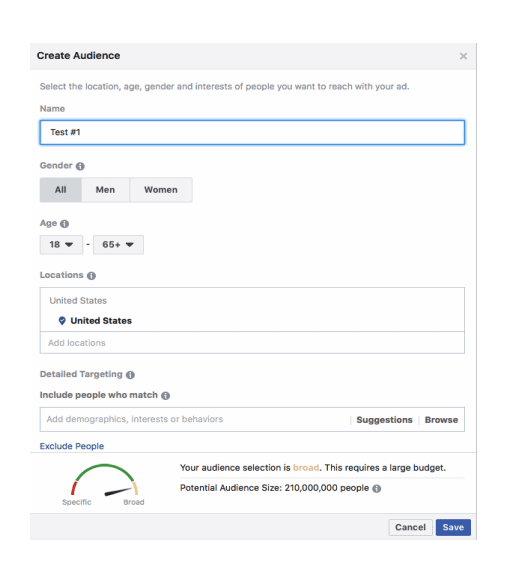
For those of you who are new to audience targeting, follow the steps below to create your ideal audience:

You will first see the audience creation dashboard:

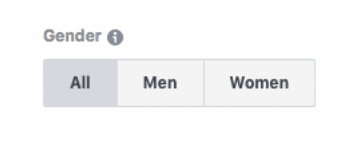
Now it’s time to select a gender- Whatever you do, make sure that the gender you select matches the product or service that you are selling!

How old are the members of your audience?

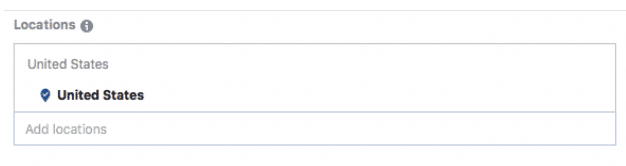
Location, location, location- This is a part of the audience targeting that we constantly see being screwed up. Too many business owners think that the wider the audience, the better their ad will perform, and that’s simply not the case. If you’re are a roofing company in Arizona, why on Earth would you be targeting the entire United States? Think about who you serve and decide what makes sense for you.

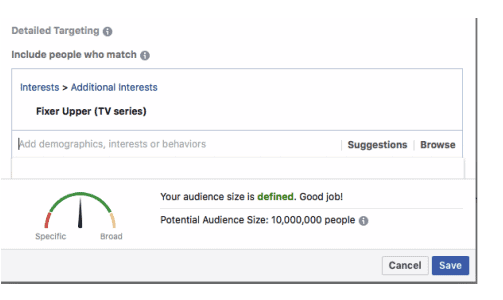
Who is your audience?- If you’re just starting off with Facebook ad campaigns, you’re going to want to use interest-based targeting. Target interests that are related to your business, because these are going to essentially target “warm leads” for your business!

Now, put it all together!

We’ve talked about creating killer content, writing killer copy, and now using accurate audience targeting. It’s important to remember that using just one of these strategies will not produce your most effective ad campaigns. You have to put all of them to use in the same ad campaign, and that is where you are going to see the most significant results in running your Facebook advertising campaigns.

We’d also be happy to talk more with you about how to optimize your current Facebook Ad spend. Just shoot us a note!

Categories
Blog Digital Marketing Online Marketing Sales Social Media Tips and Tricks

Content is King: Digital Storytelling Basics

In a rapidly evolving digital environment, producing high-quality content is more important than ever. Good content tells a story, which enables your business to connect with a wider audience, share new ideas, and stand out from the crowd.


Make Your Brand into a Story

First things first: your organization needs to tell a story. This simple move can increase brand awareness and add a personal component to your business that resonates with customers. The more familiar someone is with your brand, the more likely they are to trust you and be a returning customer. Your story doesn’t have to be long or complex, but it should answer a few simple questions. How did you get started? What makes your business special? What inspires you and your employees? The answers to these questions can help form an authentic, unique identity and even drive a higher conversion rate.

Make it real, relatable, and honest. Fluffy descriptions and meaningless words will only fall flat. Authenticity is key. According to Ad Week, “91 percent of consumers are likely to reward brands for authenticity and share the brand with friends and family, and 62 percent are likely to purchase from or show greater interest in purchasing from a brand that authentically expresses itself.”

You can be professional without being stuffy. Just be yourself—there’s no need to try to be something you’re not. What works for one company doesn’t necessarily work for another, so while it’s easy to compare yourself to another brand, resist the temptation.


Popular Forms of Content

Forbes discovered that people find videos, blogs, and instructional media to be the most valuable forms of content. 54% of consumers want more video content from a brand or business they support. Due to shortened attention spans, internet users are increasingly interested in media that combines images, text, audio, and videos. Depending on your resources, producing multiple forms of content may seem overwhelming. Luckily, it’s easier than ever to add short-form videos or high-resolution photographs to a blog post or landing page. 92% of marketers make videos with assets they already have, so you don’t necessarily need a production team or camera crew to beef up video content. Play around with a variety of strategies to determine what resonates the most with your audience.


How to Create Strong Content

To keep engagement levels high, you need to offer simple, straightforward, and succinct content that also provides value, like an educational video or how-to blog article. Content is the most impactful when it’s clear, concise, and purposeful. You want to produce materials on a frequent, consistent basis, but don’t publish something just for the sake of it—quality still beats quantity.

The most important factors to consider are what your audience wants and needs. What will they enjoy consuming, what problems are they trying to solve, and how can you help them? If you have more than one target audience, don’t be afraid of segmentation. By tailoring your content to specific groups, you can forge stronger connections and make more of an impact.

As a final tip, don’t forget that proofreading is imperative. Everything in the digital landscape is so fast paced that it’s easy to overlook a mistake, but nothing derails your content train quite like a simple grammatical error or embarrassing typo.

There’s real power in storytelling. Generating quality content enables you to accomplish marketing goals, reach a wider audience, and increase your digital influence. If you’d like to learn more about how Social Link can help you strategically create a content strategy that converts to revenue drop us a line today to get started.